Courier Management System Cost: Understanding the Real Investment
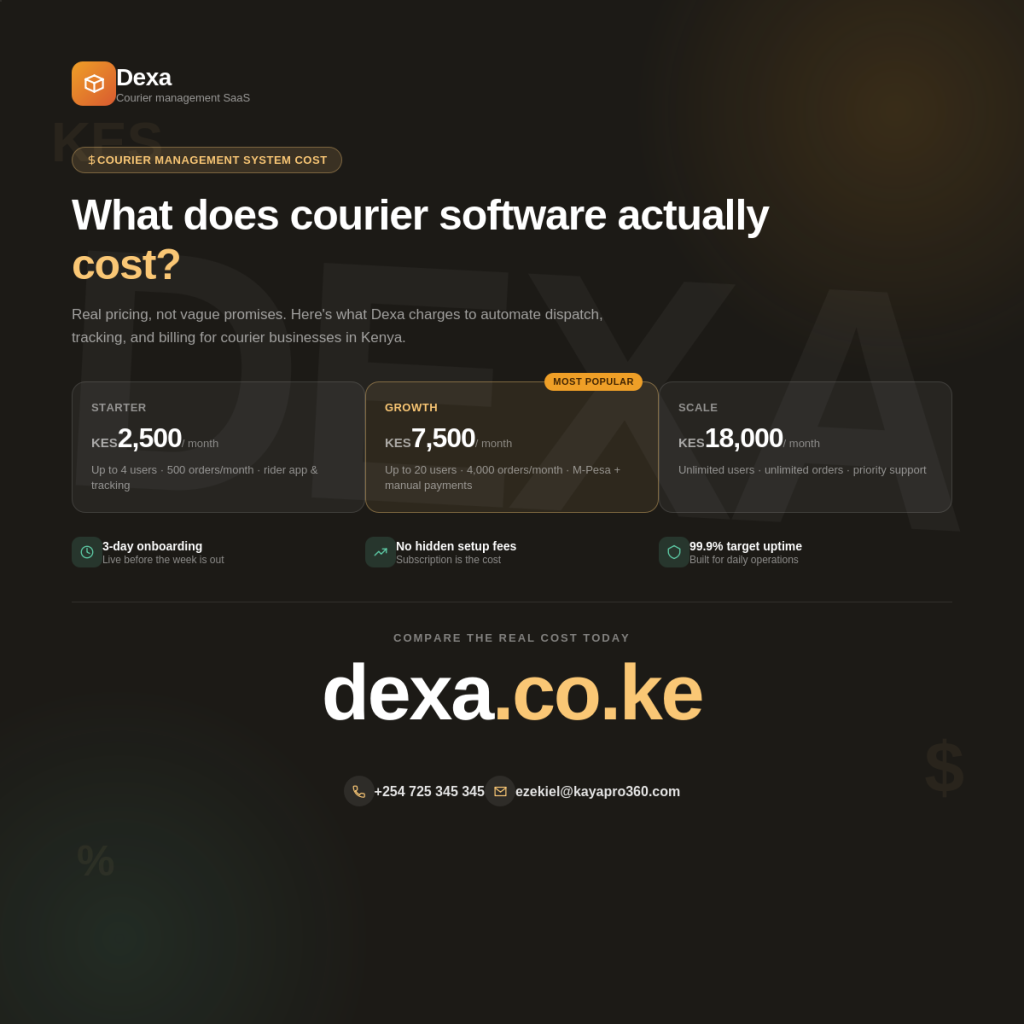
One of the most common questions courier business owners ask is about Courier management system cost. Whether you operate a small delivery startup, a regional courier company, an e-commerce delivery service, or a nationwide logistics operation, understanding the true Courier management system cost is essential before making a software investment.
Many websites discussing Courier management system cost use vague phrases such as “increase profits significantly” or “reduce expenses dramatically” without explaining how those savings are achieved. The reality is that software alone does not generate revenue. Instead, software helps businesses reduce inefficiencies, improve delivery management, automate dispatching, increase accountability, and provide better customer experiences.
A courier company processing hundreds of deliveries weekly often loses time through manual paperwork, phone-based dispatching, delivery disputes, route inefficiencies, and poor reporting. These hidden costs accumulate over time.
Understanding the actual Courier management system cost helps business owners make informed decisions rather than focusing only on subscription fees.
What Is a Courier Management System?
A courier management system is software designed to automate and centralize courier operations.
Instead of managing deliveries through spreadsheets, WhatsApp messages, phone calls, and paperwork, businesses can manage everything from a centralized platform.
A modern courier management solution typically includes:
- Delivery management
- Dispatch automation
- Driver management
- Customer tracking
- Route planning
- Delivery proof capture
- Reporting
- Analytics
- Customer communication
The purpose of understanding Courier management system cost is not simply to compare software subscriptions. It is to evaluate whether the software helps improve operational efficiency.
Why Courier Businesses Need Software
Courier businesses face increasing customer expectations.
Customers expect:
- Faster deliveries
- Real-time updates
- Accurate tracking
- Better communication
- Reliable service
Manual processes struggle to meet these expectations consistently.
A quality courier management system helps businesses automate routine tasks while improving operational visibility.
This is one reason interest in Courier management system cost continues growing among courier companies, logistics firms, and delivery businesses across Kenya.
Understanding Courier Management System Cost
The actual Courier management system cost varies significantly depending on business requirements.
Small courier companies typically require fewer features than large logistics operators.
Factors affecting pricing include:
- Number of users
- Number of vehicles
- Number of deliveries
- Automation requirements
- Integration requirements
- Reporting capabilities
- Mobile application support
- Customer portal requirements
Because every organization is different, there is no universal pricing model.
Businesses should evaluate total value rather than simply selecting the cheapest option.
Factors That Affect Courier Management System Cost
One of the most important aspects of Courier management system cost is understanding what drives pricing differences.
Business Size
Larger businesses generally require additional users, permissions, reporting features, and operational controls.
Delivery Volume
Companies processing thousands of deliveries monthly often require advanced automation features.
Driver Management
Businesses with larger driver teams usually require more extensive management functionality.
Customer Communication
Automated notifications and customer portals may influence software pricing.
Reporting Requirements
Advanced analytics and business intelligence features often affect overall Courier management system cost.
Cloud-Based vs On-Premise Software
Many courier businesses evaluating Courier management system cost must decide between cloud-based and on-premise systems.
Cloud platforms generally offer:
- Lower upfront costs
- Faster implementation
- Automatic updates
- Remote access
- Reduced IT management
On-premise systems may provide:
- Greater infrastructure control
- Internal hosting
- Custom deployment environments
However, cloud platforms are increasingly preferred due to flexibility and reduced infrastructure complexity.
Implementation Costs
When discussing Courier management system cost, many business owners focus exclusively on subscription fees.
Implementation costs are equally important.
Implementation may involve:
- Initial setup
- Data migration
- Workflow configuration
- User account creation
- Operational testing
A well-planned implementation reduces operational disruptions and improves adoption rates.
Businesses should include implementation costs in their budgeting process.
Training Costs and User Adoption
Software success depends heavily on user adoption.
Even the most advanced system will struggle if employees do not understand how to use it effectively.
Training may involve:
- Dispatcher training
- Driver training
- Administrator training
- Reporting training
- Management training
Organizations evaluating Courier management system cost should consider training as part of the overall investment rather than an optional expense.
Proper training improves return on investment.
Integration Costs
Many courier businesses operate multiple software systems.
Examples include:
- Accounting software
- Customer management systems
- ERP platforms
- Communication tools
- Inventory systems
Integration requirements often influence Courier management system cost.
However, integrated workflows typically reduce duplicate data entry and improve operational efficiency.
Businesses should evaluate integration benefits alongside implementation costs.
Hidden Costs Businesses Often Ignore
Many organizations underestimate total Courier management system cost because they overlook hidden expenses.
Common overlooked costs include:
Manual Errors
Manual data entry mistakes create operational inefficiencies.
Lost Deliveries
Poor visibility can increase delivery disputes.
Customer Complaints
Inadequate communication may lead to dissatisfaction.
Administrative Time
Manual coordination consumes valuable staff hours.
Reporting Delays
Lack of visibility can delay decision-making.
These operational inefficiencies often cost more than software subscriptions themselves.
How Courier Management Systems Improve Efficiency
Businesses investing in courier software typically seek operational improvements.
A quality system helps:
- Automate dispatching
- Improve visibility
- Streamline workflows
- Enhance customer communication
- Improve accountability
- Simplify reporting
These improvements help organizations operate more efficiently without requiring proportional increases in staffing.
Understanding Courier management system cost requires evaluating both expenses and operational benefits.
Customer Experience Benefits
Customer experience has become a major competitive factor.
Customers increasingly expect:
- Delivery updates
- Tracking visibility
- Faster communication
- Reliable service
A courier management system improves transparency throughout the delivery process.
Businesses that improve customer experiences often strengthen retention and reputation.
This is one reason many organizations view Courier management system cost as an operational investment rather than merely a software expense.
Scalability and Future Growth
Businesses planning future growth should evaluate scalability carefully.
A system that works for a small startup may struggle as delivery volumes increase.
When analyzing Courier management system cost, businesses should consider future requirements including:
- Additional vehicles
- Additional drivers
- Additional dispatchers
- Additional locations
- Increased delivery volumes
Scalable systems help organizations avoid costly migrations later.
Industry Applications
Many industries benefit from courier management systems.
Examples include:
- Courier companies
- E-commerce businesses
- Pharmaceutical distributors
- Retail chains
- Wholesalers
- Manufacturers
- Field service providers
Each organization may have unique operational requirements, but all benefit from improved workflow management.
How Courier Management Systems Improve Dispatch Operations
Dispatch management is one of the most critical areas of any courier business. Without proper coordination, deliveries can be delayed, drivers can receive conflicting instructions, and customers may become frustrated due to missed deadlines. This is one of the primary reasons businesses researching Courier management system cost often discover that the software pays for itself through operational improvements rather than direct revenue generation.
Traditional dispatching methods frequently rely on spreadsheets, phone calls, text messages, and paper delivery schedules. While this approach may work for a small operation handling a few deliveries daily, it quickly becomes inefficient when delivery volumes increase. A courier company processing dozens or hundreds of deliveries each day requires a more structured approach.
Modern courier management systems automate dispatch workflows by assigning deliveries to drivers, tracking assignment status, and providing visibility into delivery progress. Managers can see which deliveries are pending, in transit, completed, or delayed. This visibility helps reduce confusion while improving service reliability.
Businesses evaluating Courier management system cost should consider the time saved by dispatch teams. Reducing administrative work allows staff to focus on customer service, operational planning, and business growth rather than constantly coordinating deliveries manually.
Route Optimization and Delivery Planning
Route planning is another area where courier businesses often experience hidden inefficiencies. Drivers may unknowingly travel longer distances than necessary, increasing fuel consumption, vehicle wear, and delivery times.
A quality courier management platform helps businesses improve route planning by organizing deliveries more efficiently. Better route management reduces unnecessary mileage while improving overall productivity.
When assessing Courier management system cost, business owners should think beyond software subscriptions and consider operational savings generated through improved route efficiency. Even small improvements in route planning can create significant long-term benefits when applied across multiple vehicles and hundreds of deliveries.
Improved routing also benefits customers. Faster deliveries improve customer satisfaction, increase repeat business opportunities, and strengthen company reputation. In a competitive market, these advantages can be significant.
Managing Customer Expectations More Effectively
Customer expectations have evolved dramatically over the past decade. People no longer want to place an order and wait without updates. They expect visibility throughout the delivery process.
This shift has made communication one of the most important aspects of courier operations. Businesses researching Courier management system cost often discover that customer communication features are among the most valuable capabilities offered by modern platforms.
Customers appreciate receiving updates when:
- Orders are dispatched
- Drivers are assigned
- Deliveries are approaching
- Deliveries are completed
Providing this information automatically reduces customer inquiries and improves overall satisfaction.
Instead of contacting support teams repeatedly, customers can access delivery information themselves. This creates a better experience while reducing administrative workload for courier businesses.
Courier Management System Cost vs Manual Administration
Many business owners underestimate the cost of manual administration.
Paper records require filing.
Spreadsheets require updates.
Phone calls consume staff time.
Delivery disputes require investigation.
Reports require manual preparation.
Each of these activities consumes resources that could be used more productively elsewhere.
When evaluating Courier management system cost, businesses should compare software expenses against the cost of maintaining inefficient manual processes. Often, the hidden cost of manual administration exceeds the cost of adopting a modern management platform.
Administrative efficiency becomes increasingly important as businesses grow. A courier company handling ten deliveries daily may manage successfully using manual methods. A company handling several hundred deliveries daily faces very different operational challenges.
Software provides the structure needed to support growth without proportionally increasing administrative overhead.
Mobile Technology and Courier Operations
Mobile technology has transformed logistics operations worldwide. Drivers now expect to receive assignments digitally rather than through paper manifests or constant phone communication.
Modern courier platforms provide mobile applications that allow drivers to:
- View assigned deliveries
- Update delivery status
- Capture proof of delivery
- Communicate with dispatch teams
- Access customer information
These capabilities improve operational efficiency while reducing paperwork.
For businesses considering Courier management system cost, mobile functionality is increasingly becoming a necessity rather than an optional feature. Mobile-enabled operations improve speed, accuracy, and communication across the organization.
As smartphone adoption continues increasing across Kenya, mobile-first logistics management will likely become even more important.
Courier Management Systems for E-Commerce Businesses
The rapid growth of e-commerce has significantly increased demand for efficient delivery management.
Online retailers depend on reliable logistics partners to meet customer expectations. Delayed deliveries, missing orders, and poor communication can negatively impact customer satisfaction and brand reputation.
This is why many e-commerce businesses closely evaluate Courier management system cost when planning operational improvements.
Courier software helps e-commerce companies manage:
- Order fulfillment
- Delivery assignments
- Customer communication
- Delivery tracking
- Performance reporting
The ability to provide accurate delivery updates is particularly valuable for online retailers. Customers increasingly expect transparency throughout the delivery journey.
Businesses that can consistently meet these expectations often achieve stronger customer retention and higher satisfaction levels.
Compliance, Documentation, and Audit Readiness
Documentation is an important aspect of courier operations.
Businesses frequently need records for:
- Deliveries
- Customer confirmations
- Driver assignments
- Operational reporting
- Financial audits
Manual record-keeping creates risks because documents can be misplaced, damaged, or difficult to retrieve.
A professional courier management platform centralizes documentation and improves record accessibility.
Organizations evaluating Courier management system cost should consider the value of improved documentation management. Easy access to historical records can simplify audits, improve accountability, and reduce operational disputes.
Well-maintained records also support better decision-making by providing reliable historical data.
Why More Kenyan Courier Businesses Are Investing in Software
Across Kenya, courier and logistics businesses are facing increasing pressure to improve efficiency.
Customers expect faster service.
Competition is increasing.
Operating costs continue rising.
Businesses must find ways to improve productivity without sacrificing service quality.
These factors are driving greater adoption of courier management platforms.
When organizations analyze Courier management system cost, many discover that software investments support multiple business objectives simultaneously. They improve visibility, reduce manual work, strengthen communication, enhance reporting, and create a foundation for future growth.
The result is often a more organized, scalable, and customer-focused operation.
Long-Term Value Beyond Cost
Ultimately, businesses should evaluate Courier management system cost in terms of long-term value rather than short-term expense.
The right software helps organizations:
- Improve operational efficiency
- Strengthen customer relationships
- Reduce administrative complexity
- Increase visibility
- Support growth
- Improve accountability
- Enhance reporting
These benefits continue accumulating over time.
As delivery volumes increase and customer expectations evolve, businesses with strong operational systems are generally better positioned to compete effectively. For courier companies planning long-term growth, investing in modern management software is often less about technology and more about building a stronger, more resilient business capable of adapting to future challenges and opportunities.
Business Ecosystem Integration
Many courier businesses also use complementary software solutions.
Examples include:
- Rental management through https://rentaldesk.co.ke
- Property management through https://pms.co.ke
- Estate administration through https://estateadmin.co.ke
- Retail operations through https://vega.co.ke
- Salon software through https://prim.co.ke
- WiFi billing through https://pawa.co.ke
- Driver marketplace solutions through https://dereva.co.ke
- Campaign management through https://vota.co.ke
- Customer communication through https://zivo.co.ke
- Workflow automation through https://dexa.co.ke
- School administration through https://ratibu.co.ke
- Church management through https://churchesadmin.com
- Business platforms such as https://fama.co.ke
- Enterprise systems such as https://jaat.co.ke
- Business management solutions such as https://kayapro360.com
Integrated systems improve operational efficiency and reduce data duplication.
Risk Factors and How to Mitigate Them
Like any technology investment, courier software implementation involves risks.
Poor User Adoption
Mitigation: Provide comprehensive training and support.
Data Quality Issues
Mitigation: Establish clear data standards.
Resistance to Change
Mitigation: Communicate benefits clearly.
Security Risks
Mitigation: Use role-based access controls and strong passwords.
Inadequate Planning
Mitigation: Define business requirements before implementation.
Addressing these risks improves project success rates.
Is Courier Management System Cost Worth It?
For most growing courier businesses, the answer is yes.
The value comes from operational improvements rather than unrealistic promises.
Benefits often include:
- Better visibility
- Faster dispatching
- Improved reporting
- Enhanced accountability
- Better customer service
- Reduced administrative workload
Businesses managing deliveries manually may eventually reach operational limits.
Software helps organizations scale more effectively while maintaining service quality.
This is why many courier companies view Courier management system cost as a strategic investment.
Frequently Asked Questions
1. What affects Courier management system cost the most?
Business size, delivery volume, user count, automation requirements, integrations, and reporting needs are major pricing factors.
2. Can small courier businesses afford courier software?
Yes. Many modern platforms offer scalable pricing suitable for small businesses.
3. Does courier software reduce operating costs?
It can help reduce inefficiencies, improve visibility, and automate manual processes.
4. How long does implementation take?
Implementation timelines vary depending on business complexity and customization requirements.
5. Is cloud software better than on-premise software?
For many courier businesses, cloud platforms offer greater flexibility, lower infrastructure requirements, and easier scalability.
Final Verdict
Understanding Courier management system cost requires looking beyond subscription fees. Businesses should evaluate implementation, training, integrations, scalability, and long-term operational benefits.
The right courier management platform can help organizations improve efficiency, streamline workflows, enhance customer experiences, and support future growth.
Rather than focusing solely on the cheapest option, businesses should prioritize value, reliability, scalability, and operational impact.
A well-implemented system often becomes one of the most valuable operational tools within a courier business.
Start with Dexa Today
Looking to modernize your courier operations?
Visit Dexa.co.ke and discover how Dexa helps courier companies automate workflows, manage deliveries, improve visibility, streamline operations, and support sustainable growth.
Whether you operate a local courier service, a nationwide delivery network, or a growing logistics company, Dexa provides the tools needed to improve operational efficiency and customer satisfaction in 2026 and beyond.