Introduction on How to Onboard Courier Riders to a Platform in Kenya
If you have been wondering how to onboard courier riders to a platform and whether the numbers actually make sense in Kenya, this guide gives you the complete financial picture with real KES figures, zero vague language, and actionable steps you can execute today. Most articles on how to onboard courier riders to a platform talk about “great earning potential” or “can earn up to KES 2,000 a day” without telling you the monthly operating cost structure, the commission splits, or the platform setup fees. We are going to fix that.
This guide is relevant for: courier platform operators, logistics startup founders, fleet managers, independent riders thinking of joining a digital platform, and business owners looking to integrate same-day delivery into their operations.
1. What Does It Actually Mean to Onboard Courier Riders to a Platform?
Before we talk money, let us define what the process of how to onboard courier riders to a platform actually involves. Onboarding is not just handing a rider a phone and saying “go deliver.” It is a structured process that covers identity verification, vehicle documentation, skills training, app setup, payment integration, insurance, and performance baseline-setting. Done properly, it takes between 3 and 7 business days per rider and costs the platform operator between KES 800 and KES 2,500 per rider onboarded.
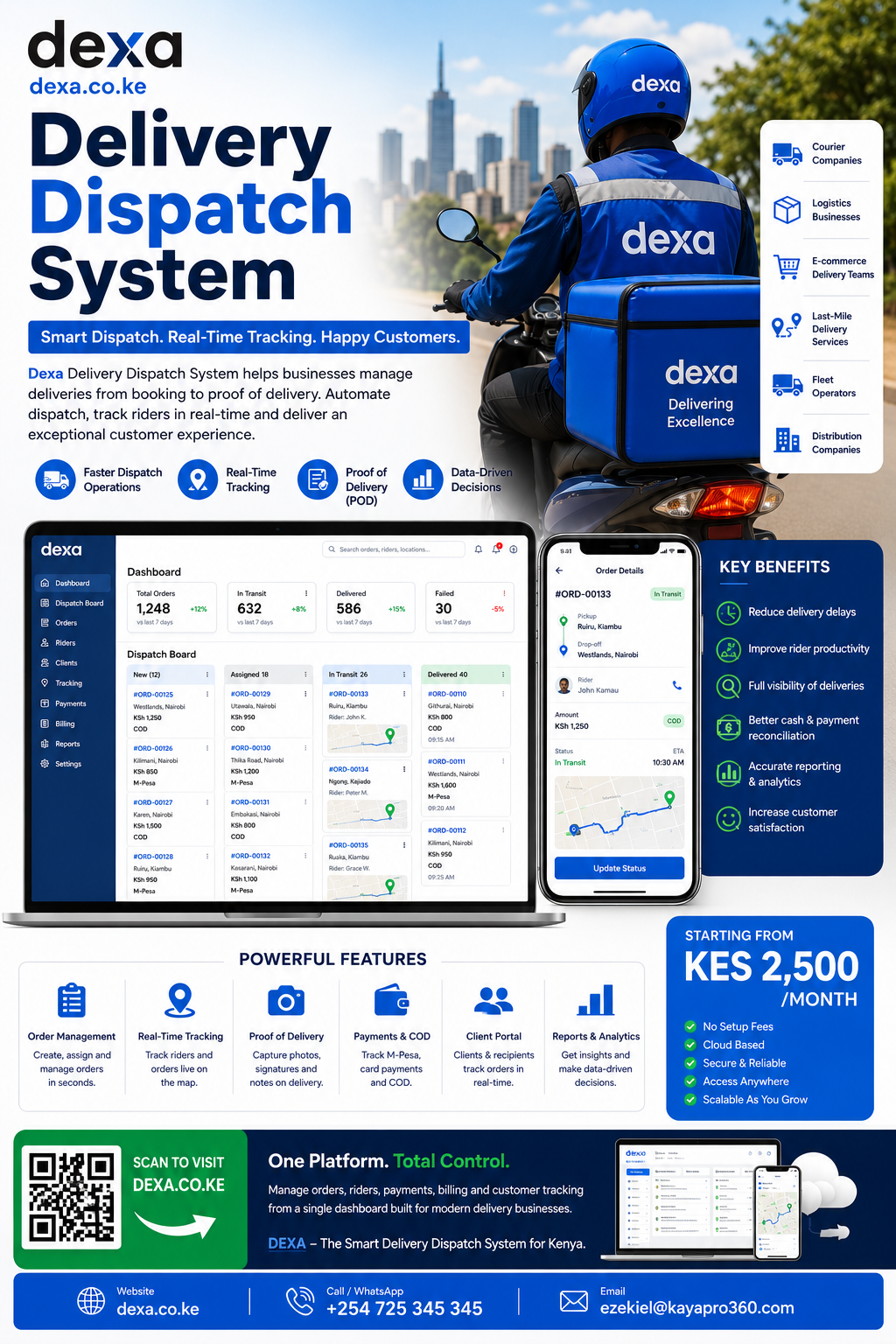
Understanding how to onboard courier riders to a platform correctly means understanding that the upfront investment in a solid onboarding process is actually a cost-reduction strategy. A well-onboarded rider completes more deliveries, gets better customer ratings, generates fewer complaints, and stays on the platform longer. The economics are clear: spend KES 2,000 to onboard a rider properly versus spending KES 6,000 replacing a badly onboarded one twice in 90 days.
2. Complete Startup Cost Table for a Courier Rider Platform (2026)
One of the biggest questions any founder or operator asks when figuring out how to onboard courier riders to a platform is: how much does it cost to build and launch the platform itself? The answer depends heavily on whether you are building from scratch, using a white-label SaaS solution, or licensing an existing Kenyan platform. Below is a realistic startup cost table based on current 2026 Kenyan market rates, not inflated international benchmarks.
| Cost Item | Low Estimate (KES) | High Estimate (KES) | Notes |
| Platform / App Development (SaaS licence or build) | 25,000/mo | 150,000 once-off | White-label SaaS is cheapest; custom build for scale |
| Rider App Setup & Config | 5,000 | 30,000 | Android APK config, branding, Play Store upload |
| Admin Dashboard / Dispatcher Web Panel | 0 (included in SaaS) | 80,000 (custom) | Order tracking, rider assignment, analytics |
| M-Pesa Daraja API Integration | 10,000 | 40,000 | Paybill/Till setup, STK Push, B2C payouts |
| GPS Tracking Module | 5,000/mo (SaaS) | 60,000 (custom) | Real-time rider location visibility |
| Rider Smartphones (10 riders at launch) | 120,000 | 200,000 | KES 12,000–20,000 each; can require rider to own |
| Rider Training (per cohort of 10) | 8,000 | 25,000 | Venue, printed materials, trainer fee |
| Marketing & Launch (social, flyers, WhatsApp) | 15,000 | 80,000 | First customer acquisition push |
| Insurance (personal accident per rider per year) | 3,600/rider | 7,200/rider | KES 300–600/month per rider |
| Business Registration & Licences | 10,600 | 25,000 | CA registration, county business permit |
| Office / Operations Space (optional co-work) | 0 (remote) | 25,000/mo | Dispatch hub if physical presence needed |
| TOTAL (10-rider launch, SaaS model) | ~KES 197,200 | ~KES 522,000 | Excludes working capital buffer (add 20%) |
The most important insight here is that a SaaS-first approach to launching a courier platform in Kenya can get you operational for under KES 200,000.
3. Monthly Revenue Model: 4 Real KES Scenarios
When you understand how to onboard courier riders to a platform, the next question is: what does the monthly revenue actually look like? Below are four operational scenarios modelled on realistic Kenyan market conditions in 2026. Each scenario specifies the number of active riders, average daily deliveries per rider, average delivery fee, and platform commission rate. These are not theoretical — they reflect how platforms like Glovo, Sendy, and Jumia have operated in the Nairobi market.
| Metric | Scenario A: Nairobi CBD 10 Riders | Scenario B: Nairobi Suburbs 20 Riders | Scenario C: County Town 15 Riders | Scenario D: E-Commerce Partner 30 Riders | Notes |
| Active Riders | 10 | 20 | 15 | 30 | |
| Avg Deliveries/Rider/Day | 12 | 8 | 6 | 15 | High in CBD; lower in suburbs |
| Avg Fee per Delivery (KES) | 200 | 250 | 180 | 160 | KES 150–500 typical range |
| Working Days/Month | 26 | 26 | 26 | 26 | |
| Gross Platform GMV/Month (KES) | 624,000 | 1,040,000 | 421,200 | 1,872,000 | Total delivery fees collected |
| Platform Commission Rate | 12% | 10% | 10% | 8% | Bulk/partner rates are lower |
| Platform Revenue/Month (KES) | 74,880 | 104,000 | 42,120 | 149,760 | Before OpEx |
| Rider Earnings (avg/rider/month, KES) | 54,912 | 46,800 | 37,908 | 57,408 | After platform commission |
Scenario D (E-Commerce Partner, 30 riders) is the most compelling for a platform operator. A volume deal with a single e-commerce merchant — think an online electronics shop, a wholesale produce supplier, or a fashion retailer in Nairobi — generates KES 149,760 in monthly platform revenue while riders still earn a respectable KES 57,408 monthly average (roughly KES 2,208 per working day). This is why understanding how to onboard courier riders to a platform and structure merchant partnerships simultaneously is the key to reaching profitability fastest.

4. Monthly Ongoing Costs: The Full Picture
Learning how to onboard courier riders to a platform is only half the equation. You also need to know exactly what it costs to keep the lights on every month. Below is a comprehensive ongoing cost breakdown for a platform operating 15–20 riders in a Kenyan urban market. These figures are based on 2026 Kenyan market pricing.
| Monthly Cost Item | Low (KES) | High (KES) | Notes |
| Platform SaaS Licence / Hosting | 15,000 | 45,000 | Scales with rider count |
| M-Pesa Transaction Fees (B2C payouts) | 5,000 | 18,000 | ~KES 33 per payout at scale |
| Internet / Data Bundles (ops team) | 3,000 | 8,000 | Fibre + backup mobile data |
| Customer Support (1 agent salary) | 25,000 | 45,000 | Critical for disputes, ratings, lost parcels |
| Rider Insurance (accident cover, 15 riders) | 4,500 | 9,000 | KES 300–600/rider/month |
| Marketing & Retention (promotions, WhatsApp) | 5,000 | 20,000 | Surge bonuses, referral programmes |
| Pawa Billing Platform Fee (5% of transactions) | Variable | Variable | Pawa.co.ke takes 5% of platform billing |
| Fuel / Logistics for Ops Team | 3,000 | 10,000 | Field visits, rider checks |
| Maintenance (devices, app updates) | 2,000 | 8,000 | Screen replacements, bug fixes |
| Accounting / Payroll Admin | 5,000 | 15,000 | Can use Dexa HSSE & accounts module |
| TOTAL MONTHLY OpEx | KES 67,500 | KES 178,000 | Before depreciation of startup assets |
5. Real Break-Even Timeline (In Months)
Here is where most guides about how to onboard courier riders to a platform completely fail you. They will say “you can break even in a few months” without showing you the actual math. Let us do it properly for each of our four scenarios, assuming a startup cost of KES 250,000 (mid-range SaaS launch) and the mid-range monthly OpEx of KES 110,000.
| Scenario | Monthly Revenue (KES) | Monthly OpEx (KES) | Net Monthly Profit (KES) | Break-Even Month |
| A: CBD, 10 Riders | 74,880 | 110,000 | -35,120 (loss) | Not viable at 10 riders |
| B: Suburbs, 20 Riders | 104,000 | 110,000 | -6,000 (near break-even) | Month 3–4 (add 2 riders) |
| C: County Town, 15 Riders | 42,120 | 67,500 (lower opex) | -25,380 (loss) | Month 5–6 (grow to 22 riders) |
| D: E-Commerce, 30 Riders | 149,760 | 130,000 | 19,760 (profit) | Month 13 from startup |
The math is unambiguous: the fastest route to profitability when you understand how to onboard courier riders to a platform is to secure a merchant partnership before you launch widely. Scenario D (E-Commerce Partner) is the only scenario that generates a profit at the base rider count. A 30-rider platform with a single strong merchant contract needs approximately 13 months to recoup the KES 250,000 startup investment (KES 250,000 / KES 19,760 net profit = 12.65 months).
Scenario B (20 riders, suburban) reaches near-break-even at launch, meaning adding just 2–3 more riders pushes it into profit within 3–4 months. This is an excellent model for operators entering secondary Nairobi markets like Kahawa, Ruaka, Kitengela, or Rongai where competition from Glovo and Jumia is lower.

6. Step-by-Step: How to Onboard Courier Riders to a Platform (The 7-Step Process)
Now that you understand the financial context, here is the definitive operational guide on how to onboard courier riders to a platform in Kenya. Every operator who has asked how to onboard courier riders to a platform and executed it correctly will tell you the same thing: the process matters more than the technology. The seven-step framework below is what separates platforms with 15% monthly rider churn from those with 4% churn.
Step 1 — Build Your Application Funnel (Days 1–2)
The first practical action when you learn how to onboard courier riders to a platform is to create a friction-free application entry point. Build a single Google Form or Typeform — no more than 10 fields — and distribute it across WhatsApp broadcast lists, Facebook boda boda groups, local rider SACCOs, and community noticeboards in your target operating zone. .
Step 2 — Document Verification: The Step That Protects Everything (Days 2–4)
Operators who understand how to onboard courier riders to a platform professionally treat document verification as non-negotiable. This is the step most low-quality platforms skip to “move fast,” and it is the primary reason they face ghost deliveries, accidents, liability claims, and regulatory shutdowns.
Step 3 — Practical Assessment and Safety Training (Day 4–5)
Knowing how to onboard courier riders to a platform means knowing that a rider who can ride is not the same as a rider who can deliver professionally. Run a half-day practical session covering five areas: safe loading and securing of parcels of different sizes and fragility levels, customer interaction standards including greeting scripts, ID confirmation, and OTP collection protocols, a full app usage walkthrough covering job acceptance, in-app navigation, proof-of-delivery photo capture, and dispute reporting, emergency procedures for accidents and theft, and basic first aid awareness.
Step 4 — App Setup and Device Configuration (Day 5)
A critical moment in the process of how to onboard courier riders to a platform is the app configuration session. This is where many platforms lose riders who are otherwise excellent — a confusing or broken app experience on day one triggers immediate abandonment.
Step 5 — M-Pesa Wallet Activation and Payment Schedule Agreement (Day 5)
One of the most retention-critical elements of how to onboard courier riders to a platform is the payment clarity conversation. Every rider must have their M-Pesa number registered, verified, and test-paid before their first delivery.
Step 6 — Supervised First Deliveries: The Silent Mentor Model (Week 1)
The supervised delivery phase is where the question of how to onboard courier riders to a platform transitions from paperwork to live performance. Assign each new rider a minimum of five monitored deliveries in their first working week.
Step 7 — Performance Monitoring and the Graduated Incentive Structure (Month 2 Onwards)
The final stage of how to onboard courier riders to a platform is really the bridge between onboarding and long-term retention — and this is where most platforms either build a sustainable business or slowly haemorrhage their best riders to competitors. From month 2, implement a three-tier graduated incentive structure tied directly to monthly delivery volume.
7. Risk Section: What Can Go Wrong and How to Mitigate It
No honest guide on how to onboard courier riders to a platform is complete without a frank discussion of what can go wrong. The courier and last-mile delivery space in Kenya has real operational and financial risks that have killed multiple well-funded startups. Here is a no-sugar-coating assessment.
Risk 1: Rider Fraud (Ghost Deliveries and Cash Theft)
Ghost deliveries — where a rider marks a delivery as completed without delivering — are the most common fraud type on courier platforms. Mitigation: mandatory OTP confirmation (6-digit code from recipient) before delivery can be marked complete, photograph proof-of-delivery upload, and randomised audit calls to recipients.
Risk 2: Rider Churn (High Turnover Kills Unit Economics)
Rider churn rates of 30–50% in the first 90 days are common on platforms that underinvest in onboarding. At KES 2,000 per rider to onboard, a platform that churns 10 riders per month is spending KES 20,000/month just replacing riders who leave — before you earn a single shilling from those replacements. Mitigation: follow the 7-step onboarding process above, implement the graduated incentive structure, and survey departing riders to identify systemic issues.
Risk 3: Technology Failure During Peak Hours
App downtime during the Friday evening peak (17:00–20:00) or during a major e-commerce sale event can cost you thousands of KES per hour in lost GMV and permanently damage merchant relationships. Mitigation: ensure your SaaS platform has a published uptime SLA of 99.5% or higher, maintain a WhatsApp dispatch backup channel for manual job allocation, and test your platform under load before any major marketing push.
8. The dexa.co.ke Ecosystem: Tools That Power Your Courier Platform
When you build a courier platform in Kenya, you are not just building dispatch software. You are building a business with HR needs, financial management requirements, compliance obligations, and customer communication infrastructure. The dexa.co.ke product family offers a comprehensive suite of Kenyan-built SaaS tools that integrate directly with your courier platform needs.
| No. | Product | Relevance to Courier Platform Operators |
| 1 | Dereva (dereva.co.ke) | Driver marketplace and hire platform — core infrastructure for managing rider profiles, dispatch, and job assignment |
| 2 | Pawa (pawa.co.ke) | WiFi hotspot billing system — 5% platform billing fee model; also useful for rider hub connectivity billing management |
| 3 | Dexa / Sibed (dexa.co.ke) | HR, HSSE, accounts, attendance, and business workflow — manage rider contracts, safety compliance, payroll, and onboarding documentation |
| 4 | Vega POS (vega.co.ke) | POS system — integrate with merchant clients for seamless order handoff from shop to courier dispatch |
| 5 | Zivo / ZChat (zivo.co.ke) | WhatsApp shared inbox and customer communication platform — handle customer delivery queries, complaints, and confirmations at scale |
| 6 | Wito (Wito RSVP) | RSVP, attendance, and check-in system — useful for rider training event management, cohort attendance tracking, and certification events |
| 7 | Fama (fama.co.ke) | Core SaaS product — scalable platform infrastructure for building merchant-courier integrations |
| 8 | RentalDesk Family (rentaldesk.co.ke) | Property and estate management — relevant if operating a courier business from a managed commercial property |
This integrated ecosystem means that when you understand how to onboard courier riders to a platform and start building your business, you can deploy Dereva for rider management, Dexa for HR and HSSE compliance, ZChat for customer service, and Pawa for billing — all from a single Kenyan-built, Kenyan-supported product family.
9. FAQ: 5 Questions Investors and Beginners Ask About How to Onboard Courier Riders to a Platform
Q1: What is the minimum number of riders needed to make a courier platform profitable in Kenya?
Based on our modelling, the minimum viable rider count for a Nairobi urban market is 18–22 active riders at a 10–12% commission rate and an average delivery fee of KES 200–250. Below 18 riders, your platform revenue (roughly KES 85,000–100,000/month) does not cover typical OpEx of KES 90,000–110,000/month. In county towns with lower OpEx, you can reach break-even with as few as 12–15 active riders if your average delivery fee is above KES 180.
Q2: How long does the process of how to onboard courier riders to a platform actually take from first application to first delivery?
Using the 7-step process outlined above, the minimum onboarding timeline is 5 business days: Day 1 application submission, Day 2–3 document verification, Day 4 training session, Day 5 app setup and first supervised delivery. Platforms that try to compress this to 1–2 days consistently report 3x higher early churn and double the fraud rate. The 5-day investment per rider pays for itself within the first 30 days of a retained, high-performing rider.
Q3: What is the biggest mistake new courier platform operators make when learning how to onboard courier riders to a platform?
The single biggest mistake is prioritising rider quantity over rider quality. Many new operators see a 50-rider platform and assume they are more competitive than a 20-rider one. In reality, a platform with 20 reliable, trained, well-insured riders who complete 95% of deliveries successfully is worth 5x more in customer lifetime value and merchant contract renewals than a platform with 50 undocumented, poorly trained riders with a 70% completion rate. Prioritise the quality of your onboarding process — specifically Steps 2 (document verification), 3 (training), and 6 (supervised first deliveries) — before you prioritise scale.
Start Building Your Courier Platform Today with Pawa and Dereva
Ready to put everything you have learned about how to onboard courier riders to a platform into action? The dexa.co.ke product ecosystem gives you the Kenyan-built tools to launch, manage, and scale a professional courier platform without expensive custom development.
Use Pawa (pawa.co.ke) for automated billing and M-Pesa payment management with a transparent 5% fee structure. Use Dereva (dereva.co.ke) as your rider marketplace backbone for dispatch, performance tracking, and job management. Use Dexa (dexa.co.ke) for HR, HSSE compliance, attendance, and document management. And use ZChat (zivo.co.ke) to handle customer communication at scale via WhatsApp.

Contact the dexa.co.ke team today to book a free consultation and get your courier platform live within 30 days.