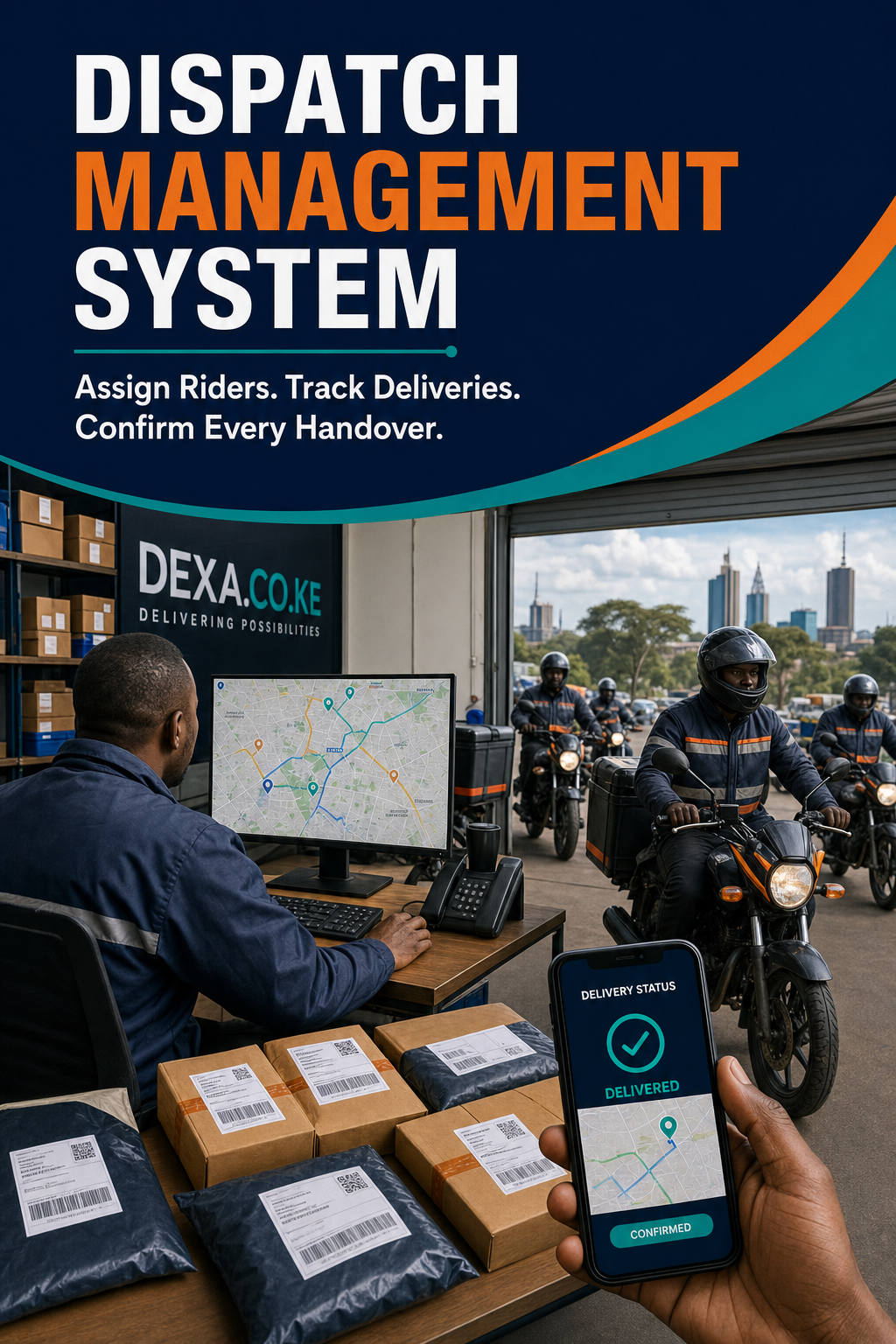
Dispatch Management System Kenya – Transforming Courier Operations with Dexa
In today’s fast-paced logistics and e-commerce environment, efficiency is no longer optional—it is essential. Businesses across Kenya are rapidly shifting from manual delivery coordination methods such as spreadsheets, phone calls, and WhatsApp messages to more structured and automated solutions.
A Dispatch Management System Kenya is now the backbone of modern courier, logistics, and delivery companies. It enables businesses to manage orders, assign riders, track deliveries in real time, and streamline communication between all stakeholders.
At the center of this transformation is Dexa (dexa.co.ke), a modern courier SaaS platform built specifically to simplify dispatch operations, improve visibility, and scale delivery businesses efficiently.
This article explores how a Dispatch Management System Kenya works, its core features, benefits, and why Dexa is becoming a preferred solution for courier businesses.
What is a Dispatch Management System Kenya?
A Dispatch Management System Kenya is a digital logistics platform that helps businesses manage the entire delivery lifecycle—from order creation to final delivery confirmation.
Instead of manually assigning riders or tracking deliveries through calls, the system automates and centralizes operations into one dashboard.
A typical Dispatch Management System includes:
- Order creation and management
- Automated or manual dispatching
- Rider assignment and tracking
- Proof of delivery (POD) collection
- Customer notifications
- Billing and invoicing integration
In Kenya, where courier demand is growing rapidly due to e-commerce, food delivery, pharmacy logistics, and retail distribution, this system has become a critical business tool.
Why Dispatch Management Systems Kenya Are Essential in Kenya
The logistics sector in Kenya faces unique operational challenges:
1. High Delivery Volumes
E-commerce growth has increased daily delivery requests, making manual dispatching inefficient.
2. Traffic and Route Complexity
Urban areas like Nairobi, Mombasa, and Kisumu require intelligent routing to avoid delays.
3. Customer Expectations
Customers now expect real-time tracking and instant updates.
4. Operational Errors
Manual dispatching leads to missed deliveries, lost orders, and communication breakdowns.
A Dispatch Management System Kenya solves these challenges by introducing automation, visibility, and structured workflows.
Introducing Dexa Dispatch Management System Kenya
Dexa (dexa.co.ke) is a modern SaaS-based courier and dispatch platform designed for African logistics businesses. It brings together dispatch, tracking, payments, and reporting into a single unified system.
Unlike traditional tools, Dexa is built for scalability and clarity, allowing courier companies to grow without losing control over operations.
Key idea behind Dexa:
“One platform. One workflow. Full visibility.”
Core Features of Dexa Dispatch Management System
Dexa provides a complete operational toolkit for courier and logistics businesses in Kenya.
1. Smart Dispatch Control System
Dexa enables businesses to assign deliveries efficiently based on rider availability, location, and workload.
- Manual and structured dispatching
- Role-based order assignment
- Real-time dispatch status updates
- Exception handling for failed deliveries
This reduces delays and ensures that every order is properly tracked from start to finish.
2. Real-Time Delivery Tracking
One of the most important features of a modern Dispatch Management System Kenya is live tracking.
Dexa provides:
- Live order status updates
- Rider movement visibility
- Customer tracking links
- Delivery stage notifications
This improves transparency and reduces customer inquiries like “Where is my parcel?”
3. Rider Management System
Managing riders is often one of the most complex parts of logistics operations. Dexa simplifies this through structured rider workflows.
- Rider assignment and workload balancing
- Availability tracking
- Performance monitoring
- Delivery proof upload
This ensures that dispatchers always know which rider is best suited for a job.
4. Proof of Delivery (POD)
Dexa allows riders to capture delivery proof digitally:
- Customer signatures
- Photo confirmation
- Timestamp and geolocation
- Order completion records
This reduces disputes and increases accountability in delivery operations.
5. Payments & Billing Integration
Financial tracking is often disconnected in traditional systems. Dexa connects dispatch operations directly with financial records.
- M-Pesa transaction logging
- Cash-on-delivery tracking
- Invoice generation
- Client billing summaries
This ensures every delivery is linked to its financial outcome.
6. Customer Tracking Portal
Customers receive a professional tracking experience without needing to contact support.
- Branded tracking pages
- Live delivery status
- Estimated delivery time
- Order history access
This improves trust and customer satisfaction.
7. Analytics & Reporting
Dexa provides data-driven insights for business owners:
- Daily order performance
- Rider efficiency reports
- Delivery success rates
- Revenue tracking
This helps businesses make smarter operational decisions.
How a Dispatch Management System Kenya Works
A modern system like Dexa follows a structured workflow:
Step 1: Order Creation
Orders are created manually or imported into the system.
Step 2: Dispatch Assignment
The system assigns riders based on availability or dispatcher selection.
Step 3: Delivery Execution
Riders receive tasks and begin delivery with live tracking enabled.
Step 4: Proof of Delivery
Delivery is confirmed using signature, photo, or OTP verification.
Step 5: Completion & Billing
The system updates the order as complete and links it to billing records.
This structured workflow eliminates confusion and improves efficiency across teams.
Benefits of Using Dispatch Management System Kenya
1. Improved Operational Efficiency
Automation reduces manual work and speeds up dispatch processes.
2. Better Customer Experience
Real-time updates improve transparency and trust.
3. Reduced Delivery Errors
Structured workflows minimize missed or incorrect deliveries.
4. Cost Optimization
Optimized routes and better rider allocation reduce fuel and operational costs.
5. Scalability
Businesses can grow without increasing administrative complexity.
6. Centralized Control
All dispatch operations are managed from a single dashboard.
Dispatch Management System vs Manual Dispatching
| Feature | Manual Dispatch | Dexa Dispatch System |
|---|---|---|
| Order Tracking | Limited | Real-time |
| Rider Assignment | Manual | Structured/Automated |
| Customer Updates | None or delayed | Instant notifications |
| Error Rate | High | Low |
| Reporting | Spreadsheet-based | Automated dashboards |
| Scalability | Difficult | Easy |
This comparison clearly shows why Kenyan courier businesses are moving toward systems like Dexa.
Industries Using Dispatch Management Systems Kenya
A Dispatch Management System Kenya is not limited to courier companies only. It is widely used in:
- E-commerce delivery services
- Pharmacy delivery networks
- Food delivery businesses
- Retail logistics companies
- Field service operations
- Wholesale distribution networks
Each of these industries benefits from improved coordination and tracking.
Why Dexa is the Future of Dispatch Management System Kenya
Dexa is designed specifically for African logistics challenges such as:
- High delivery density in cities
- Mixed payment systems (M-Pesa + cash)
- Multi-rider coordination
- Rapid business scaling needs
Unlike generic international tools, Dexa is built with local operational realities in mind.
It provides:
- Faster onboarding
- Lightweight system design
- Scalable SaaS pricing
- Local payment integration
- Clean, easy-to-use interface
This makes it ideal for both startups and established courier companies.
Automation in Dispatch Operations
A modern Dispatch Management System Kenya relies heavily on automation to reduce manual workload and improve operational accuracy. Instead of dispatchers manually assigning every order, the system streamlines workflows by organizing deliveries based on rider availability, location proximity, and workload distribution. This automation significantly reduces human error, improves delivery speed, and ensures that businesses can handle higher order volumes without increasing administrative staff. For growing courier companies in Kenya, automation is no longer a luxury but a necessity for scalability and competitiveness.
Real-Time Visibility and Tracking
One of the most important advantages of using a Dispatch Management System Kenya is real-time visibility across all delivery operations. Businesses can monitor every stage of an order, from pickup to final delivery, using a centralized dashboard. This level of visibility improves decision-making, allows quick response to delays, and enhances coordination between dispatchers and riders. Customers also benefit from live tracking updates, which reduces uncertainty and increases trust in the delivery process.
Improving Customer Experience
Customer experience is a key competitive factor in Kenya’s fast-growing logistics sector. A well-implemented Dispatch Management System Kenya enhances customer satisfaction by providing accurate delivery timelines, real-time tracking links, and instant status updates. Customers no longer need to call support centers to ask about their parcels, as all information is available in real time. This transparency builds trust, strengthens brand reputation, and increases customer retention for courier businesses.
Scalability for Growing Businesses
As courier businesses expand, manual dispatch processes quickly become inefficient and difficult to manage. A Dispatch Management System Kenya provides the scalability required to handle increasing order volumes without operational breakdowns. Whether a company is managing 50 deliveries per day or 5,000, the system ensures that workflows remain structured and controlled. This scalability is especially important for logistics startups and SMEs in Kenya aiming for long-term growth.
Reducing Operational Costs
Implementing a Dispatch Management System Kenya also plays a significant role in reducing operational costs. By optimizing delivery routes, minimizing fuel wastage, and improving rider allocation, businesses can significantly cut down unnecessary expenses. Additionally, automation reduces the need for large administrative teams, further lowering overhead costs. Over time, these savings contribute directly to increased profitability and improved business sustainability.
Data-Driven Decision Making
Another powerful benefit of a Dispatch Management System Kenya is access to real-time analytics and reporting. Businesses can track rider performance, delivery success rates, peak order times, and revenue trends. This data allows managers to make informed decisions that improve efficiency and customer service. Instead of guessing operational performance, businesses can rely on accurate insights to optimize delivery strategies and scale effectively.
Digital Transformation of Logistics in Kenya
The logistics industry in Kenya is rapidly evolving due to the rise of e-commerce, online shopping, and on-demand delivery services. Traditional dispatch methods are no longer sufficient to handle the complexity and speed required by modern customers. A Dispatch Management System Kenya bridges this gap by introducing digital transformation into courier operations. It enables businesses to operate more professionally, compete with larger logistics companies, and meet rising customer expectations.
Conclusion
The demand for a Dispatch Management System in Kenya is growing rapidly as businesses shift toward digital logistics operations.
Manual dispatching is no longer sustainable in a market that demands speed, transparency, and accuracy.
Platforms like Dexa (dexa.co.ke) are redefining how courier businesses operate by introducing automation, real-time tracking, structured workflows, and integrated billing systems.
If your business is still relying on spreadsheets or WhatsApp-based coordination, upgrading to a dispatch management system is no longer optional—it is a competitive necessity.
Dexa provides the infrastructure needed to run a modern, scalable, and efficient delivery operation in Kenya.
FAQs
1. What is a Dispatch Management System Kenya?
It is a software platform that helps courier businesses manage deliveries, riders, tracking, and billing from one system.
2. Why is Dexa suitable for Kenyan businesses?
Dexa is built with local logistics needs such as M-Pesa payments, high delivery density, and scalable courier operations.
3. Can small businesses use a dispatch system?
Yes. Even small courier companies benefit from automation and structured delivery workflows.
4. Does Dexa support real-time tracking?
Yes, Dexa provides live order tracking for both businesses and customers.
5. Is a dispatch system better than manual delivery tracking?
Yes. It reduces errors, improves efficiency, and enhances customer experience significantly.

Leave a Reply