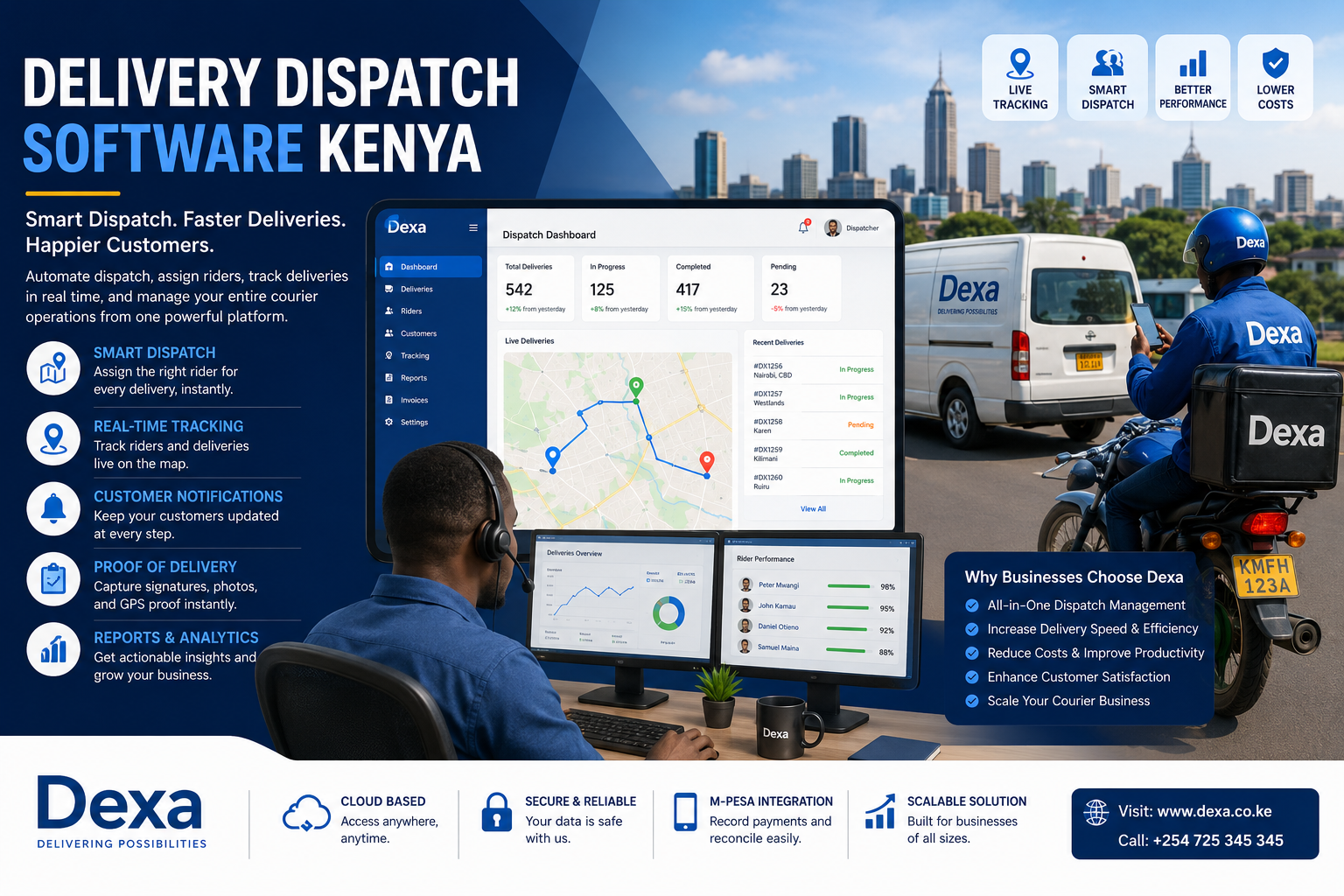
Delivery Management Software Kenya: The Smart Solution for Modern Businesses
Delivery services have become an important part of modern business operations in Kenya. From online stores and supermarkets to pharmacies, restaurants, wholesalers, and courier companies, businesses increasingly depend on fast and reliable delivery systems.
However, managing deliveries manually can become difficult as the number of customers and orders increases.
Businesses may struggle with:
- Delayed deliveries
- Poor communication
- Lost delivery records
- Inefficient dispatching
- High fuel costs
- Difficulty managing riders
- Customer complaints
- Failed deliveries
This is why more businesses are adopting Delivery Management Software Kenya.
A modern delivery management system helps businesses automate operations, organize orders, assign riders, optimize routes, track deliveries, and improve customer communication.
Dexa provides a centralized platform designed to help businesses manage their delivery operations more efficiently.
What Is Delivery Management Software?
Delivery management software is a digital system that helps businesses coordinate the entire delivery process.
From the moment an order is received until it reaches the customer, the platform helps businesses organize and monitor each stage.
A delivery management system can support:
- Order management
- Delivery scheduling
- Rider assignment
- Dispatch management
- Route optimization
- Real-time tracking
- Customer notifications
- Proof of delivery
- Payment management
- Reporting and analytics
By bringing these activities into one platform, businesses can reduce manual work and improve operational visibility.
Why Businesses Need Delivery Management Software in Kenya
Customer expectations have changed significantly.
Today, customers want:
- Fast delivery
- Accurate information
- Real-time updates
- Reliable service
- Convenient communication
Businesses that depend entirely on phone calls, spreadsheets, and handwritten records may struggle to meet these expectations.
A Delivery Management Software Kenya solution gives businesses better control over their operations and helps teams respond faster to customer needs.
Common Delivery Challenges Facing Businesses
Manual Dispatching
Manually assigning deliveries can take time and may result in mistakes.
A digital system can help dispatchers organize and assign deliveries more efficiently.
Delivery Delays
Traffic, poor route planning, incorrect addresses, and communication problems can cause delays.
Better planning helps businesses reduce these challenges.
High Operational Costs
Fuel, vehicle maintenance, and administrative work can significantly increase delivery expenses.
Automation and route optimization can help control unnecessary costs.
Limited Delivery Visibility
Without a centralized platform, managers may struggle to know the exact status of active deliveries.
Real-time tracking improves visibility.
Customer Communication Problems
Customers often want to know when their orders will arrive.
Automated notifications can provide important updates throughout the delivery process.
Key Features of Delivery Management Software Kenya
1. Order Management
Businesses can organize delivery requests and customer orders from one dashboard.
Managers can monitor:
- New orders
- Pending deliveries
- Assigned deliveries
- Completed deliveries
- Cancelled orders
This improves organization and reduces confusion.
2. Smart Dispatch Management
Dispatchers can assign deliveries based on:
- Rider availability
- Delivery location
- Delivery priority
- Current workload
- Vehicle availability
This helps businesses distribute work more efficiently.
3. Route Optimization
Efficient route planning is essential for reducing delivery times and transportation expenses.
Route optimization can help businesses:
- Reduce travel distance
- Save fuel
- Improve delivery speed
- Increase rider productivity
- Reduce unnecessary trips
4. Real-Time Delivery Tracking
Managers can monitor active deliveries and gain better visibility into operations.
Tracking information can help customer service teams respond more effectively when customers request updates.
5. Rider and Driver Management
Businesses can manage riders and drivers from a centralized system.
Important information may include:
- Assigned deliveries
- Availability
- Completed deliveries
- Performance records
- Work schedules
6. Automated Customer Notifications
Customers can receive notifications regarding important delivery updates.
Notifications may include:
- Order confirmation
- Delivery assignment
- Delivery progress
- Delivery completion
Better communication improves transparency and customer confidence.
7. Digital Proof of Delivery
Digital proof of delivery helps businesses confirm that an order has reached the intended customer.
Records may include:
- Customer signatures
- Delivery photographs
- GPS information
- Delivery notes
- Delivery timestamps
This improves accountability and record management.
8. Payment and Billing Management
Businesses can organize financial information related to deliveries.
The system can help manage:
- Delivery charges
- Customer payments
- Invoices
- Payment records
- Financial reports
9. Reports and Analytics
Business reports provide valuable information about delivery performance.
Managers can analyze:
- Total deliveries
- Completed deliveries
- Failed deliveries
- Delivery times
- Rider productivity
- Operational costs
- Customer activity
This information supports better decision-making.
Benefits of Using Delivery Management Software
Faster Delivery Operations
Automation reduces the time required to process and assign deliveries.
Lower Operational Costs
Better route planning and resource allocation can help businesses reduce unnecessary expenses.
Improved Customer Satisfaction
Customers benefit from faster deliveries and better communication.
Greater Productivity
Employees spend less time performing repetitive administrative tasks.
Better Accountability
Digital records make it easier to monitor delivery activities.
Easier Business Expansion
As delivery volumes increase, businesses can use technology to manage larger operations more efficiently.
How E-Commerce Businesses Benefit
Online businesses must manage customer orders and deliveries efficiently.
A typical delivery process may include:
- Customer places an order.
- The business processes the order.
- The delivery is scheduled.
- A rider or driver is assigned.
- The route is planned.
- The package is delivered.
- Proof of delivery is recorded.
Delivery management software helps coordinate these activities from one system.
Delivery Management for Courier Companies
Courier companies handle multiple parcels and customers every day.
A centralized delivery system can help manage:
- Parcel information
- Customer details
- Rider assignments
- Delivery routes
- Dispatching
- Delivery status
- Proof of delivery
- Payment records
This improves organization and helps courier businesses deliver a better customer experience.
How Delivery Management Software Reduces Failed Deliveries
Failed deliveries can increase costs and frustrate customers.
Businesses can reduce failed deliveries by maintaining accurate records and improving communication.
Common reasons for failed deliveries include:
- Incorrect addresses
- Customer unavailable
- Phone unreachable
- Payment issues
- Incorrect delivery information
- Customer-requested rescheduling
Recording these reasons allows businesses to identify recurring problems and improve their processes.
The Importance of Mobile Technology
Mobile technology allows riders and drivers to access important delivery information while working in the field.
A mobile delivery system can allow riders to:
- Receive assignments
- View customer information
- Access delivery locations
- Update delivery status
- Capture proof of delivery
- Communicate with dispatch teams
This improves coordination and reduces unnecessary delays.
How Automation Improves Delivery Operations
Automation reduces repetitive manual work.
Businesses can automate activities such as:
- Delivery assignment
- Customer notifications
- Status updates
- Invoice generation
- Reporting
- Delivery scheduling
This allows employees to focus more on customer service and business growth.
Important Metrics to Monitor
Businesses should regularly monitor key performance indicators such as:
- Delivery completion rate
- Average delivery time
- Failed delivery rate
- Rider productivity
- Fuel consumption
- Customer satisfaction
- Cost per delivery
- Revenue growth
Monitoring these metrics helps managers identify opportunities for improvement.
Industries That Benefit From Delivery Management Software
Delivery management technology can benefit:
- Courier companies
- E-commerce businesses
- Supermarkets
- Restaurants
- Pharmacies
- Retail businesses
- Wholesalers
- Manufacturers
- Medical suppliers
- Logistics companies
- Distribution businesses
How to Choose the Right Delivery Management Software
Before selecting a system, businesses should consider:
Ease of Use
Employees should be able to learn and use the platform easily.
Scalability
The system should support future business growth.
Mobile Accessibility
Riders and managers should be able to access relevant features remotely.
Security
Customer and business information should be protected.
Reporting Capabilities
The platform should provide useful reports and operational insights.
Integration
Businesses may need software that can work with other important business systems.
The Future of Delivery Management in Kenya
Technology will continue to transform delivery operations.
Future developments may include:
- Artificial intelligence
- Predictive analytics
- Smart route optimization
- Advanced GPS tracking
- Automated dispatching
- Mobile delivery applications
- Digital proof of delivery
- Cloud-based logistics platforms
Businesses that adopt modern technology can improve efficiency and prepare for future growth.
Why Choose Dexa?
Dexa helps businesses simplify delivery and logistics operations through centralized digital management.
The platform can help businesses improve:
- Delivery coordination
- Dispatch management
- Rider management
- Route planning
- Delivery tracking
- Customer communication
- Operational reporting
- Business visibility
By reducing manual processes, businesses can focus on improving customer service and expanding their operations.
Frequently Asked Questions
What is delivery management software?
Delivery management software is a digital platform that helps businesses organize, assign, track, and manage deliveries.
Can delivery software improve customer satisfaction?
Yes. Better communication, improved delivery visibility, and efficient operations can improve the customer experience.
Can small businesses use delivery management software?
Yes. Small and growing businesses can use scalable systems to organize their delivery operations.
Does delivery management software support tracking?
Modern delivery platforms can provide delivery status updates and tracking capabilities.
Can businesses manage multiple riders?
Yes. Businesses can organize rider assignments, workloads, availability, and delivery performance.
Contact Dexa
Website: Dexa.co.ke
Phone: +254725345345
Email: ezekiel@kayapro360.com
Manage deliveries smarter, improve efficiency, and grow your business with Dexa.