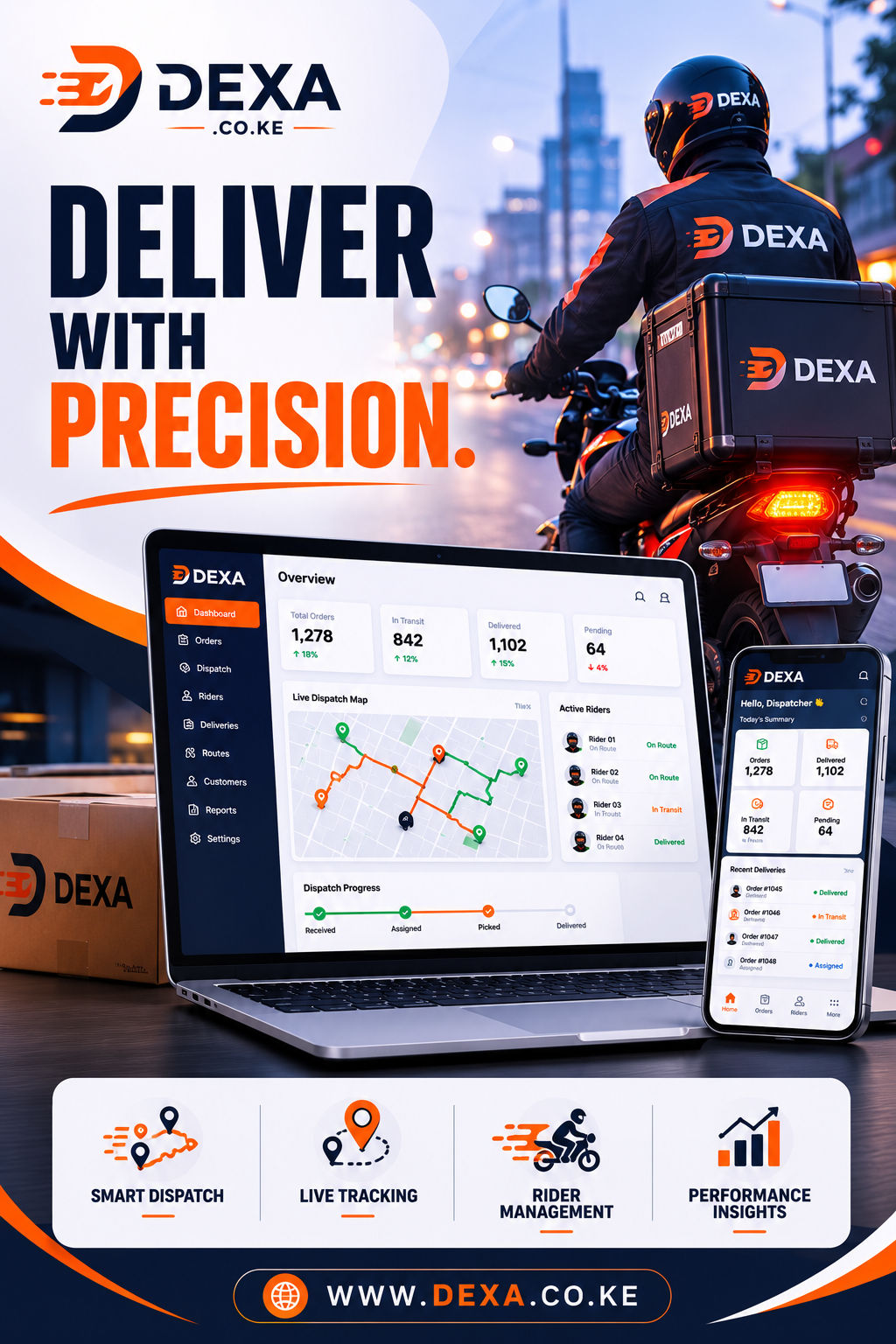
Transport management software Kenya is becoming an important solution for businesses that need better control over vehicles, drivers, trips, cargo, routes, fuel, maintenance, and transportation costs. As businesses expand their delivery networks and serve customers across different locations, managing transportation through spreadsheets, paper records, phone calls, and messaging applications can become increasingly difficult.
A modern transport management system brings these activities together in one digital platform. Businesses can use it to plan trips, assign drivers, manage vehicles, monitor transportation activities, optimize routes, track expenses, manage maintenance, and analyze operational performance.
This is particularly useful for logistics companies, distributors, manufacturers, courier businesses, retailers, e-commerce companies, construction businesses, field service providers, and organizations operating commercial fleets. Modern transportation platforms increasingly combine fleet management, shipment tracking, driver applications, analytics, and real-time visibility into one workflow.
Table of Contents
ToggleWhat Is Transport Management Software?
Transport management software Kenya is a digital system designed to help businesses plan, execute, monitor, and analyze transportation operations.
A transport management system, commonly called a TMS, can manage different activities involved in moving people, products, materials, or cargo from one location to another.
Depending on the platform, businesses can manage:
- Vehicle registration
- Driver information
- Trip planning
- Dispatching
- Route optimization
- GPS tracking
- Fuel expenses
- Maintenance
- Cargo
- Delivery schedules
- Proof of delivery
- Transportation expenses
- Customer information
- Performance reports
Instead of maintaining separate spreadsheets for vehicles, drivers, fuel, and trips, the organization can use one centralized system.
This creates a more connected transportation workflow.
For example, a logistics company may receive an order from a customer. The dispatcher can create a trip, assign an available vehicle and driver, plan the route, monitor the vehicle while it is traveling, record delivery confirmation, and later review the trip’s costs and performance.
This gives management better visibility from the beginning of a trip to its completion.
Why Transport Management Software Is Important in Kenya
Transportation is a critical part of many businesses operating in Kenya.
Products must move from manufacturers to warehouses, from warehouses to distributors, and from distributors to retailers and customers. E-commerce businesses also depend heavily on reliable last-mile delivery.
For companies operating larger fleets, transportation can involve multiple branches, vehicles, drivers, routes, customers, and delivery schedules.
Kenya’s logistics environment also includes major transportation corridors and port-linked supply chains, making visibility and coordination particularly important for companies involved in long-distance and regional transportation.
Without an organized transportation system, businesses may struggle with:
- Increasing fuel expenses
- Poor vehicle utilization
- Delayed deliveries
- Unplanned maintenance
- Driver communication problems
- Lost paperwork
- Inaccurate transportation records
- Limited visibility
- Difficult expense tracking
Transport management software Kenya helps businesses replace disconnected processes with a centralized digital workflow.
How Businesses Traditionally Manage Transportation
Many small and medium-sized businesses begin with relatively simple tools.
A dispatcher may maintain an Excel spreadsheet containing vehicle information. Drivers may receive instructions through phone calls or WhatsApp. Fuel receipts may be stored physically, while maintenance records remain in notebooks.
This approach can work when operations are small.
However, problems emerge as the fleet grows.
Imagine a company operating 50 vehicles across several regions.
The operations team may need to know:
- Which vehicles are currently available?
- Where is each vehicle?
- Which driver is assigned to each vehicle?
- Which vehicles are on long-distance trips?
- How much fuel has each vehicle consumed?
- Which vehicles require service?
- Which trips have been completed?
- Which deliveries are delayed?
- Which routes are most profitable?
Answering these questions manually can take considerable time.
A centralized transport management platform provides this information through dashboards and reports.
Problems With Manual Transport Management
Manual Trip Planning
Trip planning can become complicated when a business handles multiple vehicles and destinations.
A dispatcher may need to consider vehicle capacity, driver availability, customer location, delivery deadlines, and route distance.
When this is done manually, it is easy to overlook important information.
Transport software can organize these details and help dispatchers make better decisions.
Poor Route Planning
Inefficient routes increase travel time and operating costs.
A vehicle may travel unnecessary kilometers because destinations were arranged poorly or because the driver was not provided with an efficient route.
Route optimization tools can analyze multiple destinations and recommend efficient sequences.
Some modern TMS platforms use algorithms that consider multiple constraints when generating routes.
Limited Vehicle Visibility
Without real-time tracking, managers may not know where vehicles are without contacting drivers.
This creates problems when customers ask for updates.
GPS-enabled transport systems allow managers to monitor active vehicles from a centralized dashboard.
Difficult Fuel Management
Fuel expenses can represent a significant portion of fleet operating costs.
When fuel purchases are recorded manually, it can be difficult to compare fuel consumption between vehicles and trips.
Digital fuel management can connect fuel records with vehicles, trips, mileage, and operating expenses.
This makes it easier to identify unusual fuel consumption.
Poor Maintenance Planning
Vehicle breakdowns can disrupt transportation schedules and increase costs.
Without organized maintenance records, businesses may forget service dates or discover problems only after a vehicle breaks down.
Transport management systems can provide service schedules, maintenance reminders, repair records, and vehicle status information. Modern Kenyan fleet platforms commonly combine maintenance tracking with vehicle and expense management.
How Transport Management Software Works
A typical transport management workflow can be divided into several stages.
1. Trip or Order Creation
The transportation requirement is entered into the system.
Information may include:
- Customer
- Pickup location
- Destination
- Cargo
- Quantity
- Vehicle requirements
- Delivery date
- Priority
- Special instructions
The system then creates a digital transportation record.
2. Vehicle Selection
The dispatcher can select a suitable vehicle.
The system may consider:
- Vehicle availability
- Vehicle capacity
- Current location
- Vehicle type
- Maintenance status
This helps prevent unsuitable vehicle assignments.
3. Driver Assignment
The dispatcher assigns a driver to the trip.
Driver information can include availability, current assignments, trip history, and performance information.
4. Route Planning
The system creates or recommends a route.
For complex transportation operations, route planning can consider several destinations and operational constraints.
5. Dispatch
Once the trip is ready, the driver receives the assignment.
A driver mobile application can provide:
- Trip information
- Customer details
- Route information
- Delivery instructions
- Navigation
- Communication tools
6. Trip Monitoring
GPS tracking allows management to monitor the vehicle while it is on the road.
Managers can see whether the vehicle is:
- Moving
- Stopped
- Delayed
- Off route
- Approaching the destination
7. Delivery Confirmation
Once the trip is completed, the driver records the outcome.
Proof of delivery can include:
- Signature
- Photo
- Timestamp
- GPS coordinates
- Barcode or QR scan
8. Reporting
The system stores the trip information for future analysis.
Management can review:
- Distance
- Fuel consumption
- Trip duration
- Delivery performance
- Driver performance
- Transportation costs
Key Features of Transport Management Software
When choosing transport management software Kenya, businesses should focus on features that directly improve transportation operations.
Fleet Management
Fleet management provides a central database for all vehicles.
Businesses can record:
- Registration numbers
- Vehicle types
- Capacity
- Mileage
- Insurance
- Service history
- Vehicle status
This creates a reliable source of fleet information.
Driver Management
Driver management helps businesses organize information about their drivers.
Managers can monitor:
- Driver profiles
- Assigned vehicles
- Current trips
- Completed trips
- Performance
- Availability
This can improve scheduling and accountability.
GPS Tracking
Real-time GPS tracking provides visibility into vehicle movement.
Managers can monitor multiple vehicles from one dashboard instead of contacting drivers individually.
Some systems also support historical route playback, geofencing, and alerts for route deviations.
Route Optimization
Route optimization is particularly important for businesses handling multiple destinations.
The system can help determine efficient routes based on:
- Distance
- Delivery locations
- Time windows
- Vehicle capacity
- Traffic
- Delivery priority
Reducing unnecessary travel can help businesses control fuel costs and improve productivity.
Dispatch Management
Dispatch management allows operations teams to coordinate trips from one location.
A dispatcher can view:
- Pending trips
- Assigned trips
- Active trips
- Delayed trips
- Completed trips
- Available vehicles
- Available drivers
This makes it easier to respond to operational changes.
Fuel Management
Fuel management helps businesses understand how much they spend on fuel.
Managers can compare fuel performance by:
- Vehicle
- Driver
- Route
- Trip
- Period
This can help identify vehicles that are consuming more fuel than expected.
Maintenance Management
Preventive maintenance can help keep vehicles available for operations.
The system can record:
- Service schedules
- Repairs
- Parts
- Maintenance costs
- Vehicle downtime
- Upcoming service requirements
Automated reminders can reduce the possibility of missed maintenance activities.
Expense Management
Transportation involves more than fuel.
Other costs may include:
- Tolls
- Repairs
- Parking
- Driver expenses
- Insurance
- Permits
- Loading and unloading
Transport management software can centralize these costs and associate them with vehicles or trips.
Benefits of Transport Management Software
Improved Fleet Visibility
One of the biggest benefits is the ability to see what is happening across the fleet.
Managers can monitor vehicles, trips, drivers, and transportation activities from a centralized dashboard.
Reduced Transportation Costs
Better route planning, fuel monitoring, vehicle utilization, and expense tracking can help businesses identify unnecessary costs.
Better Vehicle Utilization
A business may have some vehicles operating continuously while others remain idle.
Centralized fleet information helps managers distribute workloads more effectively.
Faster Dispatching
Digital dispatching reduces the need for repeated phone calls and manual instructions.
Drivers can receive assignments directly through the system.
Better Customer Service
Customers can receive more accurate information about their deliveries.
Real-time tracking and automated status updates can reduce uncertainty and improve communication.
Better Decision-Making
Managers can use historical data to understand transportation performance.
Instead of asking why fuel costs increased, they can examine fuel consumption by vehicle, route, and trip.
Who Needs Transport Management Software?
Logistics Companies
Logistics companies can manage vehicles, drivers, shipments, routes, customers, and delivery documentation.
Courier Companies
Courier businesses can coordinate parcel pickups, dispatches, routes, tracking, and proof of delivery.
Wholesale Distributors
Distributors can manage regular deliveries to retailers, supermarkets, restaurants, and other customers.
E-Commerce Businesses
Online retailers can connect customer orders with transportation planning and last-mile delivery.
Manufacturing Companies
Manufacturers can manage the movement of raw materials and finished products.
Construction Companies
Construction firms can track vehicles transporting equipment and materials between project locations.
Field Service Businesses
Companies that send technicians to customers can use transportation management tools to plan technician schedules and monitor field operations.
Passenger Transport Operators
Transport systems can also support organizations managing passenger vehicles, depending on the software’s functionality. Some Kenyan TMS platforms support fleet registration and transportation workflows beyond cargo delivery.
Transport Management Software and Route Optimization
Route optimization is an important part of modern transportation management.
Consider a distributor with 20 customer deliveries scheduled for one vehicle.
A dispatcher could manually arrange the destinations, but the resulting route may include unnecessary backtracking.
A route optimization system can analyze the locations and determine a more efficient sequence.
This can help reduce:
- Travel distance
- Fuel consumption
- Driver travel time
- Vehicle wear
- Delivery delays
For companies making hundreds or thousands of trips, even small improvements in route efficiency can become significant over time.
Transport Management Software and Real-Time Tracking
GPS tracking turns transportation from a largely reactive operation into a more visible one.
Without tracking, a manager may only know that a vehicle was supposed to arrive at a particular location.
With tracking, the manager can see the vehicle’s actual position and progress.
This can help answer questions such as:
- Has the driver left?
- Where is the vehicle?
- Has the driver stopped?
- Is the vehicle following the planned route?
- Is the delivery likely to be late?
- Has the vehicle reached the destination?
Real-time visibility is particularly useful for businesses that need to provide customers with accurate delivery information.
Transport Management Software and Driver Productivity
Drivers spend much of their working day on the road.
Poor planning can cause drivers to waste time waiting for instructions, traveling inefficient routes, or returning to locations unnecessarily.
A centralized transport system can provide drivers with clearer assignments.
A mobile driver application can allow them to:
- Receive trips
- View routes
- Update trip status
- Capture proof of delivery
- Report problems
- Communicate with dispatchers
This reduces administrative communication and allows drivers to focus on transportation activities.
Transport Management Software and Fuel Efficiency
Fuel management becomes more effective when combined with trip and vehicle information.
For example, management can compare the amount of fuel consumed by similar vehicles operating on similar routes.
If one vehicle consistently performs below expectations, the company can investigate possible causes.
Potential issues may include:
- Poor vehicle maintenance
- Excessive idling
- Aggressive driving
- Unauthorized fuel usage
- Inefficient routes
- Heavy loads
Digital reporting makes these patterns easier to identify.
Getting Ready for Transport Digitization
Before implementing transport management software Kenya, businesses should document their current transportation workflow.
Start by identifying:
- How trips are created
- How vehicles are assigned
- How drivers are scheduled
- How routes are planned
- How fuel is recorded
- How maintenance is tracked
- How expenses are recorded
- How deliveries are confirmed
- How management reports are prepared
Once these processes are documented, the business can determine which activities should be automated first.
The best implementation is not necessarily the one with the most features. It is the one that solves the organization’s biggest operational problems while remaining practical for dispatchers, drivers, managers, and other users.
Part 2 will cover advanced TMS capabilities, AI-powered transport management, fleet analytics, cargo management, driver applications, fuel and maintenance control, integrations, customer portals, logistics operations, and how businesses can improve transportation efficiency using digital systems.
Transport Management Software Kenya: Advanced Features, AI, Fleet Tracking, Logistics, and Business Integration.
As transportation operations become more complex, businesses need more than basic vehicle records and trip schedules. They need a system that can connect dispatching, fleet management, route planning, drivers, cargo, fuel, maintenance, customers, and financial information.
This is where modern trasnport management software Kenya becomes especially valuable. A comprehensive transport management system can provide businesses with a centralized view of transportation activities while automating many of the repetitive tasks that traditionally require manual coordination.
Part 1 explored the fundamentals of transportation management, the challenges of manual processes, and the core features of a transport management system. Part 2 focuses on the advanced capabilities that can help businesses improve fleet efficiency, reduce transportation costs, increase visibility, and provide better customer service.
AI-Powered Transport Management
Artificial Intelligence is increasingly influencing transportation and logistics technology.
Traditional systems primarily record information and allow users to perform tasks manually. AI-powered systems can analyze large amounts of operational information and provide recommendations.
For example, AI can analyze:
- Vehicle locations
- Driver availability
- Historical routes
- Traffic conditions
- Delivery schedules
- Vehicle capacity
- Customer locations
- Previous delivery performance
The system can then help determine the most efficient way to assign vehicles and plan trips.
For businesses managing a large fleet, this can reduce the amount of time dispatchers spend making routine decisions.
Intelligent Vehicle Assignment
Vehicle assignment can become complicated when a company operates multiple types of vehicles.
A business may have:
- Motorcycles
- Small vans
- Pickup trucks
- Medium trucks
- Heavy trucks
Each vehicle has different capabilities and costs.
Advanced transport management software Kenya can help match transportation requirements with appropriate vehicles.
For example, a small order within Nairobi may not require a large truck. Similarly, transporting a large quantity of goods may require a vehicle with greater capacity.
Intelligent assignment reduces the possibility of sending unsuitable vehicles to particular jobs.
Automated Dispatching
Dispatchers are responsible for coordinating vehicles, drivers, customers, and trips.
When dispatching is performed manually, employees may spend significant amounts of time calling drivers and updating spreadsheets.
Automated dispatching simplifies this process.
When a new trip is created, the system can identify suitable drivers and vehicles based on predefined rules.
It can consider:
- Vehicle availability
- Driver availability
- Current location
- Vehicle capacity
- Trip priority
- Existing workload
The dispatcher can then approve the recommended assignment or make adjustments.
Dynamic Route Optimization
Transportation conditions can change during the day.
A route that was efficient in the morning may become less efficient later because of:
- Traffic congestion
- Road closures
- Accidents
- Weather
- Construction
- Unexpected customer requests
Modern routing systems can respond to changing conditions.
If a delay occurs, the software can help identify alternative routes or adjust the sequence of destinations.
This creates a more flexible transportation operation.
Multi-Stop Transportation Planning
Businesses frequently have vehicles serving multiple customers during one trip.
Planning these stops manually can become complicated.
Suppose a distributor needs to deliver goods to 15 customers.
The dispatcher needs to determine:
- Which customers should be served first?
- Which route minimizes unnecessary travel?
- Can all deliveries fit within the available time?
- Does the vehicle have enough capacity?
- Are there customers with specific delivery windows?
Transport management software can process these variables and generate a more efficient transportation plan.
Delivery Time Windows
Some customers require deliveries at specific times.
For example:
- 8:00 AM–10:00 AM
- 10:00 AM–12:00 PM
- 1:00 PM–3:00 PM
- 4:00 PM–6:00 PM
Ignoring these requirements can lead to failed or delayed deliveries.
A modern transport management system can include time windows when planning routes.
This helps businesses create schedules that are geographically efficient while still respecting customer requirements.
Real-Time Fleet Tracking
Real-time GPS tracking provides transportation managers with continuous visibility.
A fleet dashboard can show the location of active vehicles and their current status.
Managers may be able to see whether a vehicle is:
- Moving
- Parked
- Delayed
- Outside its planned route
- Approaching a destination
- At a customer location
This allows businesses to respond quickly when problems arise.
Geofencing
Geofencing creates virtual boundaries around physical locations.
For example, a company can create a geofence around:
- A warehouse
- Customer premises
- A depot
- A construction site
- A fuel station
When a vehicle enters or leaves the area, the system can trigger an event.
Geofencing can be used to automate:
- Arrival notifications
- Departure notifications
- Delivery status
- Site attendance
- Vehicle movement alerts
This reduces the need for drivers to manually report every movement.
Route Deviation Alerts
A vehicle may occasionally move away from its planned route.
There may be legitimate reasons, such as road closures or customer instructions.
However, unexplained route deviations may require investigation.
A transport management system can notify managers when a vehicle moves outside an approved route.
This provides greater control over fleet operations.
Driver Management and Scheduling
Drivers are central to transportation operations.
Businesses need to know which drivers are available, which drivers are currently working, and which drivers have been assigned to particular trips.
A digital driver management system can maintain detailed profiles.
Information may include:
- Driver name
- Contact details
- Assigned vehicle
- Current trip
- Completed trips
- Working schedule
- Performance information
This simplifies driver scheduling.
Driver Mobile Applications
A mobile application can connect drivers directly to the transportation management system.
Instead of relying on paper instructions, drivers can receive trip information through their phones.
The application may allow drivers to:
- Accept assignments
- View destinations
- Access navigation
- Update trip status
- Contact customers
- Capture signatures
- Upload photos
- Report incidents
- Complete delivery documentation
This reduces communication gaps between drivers and dispatchers.
Electronic Proof of Delivery
Proof of delivery is important for logistics, distribution, and courier companies.
Traditional paper documents can be lost or damaged.
Electronic proof of delivery creates a digital record of completed transportation activities.
Depending on the platform, a driver can capture:
- Customer signature
- Photograph
- GPS location
- Timestamp
- Barcode
- QR code
The information can then be stored in the system and accessed later.
This can help businesses resolve delivery disputes more efficiently.
Barcode and QR Code Scanning
Barcode and QR code scanning can improve cargo visibility.
A driver or warehouse employee can scan an item when it is:
- Received
- Loaded
- Dispatched
- Delivered
- Returned
This creates a digital chain of custody.
For businesses handling large numbers of packages, scanning can reduce manual data entry and improve accuracy.
Cargo and Shipment Management
Transportation is not only about vehicles.
Businesses also need to know what is being transported.
Cargo management features can help businesses record:
- Shipment numbers
- Package quantities
- Product descriptions
- Weight
- Volume
- Customer
- Pickup location
- Destination
- Delivery status
This connects cargo information with transportation information.
Load Planning
Vehicle capacity should be considered before a trip begins.
Overloading a vehicle can create safety, legal, and operational problems.
Underutilizing a vehicle can also increase transportation costs.
Transport management software can help businesses organize loads according to vehicle capacity and delivery requirements.
This can improve fleet utilization.
Fuel Management and Analytics
Fuel management is one of the most important functions for a commercial fleet.
A business needs to understand not only how much fuel is being purchased but also how efficiently that fuel is being used.
A transportation platform can connect fuel records with:
- Vehicle
- Driver
- Mileage
- Trip
- Route
- Date
- Fuel quantity
- Fuel cost
Managers can then identify unusual fuel consumption.
Monitoring Fuel Efficiency
Fuel efficiency can be evaluated by comparing fuel consumption with distance traveled.
For example, if two similar vehicles travel similar distances but one consistently uses significantly more fuel, the company can investigate.
Possible causes may include:
- Poor maintenance
- Excessive idling
- Aggressive driving
- Heavy loads
- Tire problems
- Inefficient routes
The data provides a starting point for investigation.
Vehicle Maintenance Management
Vehicle availability directly affects transportation capacity.
A vehicle that breaks down unexpectedly can cause:
- Missed deliveries
- Customer complaints
- Emergency repair costs
- Driver downtime
- Replacement vehicle expenses
Transport management systems can help businesses establish preventive maintenance schedules.
Managers can monitor:
- Service intervals
- Mileage
- Repair history
- Maintenance costs
- Vehicle downtime
- Upcoming service requirements
This helps reduce the risk of unexpected breakdowns.
Maintenance Alerts
A system can notify managers when vehicles are approaching scheduled maintenance.
For example, the system may alert management when a vehicle reaches a particular mileage threshold.
This makes preventive maintenance easier to manage.
Transportation Expense Management
Fuel is only one transportation expense.
Other costs may include:
- Tolls
- Parking
- Repairs
- Driver allowances
- Insurance
- Permits
- Loading costs
- Unloading costs
- Emergency expenses
A centralized expense system can associate these costs with individual trips or vehicles.
This gives management a clearer understanding of the true cost of transportation.
Cost Per Trip
A business should understand how much it costs to complete a trip.
Transportation software can combine several expenses to provide a more accurate picture.
For example:
Fuel + Driver Costs + Maintenance + Tolls + Other Expenses = Trip Cost
Businesses can then compare trip costs against revenue or customer charges.
This can help management identify profitable and unprofitable transportation activities.
Fleet Performance Analytics
Data becomes increasingly valuable as a business completes more trips.
A transport management platform can analyze historical information to identify patterns.
Managers can examine:
- Total kilometers
- Number of trips
- Fuel consumption
- Cost per trip
- Delivery performance
- Vehicle utilization
- Driver productivity
These reports can support better planning.
Driver Performance Analytics
Driver performance can also be measured using operational data.
Relevant indicators may include:
- Trips completed
- Deliveries completed
- Average trip duration
- Route adherence
- Idle time
- Failed deliveries
- Customer feedback
The purpose of driver analytics should be to improve operations and identify training opportunities.
Customer Communication
Customers increasingly expect visibility after placing an order.
A modern transportation system can automate customer notifications.
For example:
Order Confirmed → Scheduled → Dispatched → In Transit → Approaching → Delivered
These updates can reduce customer uncertainty.
They can also reduce the number of calls received by customer service teams.
Customer Tracking Portals
Some transportation systems provide customer-facing tracking pages.
Customers can use a tracking link to see the status of their shipment.
Depending on the platform, they may also see:
- Estimated arrival
- Current delivery status
- Driver progress
- Delivery history
This can create a more transparent customer experience.
Integration With E-Commerce Platforms
E-commerce businesses receive orders through their websites or mobile applications.
Manually transferring those orders into a transportation system creates unnecessary work.
Integration allows order information to move automatically.
A typical process could be:
Customer Order → E-Commerce Platform → Transport System → Vehicle Assignment → Route Planning → Delivery → Proof of Delivery
This reduces duplicate data entry.
Integration With ERP Systems
Large businesses may use ERP systems to manage finance, inventory, purchasing, and other operations.
Connecting the transportation platform with the ERP can create a more complete business workflow.
For example, when inventory is ready for dispatch, transportation information can be automatically generated.
Integration With Inventory and Warehouse Systems
Transportation and warehousing are closely connected.
A vehicle should not be dispatched before the required cargo is ready.
Integration can allow warehouse and transport teams to share information.
This can help prevent:
- Missing cargo
- Incorrect shipments
- Delayed loading
- Unnecessary driver waiting time
API Integration
Businesses with specialized software may need custom integrations.
An API can allow different systems to exchange information.
For example, a company could connect its:
- E-commerce system
- CRM
- ERP
- Inventory platform
- Payment system
- Transport management software
This creates a connected technology environment.
Cloud-Based Transport Management
Cloud-based transport management software Kenya allows authorized users to access transportation information through internet-connected devices.
Managers can monitor operations from:
- Offices
- Warehouses
- Branches
- Remote locations
Cloud technology can also make it easier to scale the platform as the business grows.
A company can add additional vehicles, users, branches, and delivery regions without building a separate software infrastructure for each location.
Role-Based Access
Not every employee needs access to every transportation record.
A driver may only need to see assigned trips.
A dispatcher may need to manage vehicles and assignments.
A finance manager may need access to transportation expenses.
Senior management may need access to overall analytics.
Role-based access allows organizations to control what different users can view and modify.
Transportation Data Security
Transportation platforms may contain sensitive information, including:
- Customer addresses
- Phone numbers
- Driver information
- Vehicle locations
- Shipment details
- Business expenses
Businesses should therefore evaluate security features when selecting transport management software Kenya.
Important considerations include:
- Secure authentication
- User permissions
- Data backups
- Access controls
- Activity logs
- Secure data transmission
Transport Management for Logistics Companies
Logistics companies often coordinate large numbers of trips and customers.
They need visibility across the transportation process.
A logistics company can use transport software to manage:
- Shipment orders
- Drivers
- Vehicles
- Routes
- Cargo
- Customer deliveries
- Trip costs
- Proof of delivery
Centralizing these activities can make logistics operations easier to coordinate.
Transport Management for Distributors
Distributors frequently make repeated deliveries to the same geographic areas.
They may serve:
- Retail shops
- Supermarkets
- Restaurants
- Wholesalers
- Institutions
Transport management technology can help organize delivery territories and recurring schedules.
It can also provide historical data about customer delivery patterns.
Transport Management for E-Commerce
The growth of online shopping has increased the importance of efficient last-mile transportation.
Customers expect:
- Fast delivery
- Accurate delivery estimates
- Tracking
- Communication
- Reliable service
An e-commerce business can use transport management software Kenya to connect online orders with dispatch and delivery operations.
Transport Management for Field Service Businesses
Transportation management is also useful for businesses that send employees to customer locations.
For example:
- Internet installation companies
- Security companies
- Electrical contractors
- Maintenance companies
- Equipment repair businesses
The system can assign technicians based on:
- Location
- Availability
- Appointment time
- Required skills
- Current workload
This can reduce unnecessary travel and improve appointment scheduling.
Advanced Reporting and Dashboards
Management needs more than raw transportation data.
They need information presented in a way that supports decisions.
Dashboards can display:
- Active vehicles
- Completed trips
- Pending trips
- Delayed trips
- Fuel costs
- Maintenance costs
- Driver performance
- Delivery performance
This allows management to identify issues quickly.
Using Transportation Data to Improve Operations
One of the biggest advantages of digital transportation management is the ability to learn from historical data.
For example, a company may discover that a particular route consistently experiences delays between certain hours.
Management can respond by:
- Adjusting departure times
- Changing routes
- Assigning additional vehicles
- Modifying delivery windows
Similarly, if a particular vehicle has consistently high operating costs, management can investigate whether maintenance or replacement is necessary.
Choosing the Right Transport Management Software
Businesses should avoid choosing software based solely on the number of features advertised.
The right platform should match the company’s actual transportation requirements.
Consider:
Fleet Size
How many vehicles are currently operating?
Will the fleet grow in the future?
Delivery Volume
How many trips or deliveries are completed every day?
Route Complexity
Does the business make single-destination trips or multi-stop deliveries?
Driver Requirements
Do drivers need a mobile application?
Tracking Requirements
Does management need real-time GPS tracking?
Integration Requirements
Does the business need integration with e-commerce, ERP, inventory, or accounting systems?
Reporting
What information does management need to make decisions?
Scalability
Can the software support more vehicles, users, branches, and customers as the business grows?
Preparing Employees for Digital Transport Management
Technology implementation requires employee involvement.
Dispatchers, drivers, managers, warehouse teams, and finance staff may interact with the system differently.
Businesses should provide role-specific training.
Drivers should learn how to use the mobile application.
Dispatchers should learn how to create and assign trips.
Managers should understand reports and analytics.
Finance teams should understand transportation expenses.
This ensures that the software becomes part of the normal workflow rather than an additional administrative burden.
The Future of Transport Management in Kenya
The future of transportation management will increasingly involve Artificial Intelligence, predictive analytics, connected vehicles, electric vehicles, automation, and real-time decision-making.
Instead of simply recording what happened, future systems will increasingly predict what is likely to happen.
A platform may identify a potential delivery delay before it occurs and recommend an alternative route.
It may predict when a vehicle requires maintenance based on performance data.
It may analyze historical transportation patterns to predict demand.
It may recommend how many vehicles are required for a particular period.
This will make transportation management more proactive.
Why Businesses Should Start Digitizing Transportation Operations
Businesses do not need to wait until they operate hundreds of vehicles before adopting transportation technology.
Starting early can help establish organized processes before operational complexity becomes difficult to manage.
A small fleet can begin with basic fleet tracking, trip management, and driver scheduling.
As the business grows, additional capabilities can be introduced, such as:
- Route optimization
- Automated dispatching
- Fuel analytics
- Maintenance management
- Customer tracking
- Advanced reporting
- AI-powered decision support
This creates a scalable transportation management strategy.
Transport Management Software Kenya: Implementation, ROI, Best Practices, KPIs, Challenges, and Future Trends — Part 3
Transport management software Kenya can transform how businesses plan and execute transportation, but the technology delivers the greatest value when it is implemented with clear objectives and supported by effective operational processes. Purchasing a software platform is only the beginning. Businesses must ensure that vehicles, drivers, dispatchers, managers, warehouses, customers, and other teams understand how the system fits into their daily activities.
A well-implemented transport management system can help businesses reduce unnecessary transportation costs, improve fleet visibility, optimize routes, increase vehicle utilization, strengthen driver accountability, and provide better customer service. It can also give management access to operational information that can be used to make more informed decisions.
This final part explains how businesses can implement a transport management system successfully, measure its performance, calculate potential returns, overcome common challenges, and prepare for the future of digital transportation.
How to Implement Transport Management Software
Implementing transport management software Kenya should be approached as a business transformation project rather than simply installing an application.
The first step is understanding the current transportation workflow.
Businesses should document how they currently:
- Receive transportation requests
- Schedule trips
- Assign vehicles
- Assign drivers
- Plan routes
- Track vehicles
- Record fuel
- Manage maintenance
- Confirm deliveries
- Record expenses
- Prepare reports
This creates a clear picture of the processes that need improvement.
Identify Transportation Problems
Before selecting or implementing software, management should identify the biggest problems affecting transportation operations.
For example, a company may experience:
- High fuel consumption
- Frequent vehicle breakdowns
- Delayed deliveries
- Poor driver communication
- Unused vehicles
- Overloaded vehicles
- Manual paperwork
- Difficult expense tracking
- Lack of real-time vehicle visibility
The software should directly address these challenges.
There is little value in implementing a sophisticated system if it does not solve the company’s most important transportation problems.
Set Measurable Objectives
Businesses should establish measurable goals.
For example, an organization could aim to:
- Reduce unnecessary mileage
- Improve on-time deliveries
- Reduce fuel expenses
- Increase vehicle utilization
- Reduce vehicle downtime
- Improve driver productivity
- Reduce administrative work
These objectives provide a benchmark for measuring the software’s effectiveness.
Prepare Transportation Data
Data is one of the most important components of a transportation management system.
Businesses should organize their existing information before migrating it into the platform.
This may include:
- Vehicle details
- Driver details
- Customer information
- Pickup locations
- Delivery locations
- Vehicle capacity
- Maintenance records
- Fuel records
- Route information
Incorrect information can affect the quality of transportation decisions.
For example, an incorrect customer address can result in poor route planning.
Clean Customer Locations
Customer addresses should be reviewed carefully.
Where possible, businesses should maintain:
- Physical address
- GPS coordinates
- Building name
- Floor or unit number
- Contact person
- Telephone number
- Delivery instructions
Accurate location data makes route planning and delivery execution more reliable.
Configure Vehicles
Every vehicle should be properly registered in the system.
Important information can include:
- Registration number
- Vehicle type
- Capacity
- Fuel type
- Current mileage
- Service interval
- Insurance information
- Operating status
This allows dispatchers to select appropriate vehicles for different transportation requirements.
Configure Drivers
Driver profiles should also be created.
Businesses can record:
- Name
- Contact information
- Assigned vehicle
- Work schedule
- Driver status
- Trip history
Where applicable, organizations can also manage relevant documentation and compliance information.
Train Dispatchers
Dispatchers are among the most important users of a transportation management platform.
They need to understand how to:
- Create trips
- Assign vehicles
- Assign drivers
- Plan routes
- Monitor active trips
- Handle delays
- Reassign transportation jobs
- Generate reports
Training should include realistic scenarios.
For example, dispatchers should know what to do when a driver reports a vehicle breakdown during an active delivery.
Train Drivers
Drivers also need practical training.
They should understand how to use the driver application to:
- Receive assignments
- View routes
- Start trips
- Update status
- Navigate
- Contact dispatch
- Capture proof of delivery
- Report incidents
- Complete trips
Driver adoption is essential because transportation data becomes unreliable if drivers do not consistently update their activities.
Start With a Pilot
Businesses do not necessarily need to deploy the software across the entire organization immediately.
A pilot can be conducted using:
- One branch
- A small number of vehicles
- One delivery region
- A selected group of drivers
Management can use the pilot to identify technical and operational problems.
After the pilot is successful, the system can be expanded.
Monitor the Implementation
Implementation should be monitored continuously.
Management should ask:
- Are drivers using the system?
- Are dispatchers creating trips correctly?
- Is vehicle information accurate?
- Are routes being followed?
- Are delivery updates being recorded?
- Are reports accurate?
Regular reviews help identify problems before they become major operational issues.
Measuring the ROI of Transport Management Software
Businesses investing in transport management software Kenya should evaluate whether the system is producing measurable financial and operational benefits.
Return on investment can be measured using several categories.
Fuel Savings
Fuel can be a major fleet expense.
If better routing and monitoring reduce unnecessary mileage, the business may achieve fuel savings.
Management can compare fuel consumption before and after implementation.
For example:
Fuel consumption before implementation vs. fuel consumption after implementation
The difference can help estimate the financial impact.
Reduced Vehicle Downtime
Vehicle downtime can affect delivery capacity.
If preventive maintenance reduces unexpected breakdowns, businesses may complete more trips.
Management can monitor:
- Number of breakdowns
- Maintenance downtime
- Emergency repairs
- Vehicle availability
Improved vehicle availability can contribute to higher productivity.
Increased Delivery Capacity
Better route planning and dispatching may allow vehicles to complete more deliveries during the same working period.
This can increase operational capacity without immediately requiring additional vehicles.
Reduced Administrative Costs
Manual transportation management requires employees to spend time:
- Updating spreadsheets
- Calling drivers
- Preparing schedules
- Searching for records
- Preparing reports
Automation can reduce this workload.
The time saved can be redirected toward higher-value activities.
Reduced Failed Deliveries
Failed deliveries can create additional costs.
A second delivery attempt may require:
- More fuel
- Additional driver time
- Additional vehicle use
- Customer communication
Better scheduling, tracking, and customer communication can help reduce unsuccessful delivery attempts.
Key Transportation KPIs
A successful transportation management strategy should use measurable KPIs.
On-Time Delivery Rate
This measures the percentage of deliveries completed within the agreed delivery period.
A high on-time delivery rate generally indicates strong transportation performance.
Businesses should monitor this metric by:
- Driver
- Route
- Region
- Vehicle
- Customer
This can reveal where problems are occurring.
Cost Per Trip
Cost per trip helps management understand the financial efficiency of transportation.
It can include:
- Fuel
- Driver costs
- Maintenance
- Tolls
- Parking
- Other expenses
Tracking this metric over time can reveal whether transportation operations are becoming more or less efficient.
Fuel Consumption
Fuel consumption should be monitored by vehicle and, where useful, by route.
Unexpected changes can indicate:
- Vehicle problems
- Inefficient routing
- Excessive idling
- Driving behavior
- Fuel management problems
Vehicle Utilization
Vehicle utilization measures how effectively the available fleet is being used.
If several vehicles are frequently idle while others are overloaded, the company may need to improve fleet allocation.
Driver Productivity
Driver productivity can be measured using indicators such as:
- Trips completed
- Deliveries completed
- Working hours
- Idle time
- Route adherence
- Failed deliveries
The goal should be to improve operational efficiency rather than simply increase pressure on drivers.
Vehicle Downtime
Management should track how long vehicles remain unavailable because of:
- Maintenance
- Repairs
- Accidents
- Mechanical failures
Reducing unnecessary downtime can increase fleet availability.
Common Challenges When Implementing Transport Management Software
Even a good technology implementation can experience challenges.
Resistance to Change
Employees who are accustomed to manual processes may initially resist new systems.
A driver may prefer phone calls.
A dispatcher may prefer a spreadsheet.
A manager may be comfortable with paper reports.
Management should explain the reasons for the change and show employees how the software can simplify their work.
Poor Data Quality
Incorrect information can undermine a transportation platform.
Businesses should regularly review:
- Customer addresses
- Vehicle records
- Driver records
- Maintenance data
- Fuel records
Data should be treated as an ongoing management responsibility.
Poor Driver Adoption
Drivers need to understand that updating the system is part of the transportation process.
If drivers fail to update trip statuses, managers may see outdated information.
Businesses should establish clear procedures for digital trip updates.
Connectivity Challenges
Some vehicles may travel through areas where internet connectivity is inconsistent.
Businesses should consider systems that support appropriate offline functionality or data synchronization.
This allows drivers to continue recording information even when connectivity temporarily becomes unavailable.
Integration Problems
Businesses may already have several systems.
For example:
- Accounting software
- ERP
- Inventory management
- E-commerce
- CRM
- Warehouse management
The transportation system may need to integrate with these platforms.
Businesses should evaluate integration capabilities before implementation.
Best Practices for Transport Management
Technology should be combined with good operational practices.
Review Routes Regularly
Even optimized routes should be reviewed periodically.
Traffic patterns and road conditions change.
Businesses should examine routes that frequently experience delays.
Maintain Accurate Fleet Records
Vehicle information should always be updated.
When a vehicle is sold, repaired, replaced, or temporarily removed from operations, its status should be updated in the system.
Monitor Fuel Consumption
Fuel data should be reviewed regularly.
Management should investigate unusual changes instead of waiting until transportation expenses become excessive.
Schedule Preventive Maintenance
Vehicles should receive maintenance according to appropriate schedules.
Preventive maintenance can reduce the risk of unexpected breakdowns.
Monitor Customer Feedback
Customer complaints can reveal transportation problems.
Businesses should track issues involving:
- Late deliveries
- Damaged goods
- Missing items
- Poor communication
- Incorrect delivery locations
The information can then be used to improve transportation processes.
Use Data for Continuous Improvement
Transportation management should not remain static.
Businesses should regularly analyze their performance and identify areas for improvement.
For example:
Measure → Analyze → Improve → Measure Again
This creates a continuous improvement cycle.
Security and Data Protection
A transportation system may contain important operational and customer information.
Businesses should consider security when selecting transport management software Kenya.
Important security measures can include:
- Secure user authentication
- Role-based access
- Data encryption
- Activity logs
- Regular backups
- Controlled administrator access
Employees should only have access to the information required for their responsibilities.
Role-Based Access
Different users have different responsibilities.
For example:
A driver may need access to assigned trips.
A dispatcher may need access to vehicle and driver scheduling.
A finance employee may need access to expenses.
Senior management may need access to reports and analytics.
Role-based permissions help limit unnecessary access.
Scaling Transportation Operations
One advantage of a digital transportation platform is scalability.
A business may begin with ten vehicles and eventually expand to:
- 20 vehicles
- 50 vehicles
- 100 vehicles
- Multiple branches
- Multiple regions
The transportation management system should be capable of supporting this growth.
Businesses should therefore evaluate scalability before selecting a platform.
Multi-Branch Transportation Management
Companies operating in multiple locations can use centralized transportation management to coordinate operations.
Management can compare:
- Branch performance
- Vehicle utilization
- Fuel costs
- Driver productivity
- Delivery performance
This creates greater visibility across the organization.
Transport Management and Sustainability
Transportation has a direct relationship with fuel consumption and environmental impact.
Efficient transportation can help reduce unnecessary travel.
Route optimization can reduce:
- Empty kilometers
- Unnecessary trips
- Excessive idling
- Fuel consumption
Businesses can also incorporate electric vehicles into their future fleet strategies.
Transport software will increasingly need to support electric vehicle considerations such as:
- Battery range
- Charging locations
- Charging time
- Energy consumption
- Route distance
The Future of Transport Management Software
The future of transport management software Kenya will be increasingly influenced by artificial intelligence, predictive analytics, Internet of Things technology, electric vehicles, and automation.
Traditional systems mainly tell businesses what has already happened.
Future systems will increasingly help businesses understand what is likely to happen next.
Predictive Analytics
A system could analyze historical information to predict:
- Transportation demand
- Fuel consumption
- Delivery delays
- Vehicle maintenance requirements
- Fleet requirements
This allows businesses to plan ahead.
Predictive Maintenance
Connected vehicle information can help identify potential maintenance problems before they become serious.
For example, unusual engine behavior or changing vehicle performance could trigger an alert.
This may allow maintenance teams to intervene before a breakdown occurs.
AI-Based Route Planning
AI can analyze large amounts of transportation data to recommend efficient routes.
Future systems may consider:
- Historical traffic
- Current traffic
- Weather
- Road conditions
- Delivery patterns
- Vehicle type
- Customer preferences
This can make route planning more dynamic.
Autonomous Transportation
Autonomous vehicles and delivery technologies may eventually become part of transportation operations.
Transportation platforms will need to coordinate different types of vehicles and transportation methods.
This could include:
- Traditional vehicles
- Electric vehicles
- Autonomous vehicles
- Delivery robots
- Drones
Choosing the Right Transport Management Software in Kenya
Businesses should evaluate software based on their transportation needs rather than simply selecting a system with the longest feature list.
Before making a decision, consider:
Fleet Size
How many vehicles need to be managed?
Number of Drivers
How many drivers will use the system?
Number of Trips
How many transportation jobs are completed daily?
GPS Requirements
Does the business require real-time vehicle tracking?
Route Optimization
Does the business handle multiple destinations?
Maintenance
Does the company require automated maintenance scheduling?
Fuel Management
Does management need detailed fuel monitoring?
Customer Tracking
Do customers need delivery visibility?
Integrations
Does the system need to connect with existing business software?
Reporting
What information does management need?
Scalability
Can the system support future growth?
Why Transport Digitization Matters
Transportation is no longer simply about moving goods from one location to another.
Modern customers expect speed, visibility, reliability, and communication.
Businesses therefore need transportation operations that can respond quickly to changing demands.
A digital platform can connect the different parts of the operation.
The result can be a more organized workflow:
Order → Planning → Vehicle Assignment → Driver Assignment → Route Optimization → Dispatch → Tracking → Delivery → Proof of Delivery → Reporting
This connected process can improve visibility at every stage.
Frequently Asked Questions About Transport Management Software Kenya
What is transport management software?
Transport management software is a digital platform used to plan, manage, monitor, and analyze transportation activities involving vehicles, drivers, cargo, routes, trips, deliveries, fuel, and maintenance.
Who can use transport management software?
Logistics companies, distributors, courier businesses, manufacturers, retailers, e-commerce companies, construction firms, field service businesses, and other organizations operating transportation fleets can benefit from a transport management system.
Can transport management software track vehicles?
Yes. Platforms that support GPS tracking can provide real-time visibility into vehicle locations and trip progress.
Can transport management software manage drivers?
Yes. Businesses can use the system to assign drivers, schedule trips, monitor performance, and provide drivers with mobile applications.
Can the software optimize routes?
Yes. Route optimization features can help businesses create more efficient routes based on destinations, vehicle capacity, delivery priorities, and other operational constraints.
Can transport software manage fuel?
Many systems include fuel management features that allow businesses to record and analyze fuel consumption and expenses.
Can transport management software manage vehicle maintenance?
Yes. Maintenance functionality can help businesses schedule servicing, record repairs, monitor maintenance expenses, and reduce unexpected vehicle downtime.
Is transport management software suitable for small businesses?
Yes. Small businesses can start with core features and expand their use of the system as the fleet and transportation volume increase.
Can transport software integrate with other systems?
Many platforms support integration with systems such as accounting, ERP, inventory, e-commerce, CRM, and warehouse management platforms.
Does transport software improve customer service?
It can improve customer service by providing better delivery visibility, more accurate updates, tracking capabilities, and faster responses to transportation inquiries.
Transport management software Kenya
Transport management software Kenya
Transport management software Kenya
Transport management software Kenya
Transport management software Kenya
Transport management software Kenya
Transport management software Kenya
Transport management software Kenya
Transport management software KenyaTransport management software Kenya
Transport management software Kenya
Transport management software Kenya
Transport management software Kenya
Transport management software Kenya
Transport management software Kenya
Transport management software Kenya
Transport management software Kenya
Transport management software Kenya
Transport management software Kenya
Transport management software Kenya
Transport management software Kenya
Transport management software Kenya
Transport management software Kenya
Transport management software Kenya
Transport management software Kenya
Transport management software Kenya
Transport management software Kenya
Transport management software Kenya
Transport management software Kenya
Transport management software Kenya
Transport management software Kenya
Transport management software Kenya
Transport management software Kenya
Transport management software Kenya
Transport management software Kenya
Transport management software Kenya
Transport management software Kenya
Transport management software Kenya
Transport management software Kenya
Transport management software Kenya
Transport management software Kenya
Transport management software Kenya
Transport management software Kenya
Transport management software Kenya
Transport management software Kenya
Transport management software Kenya
Transport management software Kenya
Transport management software Kenya
Transport management software Kenya
Transport management software Kenya
Transport management software Kenya
Transport management software Kenya
Transport management software Kenya
Transport management software Kenya
Transport management software Kenya
Transport management software Kenya
Transport management software Kenya
Transport management software Kenya
Transport management software Kenya
Transport management software Kenya
Transport management software Kenya
Transport management software Kenya
Transport management software Kenya
Transport management software Kenya
Transport management software Kenya
Transport management software Kenya
Transport management software Kenya
Transport management software Kenya
Transport management software Kenya
Transport management software Kenya
Transport management software Kenya
Transport management software Kenya