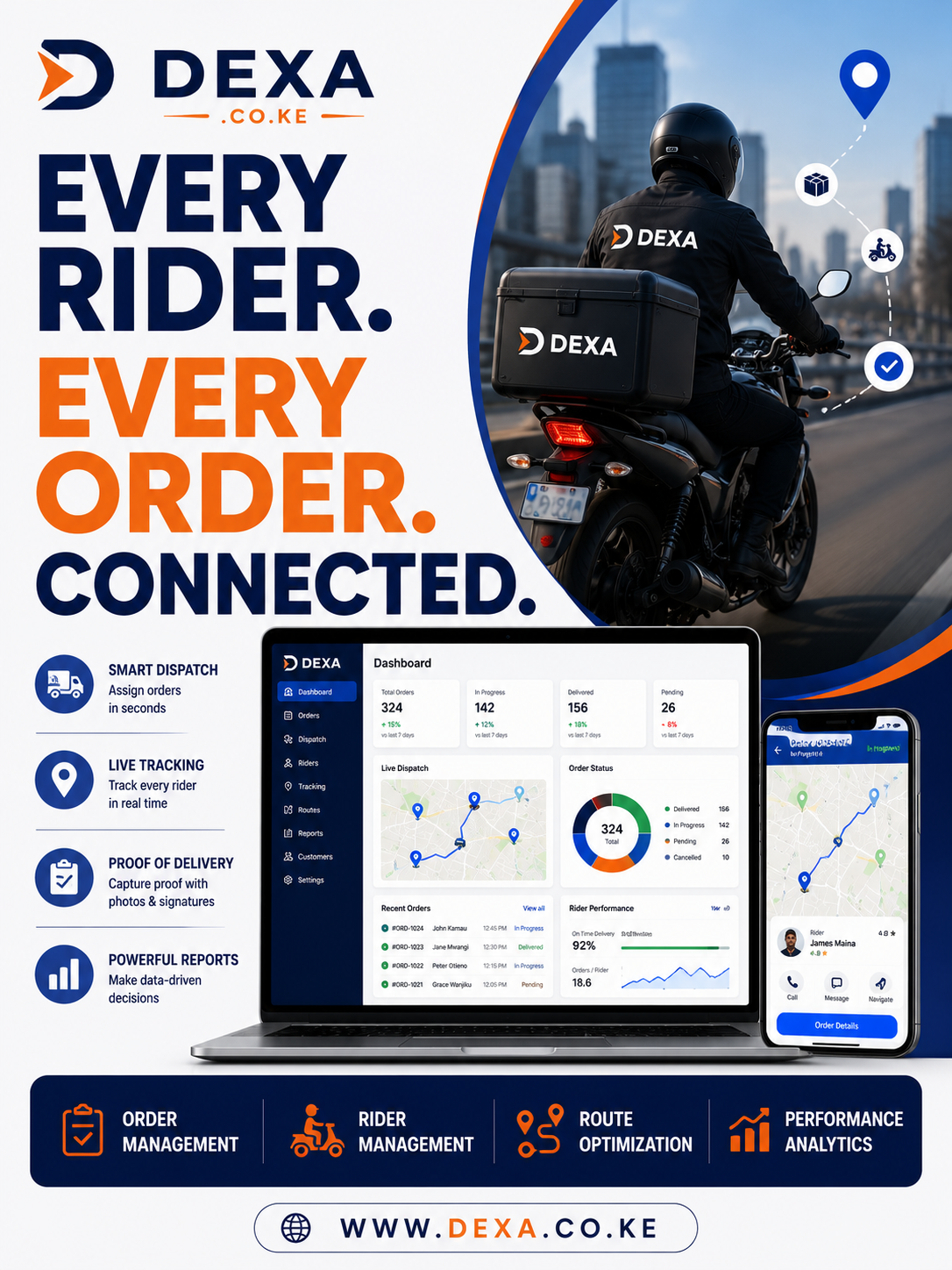
GPS fleet tracking software is becoming an important technology for businesses that depend on vehicles to transport goods, deliver products, visit customers, or move employees and equipment. Instead of relying on phone calls, paper records, and assumptions about where vehicles are, fleet managers can use GPS technology to monitor vehicle locations, review journeys, analyze driver behavior, and improve fleet operations from a centralized platform.
For Kenyan businesses, fleet visibility can be particularly valuable. Logistics companies, distributors, courier businesses, construction companies, schools, field-service providers, transport operators, and delivery businesses may have vehicles operating across Nairobi, Mombasa, Kisumu, Nakuru, Eldoret, and other parts of the country. Managing these vehicles manually can become difficult as the fleet grows.
Modern fleet platforms can combine live GPS tracking with features such as geofencing, journey history, driver behavior monitoring, fuel analytics, maintenance planning, alerts, and reporting. Kenyan fleet-management providers currently offer platforms built around these capabilities.
What Is GPS Fleet Tracking Software?
GPS fleet tracking software is a digital platform that uses GPS-enabled tracking devices and software to provide information about the location and movement of vehicles.
A GPS tracker installed in a vehicle communicates location information to the tracking platform. Fleet managers can then view the information through a web dashboard or mobile application.
Depending on the system, managers can see:
- Current vehicle location
- Vehicle speed
- Direction of travel
- Trip history
- Distance traveled
- Stops
- Idle periods
- Route deviations
- Geofence activity
- Driver behavior
- Vehicle alerts
- Fuel information
- Maintenance information
Some modern platforms go beyond simple location tracking by combining GPS information with telematics and fleet analytics. For example, systems available in Kenya can combine GPS tracking, driver behavior monitoring, fuel analysis, maintenance alerts, and reporting in one platform.
The result is a more complete picture of what is happening across the fleet.
How GPS Fleet Tracking Works
The basic process is relatively straightforward.
A GPS tracking device is installed inside a vehicle. The device receives location information from GPS satellites and transmits relevant data through a mobile communication network to a tracking platform.
The fleet manager accesses the information through a dashboard.
The process can be summarized as:
GPS Device → Mobile Network → Tracking Platform → Fleet Dashboard → Management Decision
For example, if a delivery vehicle leaves a warehouse in Nairobi, the fleet manager can view the vehicle’s location as it travels toward its destination.
The manager may also receive an alert if the vehicle exceeds a configured speed limit or leaves an approved area.
Modern systems can store historical information so managers can review completed journeys later. Real-time tracking platforms in Kenya commonly provide live maps, journey history, geofencing, and alerts.
Why GPS Fleet Tracking Matters for Kenyan Businesses
Fleet operations involve much more than simply owning vehicles.
Businesses need to control:
- Fuel
- Drivers
- Maintenance
- Routes
- Deliveries
- Vehicle utilization
- Security
- Customer service
- Operating costs
Without reliable information, management may struggle to identify inefficiencies.
For example, a business may notice that fuel expenses have increased but not know whether the problem is caused by inefficient routes, excessive idling, poor driving behavior, fuel misuse, or mechanical problems.
GPS fleet technology can provide operational information that helps management investigate these issues.
Kenyan fleet platforms commonly position real-time tracking as a way to improve visibility, reduce operating costs, and strengthen control over geographically distributed vehicles.
Problems With Managing Fleets Without GPS Tracking
Limited Vehicle Visibility
Without GPS tracking, a fleet manager may need to call a driver to find out where a vehicle is.
This becomes increasingly difficult when managing dozens or hundreds of vehicles.
A manager may have to make several phone calls simply to determine:
- Where a vehicle is
- Whether it has reached a customer
- Whether it is delayed
- Whether it has stopped
- Whether it is following its assigned route
GPS tracking reduces this dependency on manual communication.
Difficulty Monitoring Drivers
Driver behavior can have a significant impact on fleet costs and safety.
Without telematics, management may not have reliable information about:
- Speeding
- Harsh braking
- Rapid acceleration
- Excessive idling
- Unauthorized stops
- Route deviations
Modern fleet systems can collect and analyze this information. Driver behavior analytics are now offered as part of several fleet-management platforms in Kenya.
Poor Route Visibility
A vehicle may be expected to follow a particular route, but without tracking, management may not know whether it actually did.
Historical journey playback allows managers to review where a vehicle traveled after the trip has been completed.
This can be useful for investigating delays, unauthorized detours, or customer complaints.
Fuel Management Problems
Fuel theft and inefficient consumption can significantly affect fleet profitability.
GPS information alone does not always determine exactly how much fuel a vehicle has consumed, but when GPS tracking is combined with fuel sensors or fuel records, businesses can gain a much better understanding of fuel performance.
Some Kenyan fleet platforms offer fuel monitoring and analytics alongside GPS tracking.
Vehicle Security Risks
Businesses may also use GPS tracking to improve vehicle security.
A tracking platform can provide alerts for unusual movement, unauthorized use, tampering, or other configured events.
Some systems also support geofencing and security-related alerts, while particular vehicle-tracking solutions may provide remote immobilization capabilities.
Key Features of GPS Fleet Tracking Software
When selecting GPS fleet tracking software, businesses should look beyond a basic map showing vehicle locations.
A comprehensive platform should provide tools that help management understand and improve fleet performance.
Real-Time GPS Tracking
Real-time tracking allows fleet managers to see vehicle positions on a digital map.
A fleet dashboard can display multiple vehicles simultaneously.
This can help managers determine:
- Which vehicles are moving
- Which vehicles are stopped
- Which vehicles are nearby
- Which vehicles are delayed
- Which vehicles are outside expected areas
Real-time visibility is especially useful for logistics and delivery businesses.
Some current Kenyan platforms advertise updates at intervals as short as seconds, depending on the hardware and service configuration.
Trip History
Live tracking tells managers where a vehicle is now.
Trip history shows where the vehicle has been.
This allows management to review previous journeys and identify patterns.
Historical data can reveal:
- Frequently used routes
- Long stops
- Unauthorized detours
- Excessive mileage
- Repeated delays
Journey playback is a common feature among modern fleet platforms.
Geofencing
Geofencing creates virtual boundaries around physical locations.
For example, a company could create geofences around:
- Warehouses
- Offices
- Customer locations
- Construction sites
- Depots
- Fuel stations
When a vehicle enters or leaves the designated area, the system can generate an alert or record the event.
This can automate certain operational processes.
For example:
Vehicle enters warehouse → Arrival recorded
Vehicle leaves warehouse → Departure recorded
Vehicle enters customer location → Arrival notification generated
Geofencing is supported by a number of fleet-tracking systems available to Kenyan businesses.
Speed Alerts
Speed monitoring can help fleet managers identify risky driving behavior.
Management can establish speed thresholds and receive notifications when vehicles exceed them.
Speed data can also contribute to driver performance reports.
Rather than relying entirely on customer complaints or driver reports, managers can use recorded information to identify recurring behavior patterns.
Idling Monitoring
Vehicle idling occurs when an engine remains running while the vehicle is stationary.
Excessive idling can contribute to unnecessary fuel consumption.
A fleet tracking platform can identify prolonged idle periods and include them in performance reports.
Managers can then investigate whether idling is caused by:
- Traffic
- Waiting for customers
- Loading and unloading
- Driver habits
- Operational delays
Some fleet platforms specifically include idle-time analytics as part of their fleet performance monitoring.
Driver Behavior Monitoring
Advanced GPS fleet tracking software can analyze driving patterns.
The system may monitor:
- Speed
- Harsh braking
- Acceleration
- Cornering
- Idling
- Route adherence
This information can be used to develop driver scorecards.
The goal should not simply be to punish drivers. Instead, businesses can use the information to identify training needs and encourage safer, more efficient driving.
Driver Identification
Some fleet systems can associate a vehicle journey with a specific driver.
This is useful for businesses where several drivers may use the same vehicle.
Driver identification can improve accountability because management can connect a particular journey or driving event with the employee responsible for the vehicle.
Some Kenyan tracking solutions support RFID or driver-identification technologies.
Fleet Alerts
Alerts allow managers to respond to important events without constantly watching the tracking dashboard.
Possible alerts include:
- Overspeeding
- Geofence entry
- Geofence exit
- Unauthorized movement
- Excessive idling
- Tampering
- Low battery
- Route deviation
- Maintenance requirements
Alerts can be delivered through different channels depending on the platform.
Some systems support SMS, email, WhatsApp, push notifications, or dashboard alerts.
Fleet Management Dashboard
A centralized dashboard gives management a single location for fleet information.
Instead of switching between multiple systems, managers can view vehicle locations, alerts, trips, and reports from one interface.
A useful dashboard should make important information easy to understand.
For example, management could see:
Total Vehicles: 50
Moving: 31
Idle: 8
Stopped: 11
Alerts: 3
This provides an immediate overview of fleet activity.
Mobile Fleet Tracking
Fleet management does not always happen from an office.
Managers may need to monitor vehicles while traveling.
A mobile application allows authorized users to access fleet information from smartphones and tablets.
Modern fleet solutions in Kenya commonly offer web dashboards together with mobile access.
Fleet Tracking Reports
Reports turn raw GPS data into useful operational information.
A fleet manager may generate reports covering:
- Mileage
- Trip history
- Speed
- Idle time
- Stops
- Route deviations
- Geofence events
- Driver performance
- Vehicle utilization
Reports can be generated daily, weekly, or monthly depending on operational requirements.
How GPS Tracking Improves Fleet Efficiency
The primary value of GPS fleet tracking software is not simply knowing where vehicles are.
The greater value comes from using location and vehicle data to improve operations.
Better Vehicle Utilization
Managers can identify vehicles that are frequently idle.
They can also determine which vehicles are heavily utilized.
This information can support better allocation of work.
For example, if one vehicle is consistently overloaded with assignments while another spends much of the day inactive, management can adjust scheduling.
Reduced Unnecessary Mileage
Historical route information can reveal unnecessary travel.
Managers can compare actual routes with planned routes.
If a vehicle regularly travels significantly farther than expected, the company can investigate the reason.
Faster Dispatching
GPS tracking allows dispatchers to identify nearby vehicles.
If a new delivery request arrives, the dispatcher can determine which vehicle is best positioned to handle the job.
Some fleet systems specifically provide nearest-driver or smart-dispatch functionality.
Better Customer Service
Customers often want to know when their delivery will arrive.
GPS tracking can provide more accurate information about vehicle location and trip progress.
A business can use this information to provide:
- Estimated arrival times
- Delivery status
- Vehicle location
- Delay notifications
This can reduce customer uncertainty.
GPS Fleet Tracking for Logistics Companies
Logistics businesses can benefit significantly from fleet visibility.
A logistics company may operate trucks traveling between cities and regions.
Managers can use tracking software to monitor:
- Vehicle locations
- Trip progress
- Driver behavior
- Route adherence
- Stops
- Delivery status
For long-distance transportation, historical route information can also help management analyze journey performance.
GPS Fleet Tracking for Delivery Businesses
Last-mile delivery companies need precise operational visibility.
A delivery company may have multiple vans or motorcycles serving different neighborhoods.
GPS tracking can help dispatchers determine which driver is closest to a new delivery request.
This can improve response times and reduce unnecessary travel.
GPS Fleet Tracking for Construction Companies
Construction companies often move:
- Trucks
- Excavators
- Loaders
- Machinery
- Equipment
Tracking can help management know where valuable assets are located.
Geofencing can also help businesses monitor whether equipment remains within authorized project locations.
GPS Fleet Tracking for Schools
Schools and educational institutions may use vehicle tracking to monitor buses.
Management can see bus locations and receive notifications when vehicles arrive at or leave designated areas.
Parents and school administrators may also benefit from improved visibility, depending on the system’s features and privacy policies.
GPS Fleet Tracking for Field Service Businesses
Companies that send technicians to customer locations can use tracking technology to coordinate field teams.
For example, an internet installation company may have several technicians traveling throughout Nairobi.
A dispatcher can identify which technician is closest to a new customer appointment.
This can reduce travel time and improve scheduling.
GPS Fleet Tracking for Courier Companies
Courier companies depend on accurate vehicle and rider coordination.
Tracking software can help manage:
- Parcel pickups
- Delivery routes
- Rider locations
- Customer deliveries
- Trip history
Combining GPS tracking with dispatch and delivery software can create a complete last-mile delivery workflow.
GPS Tracking and Fleet Security
Vehicle security is another important reason businesses adopt GPS tracking.
A company may want to know when a vehicle is being used outside normal operating hours.
For example, management can configure an alert if a vehicle moves after a predefined curfew.
Geofencing can also identify when vehicles enter or leave designated areas.
Some tracking systems include tamper detection and remote immobilization features, although businesses should implement security controls carefully and in accordance with applicable laws and safety procedures.
GPS Tracking and Fuel Management
Location data can become even more useful when combined with fuel information.
A business can compare:
Distance traveled + Fuel consumed + Vehicle activity
This provides a clearer picture of fuel efficiency.
If a vehicle travels significantly more kilometers than expected, management can investigate.
If fuel consumption suddenly changes, management can examine:
- Route changes
- Vehicle condition
- Driver behavior
- Fuel purchases
- Potential fuel misuse
Some modern telematics systems integrate GPS, fuel sensors, and vehicle diagnostics to provide this type of analysis.
GPS Tracking and Vehicle Maintenance
Tracking software can also support maintenance planning.
Mileage information can help businesses determine when vehicles require servicing.
For example, a company can establish maintenance rules based on:
- Mileage
- Time
- Engine hours
The system can then generate reminders when maintenance is approaching.
Modern fleet platforms increasingly combine GPS tracking with maintenance planning and vehicle-performance analytics.
Choosing GPS Fleet Tracking Software in Kenya
Businesses should carefully evaluate their requirements before selecting a platform.
Important questions include:
How Many Vehicles Need Tracking?
A company with five vehicles may have different requirements from an organization managing 500 vehicles.
The platform should be able to support the current fleet and future growth.
Does It Support Real-Time Tracking?
Businesses should understand how frequently location information is updated.
Different hardware and service plans may provide different update intervals.
Does It Include Historical Tracking?
Historical data is important for investigating previous journeys and analyzing fleet performance.
Does It Support Geofencing?
Geofencing is useful for warehouses, customer sites, depots, and restricted areas.
Does It Provide Driver Analytics?
Businesses that want to improve driver safety and fuel efficiency should consider platforms with driver behavior monitoring.
Does It Include Mobile Access?
Mobile applications allow managers to monitor fleets away from their offices.
Can It Integrate With Other Software?
Businesses may eventually want to connect GPS tracking with:
- Dispatch software
- Transport management systems
- Delivery management
- Accounting
- ERP
- Customer management
- Fuel management
Integration capabilities should therefore be considered before implementation.
Preparing for GPS Fleet Tracking Implementation
Before installing GPS fleet tracking software, businesses should establish what they want the technology to accomplish.
For example, the main objective may be:
- Improving fleet security
- Reducing fuel costs
- Monitoring drivers
- Improving delivery visibility
- Reducing unauthorized vehicle use
- Improving vehicle utilization
Clear objectives make implementation easier to evaluate.
Businesses should also identify which vehicles need tracking, who will access the platform, what alerts are required, and which reports management needs.
GPS Fleet Tracking Software: Advanced Features, AI, Analytics, Security and Fleet Optimization — Part 2
GPS fleet tracking software has evolved far beyond simply showing the location of a vehicle on a map. Modern fleet platforms combine GPS data with telematics, driver analytics, fuel monitoring, maintenance management, route optimization, geofencing, automated alerts, and reporting to give businesses a complete view of their transportation operations.
For businesses in Kenya, this can be particularly valuable when vehicles operate across different counties, cities, delivery routes, customer locations, construction sites, or remote areas. A centralized platform allows managers to monitor vehicles and make operational decisions using real-time and historical data.
Modern fleet platforms available in Kenya increasingly combine GPS tracking with driver behavior analysis, fuel monitoring, maintenance scheduling, route planning, and analytics.
Advanced Features of GPS Fleet Tracking Software
Basic GPS tracking tells you where a vehicle is.
Advanced GPS fleet tracking software can help you understand what the vehicle is doing, why it is doing it, and how that activity affects your business.
Some of the most valuable advanced features include:
- AI-powered fleet analytics
- Driver behavior monitoring
- Route optimization
- Fuel monitoring
- Predictive maintenance
- Geofencing
- Smart alerts
- Vehicle utilization analysis
- Electronic trip records
- Dashcam integration
- Customer tracking
- Automated reports
- API integrations
These features transform GPS tracking from a location-monitoring tool into a broader fleet management system.
AI-Powered Fleet Management
Artificial Intelligence is becoming increasingly relevant in fleet management.
Instead of simply presenting raw GPS information, AI-powered systems can analyze large amounts of vehicle and driver data to identify patterns.
For example, an AI-enabled system may analyze:
- Speeding events
- Harsh braking
- Acceleration
- Idling
- Route deviations
- Mileage
- Fuel consumption
- Vehicle utilization
- Maintenance information
The system can then help fleet managers identify unusual behavior or areas where operational improvements may be possible.
Some newer fleet platforms in Kenya already advertise AI-based driver analytics, predictive maintenance, and intelligent fleet insights.
AI Driver Behavior Analysis
Driver behavior has a direct relationship with vehicle safety, fuel efficiency, maintenance, and operating costs.
A modern tracking platform can collect information about driving patterns and create driver performance scores.
For example, the software can identify:
- Excessive speeding
- Harsh acceleration
- Sudden braking
- Aggressive cornering
- Excessive idling
- Unauthorized route deviations
Instead of reviewing individual journeys manually, fleet managers can use driver scorecards to identify drivers who may need additional training.
The purpose should be improvement rather than punishment.
A driver who frequently brakes harshly may benefit from coaching. A driver who consistently follows efficient routes and maintains safe speeds can become an example for the rest of the team.
Driver Scorecards
Driver scorecards make driver performance easier to compare.
A company can create measurements based on:
- Safety
- Speed
- Route adherence
- Idling
- Mileage
- Trip completion
- Customer service
The scorecard can then provide management with a broader understanding of driver performance.
This can also support employee training programs.
Route Optimization
One of the major benefits of GPS fleet tracking software is the ability to combine real-time vehicle locations with route planning.
A delivery company may have 30 customers to serve in one day.
If the stops are planned manually, the driver may travel unnecessary distances or repeatedly cross the same roads.
Route optimization software can help determine a more efficient sequence of destinations.
This can reduce:
- Unnecessary mileage
- Fuel consumption
- Driver travel time
- Delivery delays
- Vehicle wear
Modern fleet platforms increasingly combine route optimization with GPS tracking and dispatching.
Dynamic Route Management
Routes do not always remain predictable.
A driver may encounter:
- Traffic congestion
- Road construction
- Accidents
- Road closures
- Weather conditions
- Customer changes
A dynamic routing system can help dispatchers adjust transportation plans when conditions change.
For example, if a delivery vehicle is delayed on one route, the dispatcher can identify another nearby vehicle that may be able to handle an urgent delivery.
Smart Dispatching
GPS tracking can improve dispatch decisions because the dispatcher can see where vehicles are located.
Suppose a new delivery request comes from a customer in Westlands.
Instead of calling every driver, the dispatcher can identify nearby available vehicles.
The dispatcher can then consider:
- Distance from customer
- Vehicle type
- Driver availability
- Current workload
- Delivery requirements
Some modern platforms specifically support nearest-driver selection and smart dispatching.
Fuel Monitoring
Fuel is one of the most important costs for many commercial fleets.
A business that operates 50 vehicles can spend a substantial amount on fuel every month.
Simply recording fuel purchases does not always provide enough information.
Advanced systems can combine GPS information with fuel-level sensors and vehicle data.
This allows management to compare:
Fuel Consumed + Distance Traveled + Vehicle Activity
This can reveal unusual consumption patterns.
Modern fleet systems in Kenya advertise fuel monitoring, fuel analytics, and fuel-theft detection as part of their telematics capabilities.
Detecting Fuel Theft
Fuel theft can be difficult to identify when businesses rely entirely on manual records.
A vehicle may receive fuel, but management may not know whether the entire quantity was actually used for legitimate operations.
Fuel sensors can provide additional information about changes in fuel levels.
If the system detects an unusual fuel drop while a vehicle is parked, it can generate an alert for investigation.
Fuel monitoring should therefore be combined with GPS data.
For example:
Vehicle Location + Fuel Level + Ignition Status + Time
This provides much stronger evidence than a paper fuel receipt alone.
Fuel Efficiency Analysis
Businesses can compare fuel performance between vehicles.
For example:
Vehicle A:
- 1,000 km traveled
- 120 litres consumed
Vehicle B:
- 1,000 km traveled
- 160 litres consumed
The difference may warrant investigation.
The reasons could include:
- Vehicle condition
- Driver behavior
- Load differences
- Route conditions
- Tire pressure
- Excessive idling
GPS and telematics data help managers investigate these differences.
Predictive Vehicle Maintenance
Vehicle maintenance is another area where fleet technology is becoming more advanced.
Traditional maintenance is often based on fixed schedules.
For example:
Service every 10,000 km.
Modern telematics can combine mileage, engine data, usage patterns, and diagnostic information to provide more detailed maintenance insights.
Some platforms already offer automated service reminders based on mileage, engine hours, or dates.
Preventing Unexpected Breakdowns
A vehicle breakdown can disrupt an entire transportation schedule.
For a logistics company, one broken-down truck can affect:
- Customer deliveries
- Driver schedules
- Cargo movement
- Vehicle availability
- Revenue
Predictive maintenance can help identify potential problems before they become major failures.
This does not eliminate breakdowns, but it can help businesses move from reactive maintenance toward preventive and data-supported maintenance.
Maintenance Reminders
A fleet platform can generate reminders for:
- Oil changes
- Tire replacement
- Brake inspections
- General servicing
- Engine checks
- Insurance renewal
- Vehicle inspection
This reduces the need to rely on memory or separate spreadsheets.
Vehicle Utilization
A fleet may contain vehicles that are heavily used and others that spend long periods inactive.
Without data, management may not notice this imbalance.
Fleet utilization reports can show:
- Active hours
- Idle hours
- Distance traveled
- Number of trips
- Number of working days
- Vehicle downtime
This information can help businesses determine whether their fleet size is appropriate.
Some fleet platforms provide utilization reports specifically designed to identify vehicles that are idle versus those being actively used.
Reducing Idle Vehicles
Suppose a company owns 40 vehicles but regularly uses only 28.
The business may be paying for:
- Insurance
- Maintenance
- Parking
- Registration
- Depreciation
on vehicles that contribute little to daily operations.
Utilization reports can help management decide whether vehicles should be:
- Reassigned
- Sold
- Rented out
- Used for additional delivery routes
Electronic Trip Management
Traditional trip sheets can contain errors or become lost.
A digital trip management system can automatically record:
- Departure time
- Arrival time
- Distance
- Route
- Stops
- Driver
- Vehicle
This creates a digital record of transportation activity.
Such records can be useful for internal reporting, customer billing, operational audits, and dispute resolution.
Geofencing for Fleet Control
Geofencing is one of the most useful features in GPS fleet tracking software.
A geofence is a virtual boundary around a physical location.
For example, a company could establish geofences around:
- Nairobi warehouse
- Mombasa depot
- Customer premises
- Construction projects
- Fuel stations
- Parking areas
The system can then generate events when vehicles enter or leave these areas.
Automated Arrival and Departure Records
Geofencing can reduce manual reporting.
Instead of asking drivers:
“Have you arrived at the warehouse?”
the system can automatically record the vehicle entering the warehouse geofence.
Similarly, the departure can be recorded when the vehicle exits.
This creates a more reliable operational record.
Unauthorized Location Alerts
Businesses can also use geofencing to monitor restricted areas.
If a vehicle enters an unauthorized location, management can receive an alert.
This can be useful for:
- High-value cargo
- Construction equipment
- Company vehicles
- Security-sensitive operations
Time-Based Geofencing
Geofences can sometimes be combined with schedules.
For example, a company may expect vehicles to remain at the depot overnight.
If a vehicle leaves the depot at 2:00 AM without authorization, the system can trigger an alert.
This provides another layer of fleet security.
Fleet Security and Anti-Theft Monitoring
Vehicle security is an important consideration for commercial fleets.
GPS tracking can help businesses establish a digital record of vehicle movements.
If a vehicle moves unexpectedly, management can receive an alert and investigate.
Some tracking systems also provide tamper alerts and remote immobilization features. Businesses should ensure that any remote-control functionality is implemented according to safety requirements and applicable laws.
Vehicle Tampering Alerts
A tracking device may detect certain forms of tampering.
Depending on the hardware and platform, alerts may include:
- Device disconnection
- Power loss
- Unusual movement
- Towing
- Low battery
- Unauthorized ignition activity
These alerts can help fleet managers respond more quickly to suspicious events.
Video Telematics
GPS tracking can be combined with cameras to create video telematics.
A vehicle camera can record road and cabin activity while GPS information provides context.
For example:
GPS: Vehicle traveling at 80 km/h.
Telematics: Harsh braking detected.
Camera: Video shows what happened immediately before braking.
This combination can be useful when investigating accidents, driver behavior, or customer disputes.
Some East African fleet platforms now offer AI dashcams and video telematics alongside GPS and driver analytics.
GPS Fleet Tracking for Delivery Management
GPS tracking becomes particularly valuable when integrated with delivery operations.
A typical workflow can look like:
Customer Order → Dispatch → Vehicle Assignment → Route Planning → GPS Tracking → Delivery → Proof of Delivery
This allows the business to connect customer orders with actual vehicle movements.
Estimated Arrival Times
GPS location data can help businesses provide customers with more accurate delivery estimates.
For example, instead of telling a customer:
“Your delivery will arrive sometime today.”
the company can provide a more specific estimated arrival window based on the vehicle’s current location and route.
This can improve customer communication.
Customer Tracking Links
Some delivery platforms allow customers to receive tracking links.
The customer can then see the status of their delivery without repeatedly calling the business.
This can reduce pressure on customer service teams.
GPS Tracking and Proof of Delivery
GPS information can also complement proof-of-delivery records.
A delivery record can contain:
- Customer
- Driver
- Vehicle
- Delivery time
- GPS coordinates
- Signature
- Photo
This creates stronger evidence that a delivery occurred at a particular location and time.
Fleet Analytics
Raw GPS data becomes more useful when converted into reports and analytics.
Management should be able to answer questions such as:
- Which vehicles travel the most?
- Which drivers have the highest idle time?
- Which routes are inefficient?
- Which vehicles consume the most fuel?
- Which vehicles spend the most time in maintenance?
- Which delivery areas experience the most delays?
Analytics can help management move from assumptions to evidence-based decisions.
Fleet Performance Dashboards
A dashboard can provide an overview of fleet performance.
For example:
Total Vehicles: 100
Active: 72
Idle: 15
Stopped: 13
Speed Alerts: 7
Maintenance Due: 5
Route Deviations: 3
Management can then investigate the exceptions instead of manually reviewing every vehicle.
Automated Fleet Reports
Fleet reports can be generated automatically.
Common reports include:
- Daily trip reports
- Mileage reports
- Driver performance reports
- Speed reports
- Idle reports
- Fuel reports
- Maintenance reports
- Geofence reports
- Vehicle utilization reports
Some platforms allow reports to be scheduled and delivered automatically.
This saves management time.
GPS Fleet Tracking and Business Intelligence
Fleet data can also contribute to broader business intelligence.
For example, a company can combine transportation information with sales data.
Management may discover that some delivery regions generate significantly higher transportation costs than others.
The company can then review:
- Delivery charges
- Customer density
- Route distance
- Vehicle utilization
- Fuel consumption
This can support more informed pricing and operational decisions.
Integration With Transport Management Software
GPS tracking does not have to operate as a standalone system.
It can be integrated with transport management software.
This creates a connected system where:
Transport Management Software handles planning and dispatch.
GPS Tracking handles real-time vehicle visibility.
Fleet Analytics evaluates performance.
This combination can create a much more complete transportation operation.
Some fleet platforms provide APIs and integrations that allow GPS data to flow into TMS and ERP systems.
Integration With ERP Systems
Large businesses often use ERP software to manage finance, inventory, purchasing, and other operations.
Connecting GPS fleet tracking to an ERP can allow transportation information to support broader business processes.
For example, mileage information can be associated with:
- Projects
- Departments
- Cost centers
- Customers
This can improve transportation cost allocation.
Integration With Accounting Software
Transportation expenses can be linked to accounting systems.
This can help businesses track:
- Fuel
- Repairs
- Tolls
- Driver expenses
- Maintenance
Automating data exchange can reduce duplicate data entry.
Open APIs
An API allows software systems to exchange information.
A business could use an API to connect its fleet platform with:
- Delivery software
- ERP
- CRM
- Accounting
- E-commerce
- Warehouse management
- Customer portals
This can create a more connected technology environment.
GPS Fleet Tracking and Mobile Applications
A mobile application allows managers to monitor vehicles while away from their desks.
Managers can:
- View live vehicles
- Check alerts
- Review trips
- Monitor drivers
- View reports
Drivers can also use mobile applications to receive assignments and update transportation activities.
Mobile access is increasingly common among fleet management platforms serving businesses in Kenya and East Africa.
GPS Tracking in Remote Areas
Kenyan businesses may operate vehicles far outside major urban centers.
Fleet managers should therefore consider how the system behaves when network connectivity becomes weak.
A good tracking device can store data temporarily and transmit it when connectivity is restored, depending on the hardware and platform.
Businesses operating nationally should evaluate:
- Network coverage
- SIM configuration
- Device storage
- Offline behavior
- Data synchronization
before deployment.
Fleet Tracking for Different Industries
Logistics
Logistics companies can use GPS tracking to monitor trucks, delivery vehicles, and cargo movements.
Distribution
Distributors can track vehicles delivering products to retailers and other customers.
Construction
Construction companies can monitor trucks and heavy equipment operating between projects.
Schools
Schools can monitor buses and create geofenced locations for school premises and designated stops.
NGOs
Organizations operating vehicles across multiple regions can use GPS tracking to improve fleet accountability.
Field Services
Companies sending technicians to customers can use live vehicle locations to improve scheduling.
E-Commerce
Online retailers can connect GPS tracking with last-mile delivery systems to provide better delivery visibility.
Measuring the Success of GPS Fleet Tracking
Installing GPS fleet tracking software is not enough.
Businesses should measure whether the system is actually improving operations.
Useful KPIs include:
Fuel Consumption
Compare fuel consumption before and after implementation.
Average Mileage
Monitor whether unnecessary kilometers have decreased.
Idle Time
Track how long vehicles remain stationary with engines running.
Route Compliance
Measure how frequently vehicles follow assigned routes.
Vehicle Utilization
Determine how much of the available fleet is actively being used.
Driver Safety
Track speeding, harsh braking, acceleration, and other driving events.
Delivery Performance
Measure on-time delivery rates.
Maintenance Downtime
Track how long vehicles remain unavailable.
Building a Data-Driven Fleet Culture
The most important benefit of fleet tracking may not be the technology itself.
It is the culture of accountability and continuous improvement created by reliable information.
Instead of saying:
“Driver X always takes too long.”
management can review actual trip data.
Instead of saying:
“Vehicle Y consumes too much fuel.”
management can compare fuel and mileage information.
Instead of saying:
“We are always late on this route.”
management can examine historical trip data.
This creates a more objective approach to fleet management.
Common Mistakes to Avoid
Businesses should avoid implementing tracking technology without a clear strategy.
Mistake 1: Tracking Without Acting
There is little value in collecting thousands of GPS records if management never reviews them.
Mistake 2: Too Many Alerts
If managers receive hundreds of alerts every day, important notifications can be overlooked.
Businesses should configure alerts carefully.
Mistake 3: Ignoring Driver Training
Drivers need to understand how tracking works and why the business is implementing it.
Mistake 4: Poor Data Management
Incorrect vehicle or driver information can reduce the usefulness of reports.
Mistake 5: Choosing Hardware Without Considering Software
The tracker and software platform should work together reliably.
Mistake 6: Focusing Only on Security
Security is important, but businesses can gain much more value by using GPS data for fuel management, route optimization, maintenance, utilization, and customer service.
The Future of GPS Fleet Tracking Software
The future of Dexa — Driver & Courier Operations for Kenya is moving toward intelligent fleet management rather than simple location tracking.
Artificial Intelligence, machine learning, predictive analytics, connected sensors, cameras, and vehicle diagnostics will continue to expand what fleet platforms can do.
Future systems will increasingly answer questions such as:
- Which vehicle is likely to require maintenance?
- Which route is likely to cause delays?
- Which driver may need additional coaching?
- Which vehicles are being underutilized?
- Which trips are likely to exceed their expected cost?
- Where can fuel consumption be reduced?
This changes the role of fleet software from monitoring what happened to helping managers anticipate what may happen next.
GPS Fleet Tracking Software: Implementation, Costs, ROI, Security, KPIs and Best Practices — Part 3
GPS fleet tracking software can provide businesses with much more than real-time vehicle locations. When properly implemented, it can become a central part of fleet operations, helping businesses improve vehicle utilization, monitor drivers, control fuel expenses, strengthen security, reduce unnecessary mileage, manage maintenance, and improve customer service.
However, successful implementation requires more than installing tracking devices in vehicles. Businesses need clear objectives, appropriate hardware, trained users, reliable data, defined policies, and regular performance analysis.
Part 1 covered the fundamentals and core features of GPS fleet tracking. Part 2 explored advanced capabilities such as AI analytics, route optimization, fuel monitoring, predictive maintenance, geofencing, smart dispatching, and integrations. This final part focuses on implementation, costs, return on investment, security, KPIs, challenges, best practices, and the future of fleet tracking.
How to Implement GPS Fleet Tracking Software
The implementation of GPS fleet tracking software should begin with a clear understanding of the company’s transportation operations.
Before purchasing equipment or software, management should identify what it wants to achieve.
Possible objectives include:
- Improving vehicle security
- Reducing fuel consumption
- Monitoring driver behavior
- Reducing unauthorized vehicle use
- Improving delivery performance
- Increasing vehicle utilization
- Reducing maintenance costs
- Improving customer service
Clear objectives make it easier to select the appropriate system.
Step 1: Assess Your Fleet
Start by creating a complete inventory of vehicles.
Record information such as:
- Vehicle registration number
- Vehicle type
- Make and model
- Fuel type
- Current mileage
- Assigned driver
- Operating location
- Vehicle status
This provides a baseline for implementation.
Businesses should also determine which vehicles require advanced tracking.
For example, a company may need standard GPS tracking for some vehicles while requiring fuel sensors, temperature monitoring, or cameras for others.
Step 2: Define Tracking Requirements
Not every business requires the same tracking capabilities.
A delivery company may prioritize:
- Real-time GPS
- Route optimization
- Driver tracking
- Customer delivery visibility
A logistics company may prioritize:
- Long-distance tracking
- Geofencing
- Driver behavior
- Fuel monitoring
A construction company may prioritize:
- Equipment tracking
- Geofencing
- Unauthorized movement alerts
Defining requirements before choosing a platform prevents businesses from paying for unnecessary functionality.
Step 3: Choose Appropriate GPS Hardware
The tracking device is an important component of the system.
Depending on the vehicle and business requirements, hardware may support:
- GPS positioning
- Mobile communication
- Ignition status
- Battery monitoring
- Engine diagnostics
- Fuel sensors
- Temperature sensors
- Driver identification
Businesses should consider device reliability, installation quality, network compatibility, and durability.
Step 4: Install Tracking Devices
Professional installation can help ensure the tracking device works correctly.
The device should be securely installed and connected according to the manufacturer’s requirements.
After installation, the business should test:
- GPS location accuracy
- Data transmission
- Ignition detection
- Alerts
- Device connectivity
A short testing period can identify installation problems before vehicles return to normal operations.
Step 5: Configure the Software
Once the hardware is installed, the fleet should be configured within the platform.
This may involve adding:
- Vehicles
- Drivers
- Users
- Depots
- Customer locations
- Geofences
- Routes
- Alert rules
The system should reflect the company’s actual operating structure.
Step 6: Configure Alerts
Alerts are useful when they are relevant.
Businesses can configure notifications for events such as:
- Overspeeding
- Unauthorized movement
- Geofence violations
- Excessive idling
- Device tampering
- Ignition activity
- Route deviations
However, businesses should avoid configuring excessive alerts.
If managers receive hundreds of notifications every day, important events may be ignored.
Step 7: Train Fleet Managers
Fleet managers and dispatchers should receive practical training.
They need to understand:
- How to view vehicles
- How to review trip history
- How to create geofences
- How to respond to alerts
- How to generate reports
- How to analyze driver performance
Training should use real operational examples.
Step 8: Train Drivers
Driver communication is essential.
Drivers should understand:
- Why vehicles are being tracked
- What information is collected
- How the system benefits operations
- What is expected from them
- How tracking-related issues should be reported
Clear communication can reduce resistance.
Step 9: Start With a Pilot
Businesses can initially deploy the system to a small group of vehicles.
For example:
10 vehicles → Test → Analyze → Improve → Expand
A pilot can reveal issues involving:
- Network connectivity
- Device installation
- Driver adoption
- Alert configuration
- Reporting
- Data accuracy
Once these issues are resolved, the company can expand the system across the fleet.
How Much Does GPS Fleet Tracking Cost in Kenya?
The cost of GPS fleet tracking software varies depending on the provider, tracking hardware, installation, subscription model, features, fleet size, and additional sensors.
Businesses should consider the total cost rather than focusing only on the device price.
Potential costs can include:
- GPS tracking hardware
- Installation
- Monthly subscription
- SIM/data connectivity
- Fuel sensors
- Temperature sensors
- Dashcams
- Maintenance
- Software integrations
- Technical support
Some Kenyan providers offer tracking packages with different combinations of features and subscription models, so businesses should compare the full package rather than choosing solely on upfront price. (itrackzen.net)
Factors That Affect GPS Tracking Cost
Number of Vehicles
A company tracking five vehicles will have different costs from one tracking 500 vehicles.
Tracking Frequency
More frequent location updates may require different hardware or data configurations.
Additional Sensors
Fuel, temperature, engine, or other sensors can increase the cost.
Video Telematics
Dashcams and AI cameras can add hardware and subscription costs.
Reporting and Analytics
Advanced analytics may be included in premium plans.
Integrations
Custom API integrations may require additional development work.
Support
Businesses should consider whether technical support and device maintenance are included.
Calculating the ROI of GPS Fleet Tracking
Businesses should measure whether fleet tracking is producing measurable improvements.
Return on investment can come from several areas.
Fuel Savings
Fuel is one of the most obvious areas where businesses can potentially achieve savings.
GPS tracking can identify:
- Excessive idling
- Unnecessary mileage
- Route deviations
- Unauthorized trips
When combined with fuel data, businesses can identify unusual consumption.
Reduced Unauthorized Vehicle Use
If employees use vehicles outside approved business activities, the additional mileage can increase:
- Fuel expenses
- Maintenance costs
- Vehicle wear
GPS tracking creates a record of vehicle movement.
Reduced Maintenance Costs
Monitoring mileage and vehicle usage can improve preventive maintenance.
This can help businesses avoid some costly breakdowns and extend vehicle availability.
Improved Productivity
If dispatchers can quickly identify nearby vehicles, they may be able to assign new jobs more efficiently.
This can increase the number of tasks completed without necessarily adding vehicles.
Reduced Customer Complaints
Better tracking can improve delivery communication.
Customers can receive more accurate information about delivery progress.
This can reduce complaints related to uncertainty or missed delivery expectations.
Key Fleet Management KPIs
Installing tracking software without measuring performance limits its value.
Businesses should establish KPIs before implementation.
Fuel Consumption Per Vehicle
Monitor fuel consumption by individual vehicle.
This makes it easier to identify unusual patterns.
Fuel Cost Per Kilometer
Fuel cost per kilometer provides a useful comparison between vehicles and routes.
Average Trip Distance
This helps identify changes in fleet utilization and route efficiency.
Idle Time
Monitor how long vehicles remain stationary with engines running.
Speeding Events
Track the frequency and severity of speeding events.
Route Deviations
Measure how often vehicles leave assigned routes.
Vehicle Utilization
Determine how frequently vehicles are actively used.
Vehicle Downtime
Measure how long vehicles remain unavailable because of maintenance or breakdowns.
On-Time Delivery Rate
For delivery businesses, this is one of the most important KPIs.
Driver Performance
Monitor driver behavior using objective operational data.
Using Fleet Data to Reduce Fuel Costs
Fuel savings should not be based on assumptions.
Businesses should analyze actual fleet data.
For example, management could identify a vehicle with:
- High mileage
- High fuel consumption
- Long idle periods
- Frequent route deviations
The business can then investigate the cause.
Possible solutions could include:
- Route changes
- Driver training
- Vehicle maintenance
- Reduced idle time
- Better scheduling
Managing Excessive Idling
Idle time can be a hidden fleet expense.
Drivers may leave engines running while:
- Waiting for customers
- Loading goods
- Waiting at warehouses
- Taking breaks
- Sitting in traffic
Not every idle period is avoidable.
However, identifying excessive idle patterns can help businesses determine where improvements are possible.
Improving Driver Safety
Fleet tracking can support safer driving practices.
Managers can use data to identify repeated:
- Speeding
- Harsh braking
- Aggressive acceleration
- Dangerous cornering
Driver training can then focus on actual behavior rather than assumptions.
Driver Coaching
A useful approach is to review performance regularly.
For example:
Week 1: Identify repeated speeding.
Week 2: Discuss the behavior with the driver.
Week 3: Provide coaching.
Week 4: Review performance again.
This creates a continuous improvement process.
GPS Tracking and Fleet Security
Fleet security should be part of the implementation strategy.
Businesses should establish procedures for responding to suspicious vehicle movements.
For example:
Unauthorized movement detected → Manager receives alert → Vehicle location verified → Driver contacted → Appropriate action taken
This creates a structured response process.
Geofence Security
Geofences can protect:
- Warehouses
- Depots
- Construction sites
- Customer premises
- Parking areas
If a vehicle leaves a restricted location outside approved hours, management can investigate.
After-Hours Monitoring
Businesses can establish expected operating hours.
If a vehicle moves outside those hours, an alert can be generated.
This can be especially useful for fleets that normally remain parked overnight.
Data Privacy and Employee Considerations
Businesses should also consider privacy when implementing GPS tracking.
Employees should understand the purpose of tracking and the company’s policies around vehicle monitoring.
Organizations should establish clear internal rules covering:
- Who can access location data
- How data is used
- How long records are retained
- When tracking occurs
- How employees can raise concerns
The objective should be to use tracking responsibly while maintaining operational accountability.
Businesses should also consider applicable Kenyan data-protection requirements when handling personal information associated with drivers and customers.
Limiting Access
Not every employee needs access to every vehicle.
Role-based permissions can limit access according to job responsibilities.
For example:
Driver: Assigned vehicle information.
Dispatcher: Active fleet information.
Fleet manager: Fleet-wide monitoring.
Senior management: Reports and analytics.
System administrator: Technical configuration.
This reduces unnecessary exposure of sensitive information.
Common GPS Fleet Tracking Challenges
Poor Network Coverage
Some vehicles may travel through areas with limited mobile connectivity.
Businesses operating nationally should ask providers how their devices handle connectivity interruptions.
Device Failure
GPS hardware can fail.
A good fleet management process should include procedures for detecting and replacing faulty devices.
Driver Resistance
Some drivers may initially perceive tracking as excessive monitoring.
Clear communication and training can help address concerns.
Incorrect GPS Data
GPS information may occasionally be affected by environmental or technical factors.
Businesses should investigate unusual data rather than automatically assuming misconduct.
Too Much Data
Tracking systems can generate large volumes of information.
The objective should be to identify the information that actually matters.
Managers should focus on meaningful KPIs and actionable alerts.
Best Practices for GPS Fleet Tracking
Establish a Clear Fleet Tracking Policy
Document:
- What is tracked
- Why it is tracked
- Who can access data
- How alerts are handled
- How information is stored
Review Reports Regularly
Fleet data should become part of regular management meetings.
Review:
- Fuel
- Mileage
- Drivers
- Maintenance
- Utilization
- Delivery performance
Investigate Exceptions
Do not attempt to manually review every journey.
Focus on unusual events.
Examples include:
- Excessive mileage
- Repeated speeding
- Long idle periods
- Unauthorized movement
- Frequent route deviations
Combine GPS With Other Data
GPS becomes more powerful when combined with:
- Fuel information
- Maintenance records
- Delivery data
- Driver information
- Customer data
- Vehicle diagnostics
This creates a complete picture of fleet performance.
Integrating GPS Tracking With Delivery Operations
For businesses operating delivery fleets, GPS tracking should ideally be connected to dispatch and delivery processes.
A complete workflow can look like:
Customer Order
↓
Delivery Created
↓
Vehicle Assigned
↓
Driver Assigned
↓
Route Optimized
↓
Vehicle Tracked
↓
Delivery Completed
↓
Proof of Delivery
↓
Performance Report
This creates a connected digital transportation operation.
GPS Tracking and Customer Experience
Customers increasingly expect visibility.
A delivery company can use tracking information to provide:
- Dispatch notifications
- In-transit updates
- Estimated arrival
- Delivery confirmation
This can improve transparency.
For example:
Your order has been dispatched.
Driver is currently 4 km away.
Estimated arrival: 25 minutes.
This type of communication can significantly improve the customer experience.
GPS Fleet Tracking and Business Growth
A fleet management system should support business growth.
A company may begin with a small fleet but expand into multiple regions.
The system should therefore be capable of handling:
- More vehicles
- More drivers
- More users
- More branches
- More customers
- More transportation data
Scalability should be evaluated before selecting a platform.
Future of GPS Fleet Tracking in Kenya
The future of fleet management will involve increasing levels of automation and intelligence.
Artificial Intelligence
AI will increasingly analyze fleet data and identify patterns.
Predictive Maintenance
Vehicles will increasingly be monitored for signs of potential problems.
Connected Vehicles
Vehicle systems will provide more detailed operational information.
Electric Fleets
As electric vehicles become more common, fleet software will need to manage:
- Battery levels
- Charging
- Range
- Charging locations
- Energy consumption
Advanced Video Telematics
Cameras and AI can provide additional information about road and driver behavior.
Automated Dispatch
AI systems may increasingly recommend which vehicle should handle a particular job based on location, availability, capacity, and route requirements.
How to Choose the Best GPS Fleet Tracking Software
Businesses should compare platforms based on operational requirements.
Before choosing a provider, ask:
Does it provide real-time tracking?
You should understand the location-update frequency and tracking reliability.
Does it provide historical journeys?
Historical data is important for analysis and investigations.
Does it support geofencing?
Geofencing is useful for security and automated location events.
Does it monitor driver behavior?
Consider whether the system can identify speeding, harsh braking, acceleration, and idling.
Does it support fuel monitoring?
If fuel costs are a major concern, consider fuel sensors and fuel analytics.
Does it support maintenance?
Look for mileage-based and time-based maintenance reminders.
Does it have mobile access?
Managers and drivers may need access while away from the office.
Can it integrate with other systems?
Consider APIs and integrations with dispatch, accounting, ERP, CRM, and delivery systems.
Does it provide reports?
Make sure the platform provides the KPIs management needs.
Is technical support available?
Businesses should understand how hardware failures, software issues, and connectivity problems are handled.
Questions to Ask a GPS Tracking Provider
Before signing an agreement, businesses should ask:
- How frequently does the device update vehicle locations?
- Which mobile networks does the device use?
- What happens when connectivity is lost?
- How long is tracking data stored?
- Can reports be exported?
- Are mobile applications available?
- Can the system support geofencing?
- Can fuel sensors be integrated?
- Can the platform integrate with existing software?
- What happens when a tracking device fails?
- Is installation included?
- What technical support is provided?
- Can the system scale with the fleet?
- How are user permissions managed?
- How is customer and driver data protected?
These questions can help businesses compare providers more effectively.
Frequently Asked Questions About GPS Fleet Tracking Software
What is GPS fleet tracking software?
GPS fleet tracking software is a digital system that uses GPS-enabled devices to monitor vehicle locations and movements while providing tools for trip history, alerts, reporting, driver monitoring, geofencing, and fleet analytics.
How does GPS fleet tracking work?
A GPS device installed in a vehicle receives location information and sends it through a communication network to a central tracking platform. Authorized users can then view the vehicle through a web or mobile application.
Can GPS tracking reduce fuel costs?
It can help identify excessive idling, inefficient routes, unauthorized trips, and unusual mileage. When combined with fuel data, it can provide deeper insight into fuel efficiency.
Can GPS tracking monitor drivers?
Yes. Depending on the hardware and software, fleet managers can monitor speeding, idling, harsh braking, acceleration, route adherence, and other driving behaviors.
Can GPS tracking improve vehicle security?
GPS tracking can improve visibility into vehicle movements and generate alerts for unusual or unauthorized activity. Additional security capabilities depend on the tracking hardware and platform.
Can GPS tracking monitor motorcycles?
Yes. GPS tracking devices can be installed on motorcycles, although the appropriate hardware should be selected based on the motorcycle’s electrical system, size, operating environment, and security requirements.
Can GPS fleet tracking be used for trucks?
Yes. GPS tracking is widely applicable to commercial trucks and can provide location monitoring, trip history, route tracking, driver behavior, fuel monitoring, and other fleet capabilities.
Does GPS fleet tracking require internet?
The tracking device generally requires a communication connection to transmit live data to the platform. If connectivity is temporarily unavailable, some devices can store information and transmit it once connectivity is restored, depending on the hardware.
Can GPS tracking integrate with delivery software?
Yes. Platforms that provide APIs or integrations can exchange GPS information with delivery management, dispatch, transport management, ERP, and other business systems.
Is GPS fleet tracking suitable for small businesses?
Yes. A small company can begin with basic vehicle tracking and later add features such as driver monitoring, fuel analytics, maintenance, geofencing, and route optimization as its operations grow.
- GPS fleet tracking software
- GPS fleet tracking software
- GPS fleet tracking software
- GPS fleet tracking software
- GPS fleet tracking software
- GPS fleet tracking software
- GPS fleet tracking software
- GPS fleet tracking software
- GPS fleet tracking software
- GPS fleet tracking software
- GPS fleet tracking software
- GPS fleet tracking software
- GPS fleet tracking software
- GPS fleet tracking software
- GPS fleet tracking software
- GPS fleet tracking software
- GPS fleet tracking software
- GPS fleet tracking software
- GPS fleet tracking software
- GPS fleet tracking software
- GPS fleet tracking software
- GPS fleet tracking software
- GPS fleet tracking software
- GPS fleet tracking software
- GPS fleet tracking software
- GPS fleet tracking software
- GPS fleet tracking software
- GPS fleet tracking software
- GPS fleet tracking software
- GPS fleet tracking software
- GPS fleet tracking software
- GPS fleet tracking software
- GPS fleet tracking software
- GPS fleet tracking software
- GPS fleet tracking software
- GPS fleet tracking software
- GPS fleet tracking software
- GPS fleet tracking software
- GPS fleet tracking software
- GPS fleet tracking software
- GPS fleet tracking software
- GPS fleet tracking software
- GPS fleet tracking software
- GPS fleet tracking software
- GPS fleet tracking software
- GPS fleet tracking software
- GPS fleet tracking software
- GPS fleet tracking software
- GPS fleet tracking software
- GPS fleet tracking software
- GPS fleet tracking software
- GPS fleet tracking software
- GPS fleet tracking software
- GPS fleet tracking software
- GPS fleet tracking software
- GPS fleet tracking software
- GPS fleet tracking software
- GPS fleet tracking software
- GPS fleet tracking software
- GPS fleet tracking software
- GPS fleet tracking software
- GPS fleet tracking software
- GPS fleet tracking software
- GPS fleet tracking software
- GPS fleet tracking software
- GPS fleet tracking software
- GPS fleet tracking software
- GPS fleet tracking software