Table of Contents
ToggleTruck Tracking App
A truck tracking app is a digital fleet management solution that allows businesses to monitor the real-time location, movement, performance, and operational status of trucks using GPS technology, mobile connectivity, and cloud-based software. It provides logistics companies, transport businesses, wholesalers, distributors, manufacturers, and corporate fleets with complete visibility over their vehicles, helping improve efficiency, reduce operational costs, and enhance customer service.
As transportation networks become more complex, businesses can no longer rely on phone calls or manual updates to determine where their trucks are. Customers expect accurate delivery timelines, dispatch teams require real-time operational visibility, and managers need reliable data to make informed decisions.
Modern truck tracking applications provide live GPS tracking, trip history, geofencing, driver monitoring, route optimization, maintenance reminders, delivery updates, proof of delivery, and detailed reporting from a centralized dashboard accessible on computers and mobile devices.
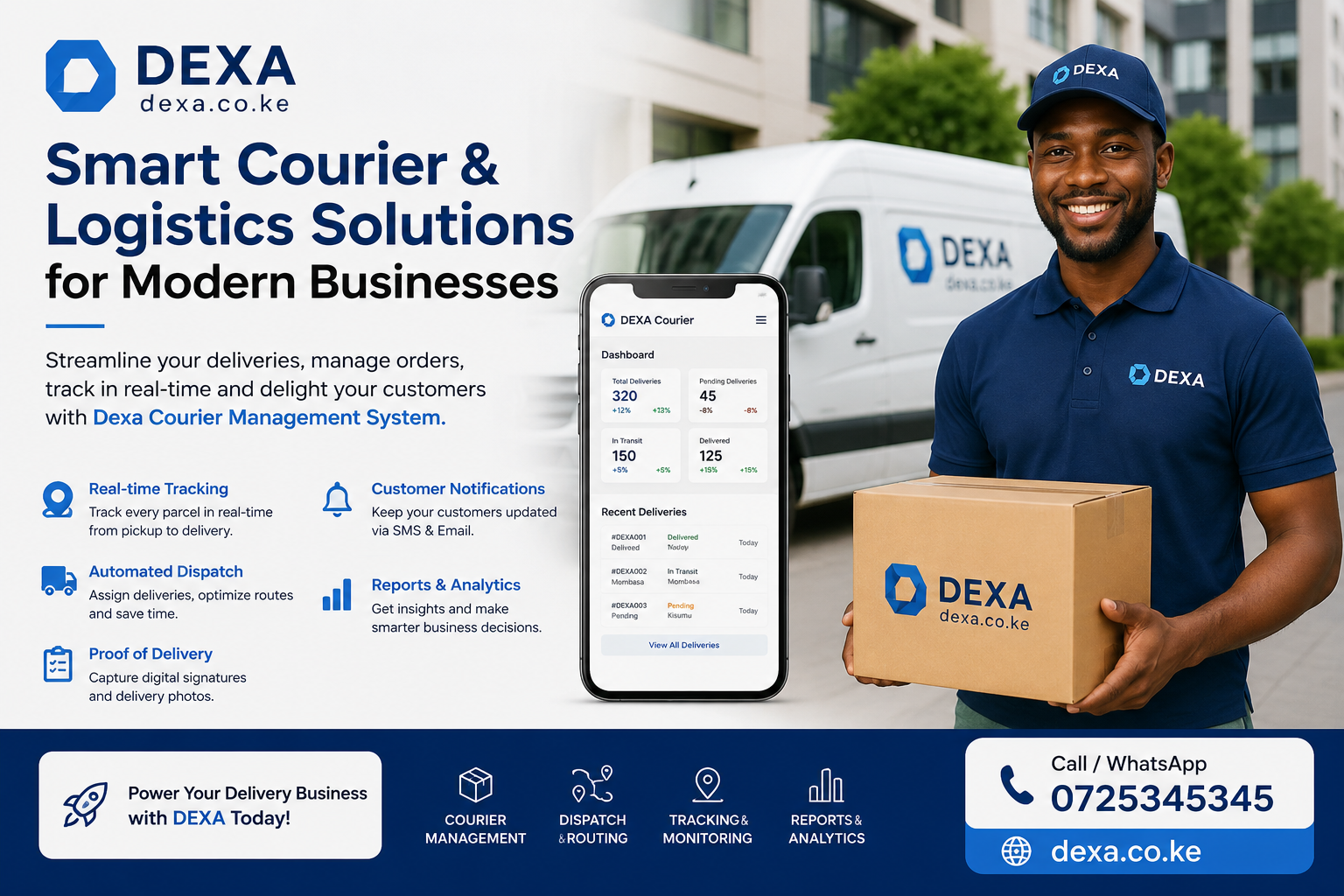
Dexa provides an intelligent fleet and logistics management platform that enables businesses across Kenya to monitor trucks, coordinate deliveries, optimize fleet operations, and improve customer satisfaction through real-time tracking and automation.
Related Resources
What Is a Truck Tracking App?
A truck tracking app enables businesses to monitor commercial vehicles throughout every journey using GPS-enabled devices and cloud-based technology.
Instead of relying on drivers to provide location updates manually, dispatchers and fleet managers can instantly view:
- Live truck locations.
- Current routes.
- Trip progress.
- Delivery status.
- Vehicle movement.
- Driver activity.
- Estimated arrival times.
- Completed journeys.
Real-time visibility enables organizations to improve decision-making while reducing delays and operational inefficiencies.
Why Truck Tracking Apps Are Important
Transport businesses operate in highly competitive environments where efficiency directly affects profitability.
A truck tracking app helps organizations:
- Improve delivery reliability.
- Increase fleet visibility.
- Reduce fuel costs.
- Improve driver accountability.
- Enhance customer communication.
- Reduce unauthorized vehicle use.
- Improve dispatch decisions.
- Increase operational efficiency.
Businesses that adopt digital fleet management gain greater control over daily transport operations.
Businesses That Benefit from Truck Tracking Apps
Many industries depend on trucks to transport goods across Kenya.
Examples include:
- Logistics companies.
- Courier businesses.
- Manufacturers.
- Wholesalers.
- Retail distributors.
- Construction companies.
- FMCG suppliers.
- Agricultural businesses.
- Beverage distributors.
- Fuel transport companies.
- Medical suppliers.
- Government fleets.
Regardless of fleet size, real-time tracking improves operational visibility.
Features of a Modern Truck Tracking App
A professional truck tracking solution provides much more than location monitoring.
Key features include:
- Real-time GPS tracking.
- Route history.
- Driver management.
- Vehicle monitoring.
- Geofencing.
- Delivery tracking.
- Route optimization.
- Fleet reporting.
- Mobile access.
- Customer notifications.
- Digital proof of delivery.
- Maintenance reminders.
These features help businesses manage transport operations more effectively.
Real-Time GPS Tracking
Live GPS tracking allows dispatchers to know exactly where every truck is operating.
Benefits include:
- Accurate vehicle locations.
- Improved dispatch decisions.
- Faster response to delays.
- Better customer communication.
- Reduced unauthorized usage.
- Improved delivery planning.
Real-time visibility eliminates guesswork from fleet management.
Driver Monitoring
Drivers play a major role in transport efficiency.
Truck tracking applications help monitor:
- Driving routes.
- Delivery completion.
- Working hours.
- Idle time.
- Route deviations.
- Productivity.
- Vehicle utilization.
Managers can use operational data to improve fleet performance and driver accountability.
Route Optimization
Selecting the best routes reduces operating costs while improving delivery performance.
Route optimization helps businesses:
- Reduce fuel consumption.
- Avoid traffic congestion.
- Complete more deliveries.
- Improve customer satisfaction.
- Lower maintenance costs.
- Reduce travel distance.
Efficient routing increases fleet productivity without increasing operating expenses.
Truck Tracking and Fuel Management
Fuel represents one of the largest operational expenses for transport businesses.
Truck tracking apps help reduce fuel costs by:
- Monitoring unnecessary trips.
- Reducing idle time.
- Optimizing delivery routes.
- Improving dispatch planning.
- Tracking vehicle utilization.
Better fleet visibility contributes directly to lower operating costs.
Geofencing
Geofencing creates virtual operational boundaries around specific locations.
Businesses can receive alerts whenever trucks:
- Enter designated areas.
- Leave approved zones.
- Arrive at customer locations.
- Depart warehouses.
- Visit unauthorized locations.
This improves security while strengthening operational oversight.
Maintenance Management
Regular maintenance improves vehicle reliability while reducing costly breakdowns.
Truck tracking systems help schedule:
- Oil changes.
- Tire inspections.
- Brake servicing.
- Engine maintenance.
- Vehicle inspections.
- Preventive servicing.
Well-maintained fleets experience fewer disruptions and longer vehicle lifespans.
Delivery Visibility
Customers increasingly expect transparency throughout the delivery process.
Truck tracking apps allow businesses to provide:
- Estimated arrival times.
- Live delivery updates.
- Delivery confirmations.
- Proof of delivery.
- Driver communication.
- Shipment tracking.
Improved visibility enhances customer satisfaction while reducing customer inquiries.
Truck Tracking App and Fleet Visibility
One of the greatest advantages of a truck tracking app is complete fleet visibility. Instead of calling drivers to ask for their location, fleet managers can instantly view every truck on an interactive dashboard. This real-time visibility helps dispatch teams make faster decisions, coordinate deliveries more effectively, and respond immediately to unexpected delays.
Fleet visibility also improves customer service because businesses can provide accurate delivery updates without relying on estimates. Whether a truck is transporting construction materials, retail products, agricultural produce, or industrial equipment, managers always know its current location and delivery progress.
Truck Tracking App for Logistics Companies
Logistics providers manage hundreds of deliveries every day, making manual vehicle tracking inefficient and prone to errors.
A truck tracking app enables logistics businesses to:
- Track every active truck.
- Assign new delivery jobs quickly.
- Monitor delivery completion.
- Reduce dispatch delays.
- Improve fleet utilization.
- Coordinate multiple warehouses.
- Increase operational efficiency.
As delivery volumes grow, centralized fleet visibility becomes essential for maintaining service quality.
Related Resources
Truck Tracking App for Distribution Businesses
Wholesalers and distributors depend on trucks to move products between warehouses, retailers, and customers.
Using a truck tracking app allows distributors to:
- Monitor outgoing deliveries.
- Verify arrival times.
- Track high-value shipments.
- Improve warehouse coordination.
- Reduce delivery disputes.
- Increase customer confidence.
Accurate tracking helps businesses meet delivery commitments while improving supply chain efficiency.
Truck Tracking App and Driver Accountability
Professional fleet management requires accountability from both drivers and dispatch teams.
A truck tracking app records valuable operational information including:
- Journey start times.
- Delivery completion.
- Travel routes.
- Idle periods.
- Stops made.
- Distance travelled.
- Working hours.
This information allows managers to recognize high-performing drivers while identifying opportunities for coaching and improvement.
Truck Tracking App and Customer Notifications
Customers appreciate knowing where their deliveries are and when they will arrive.
Modern tracking systems can automatically send:
- Dispatch confirmations.
- Delivery progress updates.
- Estimated arrival times.
- Delay notifications.
- Successful delivery confirmations.
- Electronic proof of delivery.
Keeping customers informed improves transparency and reduces unnecessary support calls.
Truck Tracking App and Cargo Security
Many businesses transport expensive or sensitive goods that require additional security.
A truck tracking app strengthens cargo protection by allowing businesses to:
- Monitor vehicle movements.
- Detect route deviations.
- Receive location alerts.
- Track delivery progress.
- Verify arrival at customer locations.
- Investigate unexpected delays.
Improved visibility helps reduce the risk of cargo theft and unauthorized vehicle use.
Truck Tracking App and Fleet Utilization
Fleet utilization measures how effectively vehicles are being used.
Tracking software helps businesses determine:
- Which trucks are active.
- Which vehicles remain idle.
- Delivery capacity.
- Vehicle availability.
- Route efficiency.
- Daily workload.
Understanding utilization allows organizations to maximize fleet productivity without purchasing unnecessary additional vehicles.
Truck Tracking App for Construction Companies
Construction businesses regularly transport building materials, equipment, and machinery between suppliers and project sites.
Fleet tracking helps project managers:
- Monitor deliveries.
- Coordinate site logistics.
- Prevent unnecessary delays.
- Track equipment transportation.
- Improve supplier coordination.
Reliable transport scheduling contributes to smoother project execution.
Truck Tracking App for Agricultural Transport
Agricultural businesses transport produce, livestock feed, fertilizers, seeds, and harvested crops across Kenya.
A truck tracking app supports agricultural logistics by helping businesses:
- Track produce deliveries.
- Monitor collection routes.
- Coordinate farm pickups.
- Improve distribution planning.
- Reduce transportation delays.
Efficient transport helps preserve product quality while improving customer satisfaction.
Truck Tracking App and Delivery Analytics
Every completed trip generates valuable operational data.
Businesses can analyze:
- Daily trips completed.
- Average delivery times.
- Vehicle productivity.
- Driver performance.
- Route efficiency.
- Delivery success rates.
- Peak operating hours.
- Customer demand patterns.
These insights support better planning and long-term operational improvements.
Truck Tracking App and Operational Reporting
Business decisions should be based on accurate information rather than assumptions.
A truck tracking app automatically generates reports covering:
- Fleet performance.
- Vehicle activity.
- Driver productivity.
- Delivery completion.
- Distance travelled.
- Operational efficiency.
- Fuel usage trends.
- Customer service performance.
Managers can use these reports to improve planning and allocate resources more effectively.
Truck Tracking App and Business Growth
As transport companies expand, manual fleet management becomes increasingly difficult.
Growing businesses require systems capable of managing:
- Larger fleets.
- More drivers.
- Additional customers.
- Multiple branches.
- Higher delivery volumes.
- Expanded service regions.
Cloud-based truck tracking software allows businesses to scale operations without losing operational control.
Future of Truck Tracking Technology
Fleet management technology continues evolving rapidly.
Emerging innovations include:
- Artificial intelligence for route optimization.
- Predictive vehicle maintenance.
- Smart driver behaviour analysis.
- Automated dispatch allocation.
- Digital inspection checklists.
- Cloud-based fleet reporting.
- Electronic delivery documentation.
- Integrated customer communication.
Businesses adopting these technologies today position themselves for long-term operational success.
Why Dexa Is the Ideal Truck Tracking Solution
Modern transport businesses require more than GPS tracking—they need an integrated operational platform that connects fleet management, dispatch, customer communication, reporting, and delivery operations.
Dexa provides a complete truck tracking and fleet management solution designed for logistics companies operating across Kenya.
With Dexa, businesses can:
- Monitor truck locations in real time.
- Coordinate dispatch operations.
- Optimize delivery routes.
- Track driver performance.
- Capture proof of delivery.
- Record customer payments.
- Generate invoices and delivery reports.
- Monitor fleet productivity.
- Improve customer communication.
- Scale transport operations efficiently.
Whether your organization manages logistics fleets, wholesale distribution, construction transport, agricultural deliveries, manufacturing logistics, or corporate vehicle operations, Dexa provides the visibility, automation, and reporting needed to operate more efficiently while delivering exceptional customer service.
Truck Tracking App and Cross-County Transport
Many transport companies operate across multiple counties, delivering goods between warehouses, retail outlets, factories, ports, and customer locations. Managing long-distance operations without accurate tracking often leads to communication gaps and delivery uncertainty.
A truck tracking app enables transport managers to monitor every vehicle regardless of its location. Whether a truck is travelling from Nairobi to Mombasa, Kisumu to Eldoret, or Nakuru to Nyeri, dispatch teams can view live locations, estimated arrival times, and delivery progress from a centralized dashboard.
This visibility improves planning while helping businesses maintain reliable delivery schedules.
Truck Tracking App for FMCG Distribution
Fast-Moving Consumer Goods (FMCG) companies depend on efficient transportation to keep supermarkets, wholesalers, and retailers fully stocked.
Truck tracking software helps FMCG distributors:
- Monitor daily deliveries.
- Coordinate warehouse dispatch.
- Reduce stock shortages.
- Improve retailer service.
- Increase delivery accuracy.
- Manage large delivery volumes.
Real-time visibility ensures products reach customers on schedule while supporting efficient supply chain operations.
Truck Tracking App for Manufacturing Companies
Manufacturers transport raw materials to factories and finished products to distributors every day.
A truck tracking app improves manufacturing logistics by helping organizations:
- Track inbound deliveries.
- Monitor outbound shipments.
- Coordinate production schedules.
- Improve warehouse planning.
- Reduce transport delays.
- Increase operational efficiency.
Reliable transportation supports uninterrupted production and timely customer deliveries.
Truck Tracking App for Wholesale Businesses
Wholesale businesses frequently deliver products to retailers, institutions, hotels, restaurants, and corporate clients.
Fleet tracking enables wholesalers to:
- Monitor multiple delivery routes.
- Verify customer deliveries.
- Improve dispatch efficiency.
- Reduce missed deliveries.
- Increase vehicle productivity.
Customers also benefit from better communication and more accurate delivery timelines.
Truck Tracking App and Warehouse Coordination
Warehouse teams rely on accurate transport information to prepare incoming and outgoing shipments.
Truck tracking software helps warehouse managers:
- Schedule loading activities.
- Prepare receiving teams.
- Reduce waiting times.
- Coordinate dispatch.
- Improve inventory movement.
- Minimize loading delays.
Better coordination between warehouses and transport teams improves overall supply chain performance.
Truck Tracking App and Vehicle Downtime
Unexpected vehicle breakdowns can interrupt deliveries and increase operating costs.
A truck tracking platform helps businesses reduce downtime by supporting:
- Preventive maintenance schedules.
- Vehicle inspection reminders.
- Maintenance history tracking.
- Fleet availability monitoring.
- Service planning.
Well-maintained vehicles remain productive for longer while reducing emergency repair expenses.
Truck Tracking App and Delivery Verification
Customers increasingly expect confirmation that deliveries have been completed successfully.
A truck tracking app supports delivery verification through:
- GPS-confirmed arrival locations.
- Digital signatures.
- Time-stamped delivery records.
- Delivery photographs where applicable.
- Electronic delivery notes.
These records improve accountability while reducing customer disputes.
Truck Tracking App and Dispatch Communication
Clear communication between dispatchers and drivers is essential for efficient logistics operations.
Modern fleet management platforms improve communication by allowing dispatchers to:
- Assign new delivery jobs.
- Send route updates.
- Notify drivers of schedule changes.
- Share customer instructions.
- Monitor delivery progress.
- Respond quickly to unexpected situations.
Centralized communication minimizes misunderstandings and improves operational efficiency.
Truck Tracking App and Fleet Cost Control
Operating a fleet involves numerous expenses beyond fuel.
Truck tracking software helps businesses control costs associated with:
- Vehicle maintenance.
- Excess mileage.
- Idle time.
- Unauthorized trips.
- Delivery delays.
- Driver overtime.
- Poor route planning.
Reducing unnecessary operational costs contributes directly to improved profitability.
Truck Tracking App and Environmental Sustainability
Businesses are increasingly looking for ways to reduce their environmental impact while maintaining efficient operations.
Fleet tracking contributes to sustainability by helping organizations:
- Optimize travel routes.
- Reduce unnecessary fuel consumption.
- Lower carbon emissions.
- Minimize idle time.
- Improve vehicle utilization.
- Plan efficient delivery schedules.
Efficient fleet management supports both environmental goals and cost savings.
Truck Tracking App and Business Intelligence
Every delivery provides valuable operational information that supports better business decisions.
Managers can evaluate:
- Fleet performance trends.
- Customer delivery patterns.
- Driver productivity.
- Vehicle utilization.
- Route efficiency.
- Delivery completion rates.
- Operational costs.
- Regional demand.
Business intelligence helps transport companies improve planning while identifying opportunities for growth.
Truck Tracking App and Future Fleet Innovation
Fleet technology continues advancing as businesses seek greater automation and operational control.
Future developments include:
- AI-powered dispatch recommendations.
- Predictive maintenance alerts.
- Intelligent route optimization.
- Driver safety analytics.
- Automated compliance reporting.
- Paperless delivery workflows.
- Advanced fleet dashboards.
- Mobile-first fleet management.
Organizations investing in modern fleet technology today will remain competitive as transport operations become increasingly digital.
Why Dexa Is Built for Modern Fleet Operations
Today’s transport businesses need more than vehicle tracking—they need a complete logistics management ecosystem.
Dexa combines truck tracking, dispatch management, fleet monitoring, customer communication, delivery verification, and operational reporting into one centralized cloud platform.
With Dexa, businesses can:
- View live truck locations from any device.
- Coordinate dispatch efficiently.
- Track deliveries from collection to completion.
- Monitor driver productivity.
- Generate fleet performance reports.
- Record proof of delivery digitally.
- Manage customer accounts and payments.
- Improve route planning.
- Reduce operational costs.
- Scale transport operations confidently.
Whether your business operates long-haul trucking, regional distribution, wholesale deliveries, construction logistics, manufacturing transport, agricultural supply chains, or corporate fleets, Dexa provides the technology needed to improve visibility, strengthen operational control, and deliver outstanding logistics performance.
Related Resources
Why Businesses Choose Dexa
Managing transport operations manually becomes increasingly difficult as fleets expand.
Dexa provides businesses with a centralized fleet and logistics management platform that simplifies truck tracking, dispatch coordination, delivery management, and operational reporting.
Using Dexa, organizations can:
- Track trucks in real time.
- Manage drivers.
- Coordinate deliveries.
- Monitor fleet performance.
- Capture proof of delivery.
- Record customer payments.
- Generate invoices.
- Produce operational reports.
- Improve customer communication.
- Scale fleet operations efficiently.
Whether operating ten trucks or hundreds of commercial vehicles, Dexa provides complete visibility across every transport operation.
Frequently Asked Questions
What is a truck tracking app?
A truck tracking app is a GPS-enabled software solution that allows businesses to monitor truck locations, deliveries, drivers, and fleet performance in real time.
Who uses truck tracking apps?
Logistics companies, transport businesses, manufacturers, distributors, wholesalers, retailers, construction firms, and government organizations commonly use truck tracking applications.
Can truck tracking reduce fuel costs?
Yes. By optimizing routes, reducing idle time, monitoring unauthorized trips, and improving dispatch efficiency, truck tracking apps help lower fuel consumption.
Does truck tracking improve customer service?
Yes. Businesses can provide customers with accurate delivery updates, estimated arrival times, and proof of delivery, leading to better customer experiences.
Why choose Dexa?
Dexa combines truck tracking, fleet management, delivery coordination, reporting, and logistics automation into one integrated platform designed for Kenyan transport businesses.