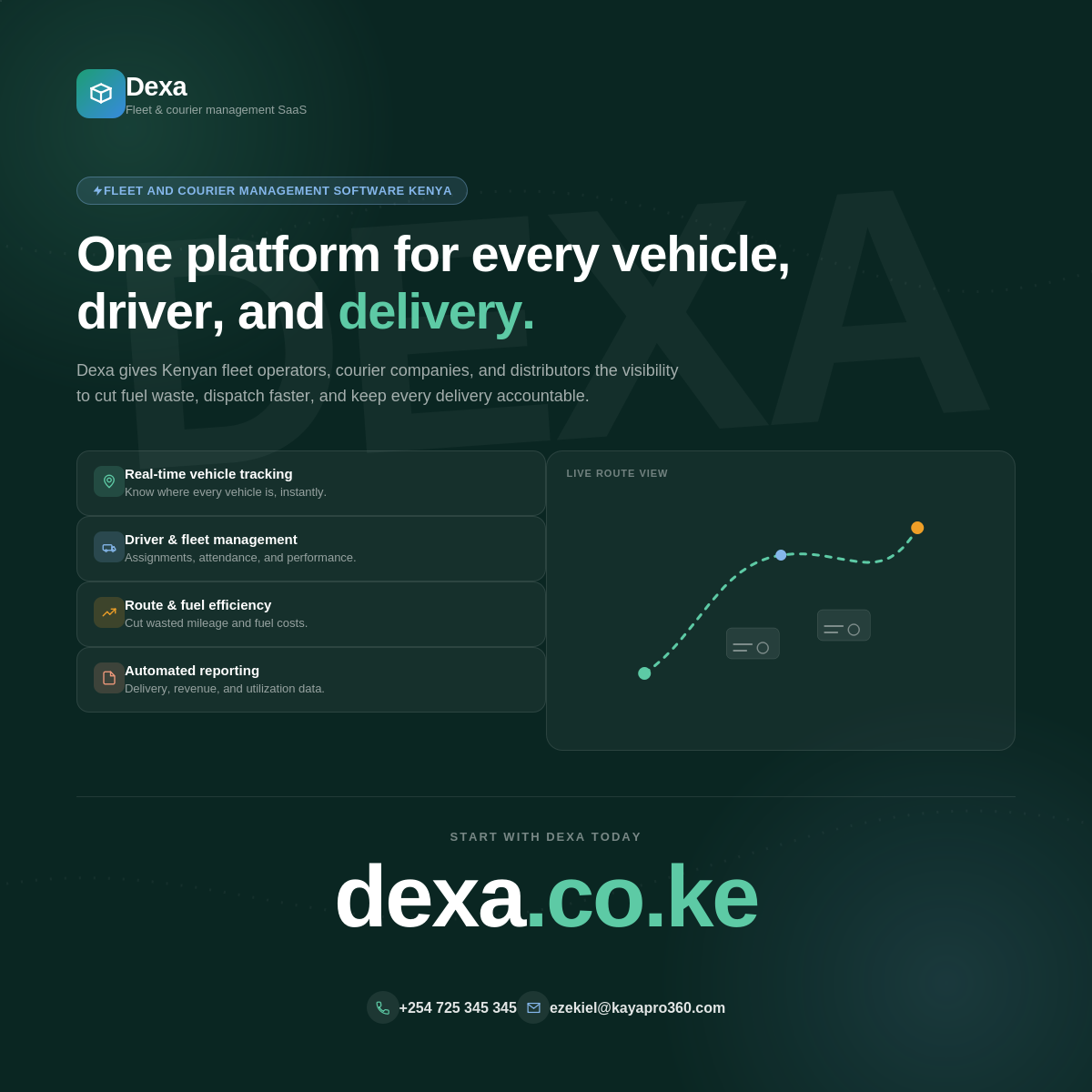
provides the visibility and control needed to operate efficiently in a competitive market.
What Is Fleet Management Software?
Fleet management software is a digital solution that helps businesses monitor and manage vehicles, drivers, deliveries, routes, and operational performance from a centralized platform.
The software provides tools for:
- Vehicle tracking
- Driver management
- Route planning
- Dispatch coordination
- Maintenance scheduling
- Fuel monitoring
- Delivery tracking
- Reporting and analytics
By centralizing these functions, businesses gain complete visibility over their fleet operations.
Why Fleet Management Matters in Kenya
Kenya’s economy depends heavily on transportation and logistics.
Industries that rely on efficient fleet operations include:
- Courier services
- E-commerce businesses
- Distribution companies
- FMCG suppliers
- Construction firms
- Utility providers
- Healthcare logistics providers
As customer expectations increase, businesses need better systems to manage growing transportation demands.
Fleet management software provides the structure necessary to maintain efficiency and profitability.
Common Fleet Management Challenges
Rising Fuel Costs
Fuel is often one of the largest expenses for transport businesses.
Without proper monitoring:
- Vehicles may take inefficient routes
- Drivers may waste fuel through excessive idling
- Operational costs increase significantly
Fleet management software helps reduce these costs through route optimization and performance monitoring.
Poor Vehicle Visibility
Many businesses struggle to know:
- Where vehicles are located
- Which deliveries are in progress
- How drivers are performing
This lack of visibility creates operational inefficiencies.
Modern software provides real-time tracking and reporting.
Inefficient Dispatching
Manual dispatch systems often lead to:
- Delayed assignments
- Poor route planning
- Uneven workload distribution
Digital dispatch management helps eliminate these challenges.
Vehicle Maintenance Problems
Unexpected vehicle breakdowns can disrupt operations.
Fleet management software helps businesses schedule maintenance proactively, reducing downtime and repair costs.
How Fleet Management Software Works
A fleet management platform connects vehicles, drivers, dispatchers, and managers through a centralized system.
The process typically includes:
- Assigning delivery tasks
- Monitoring vehicle movement
- Tracking driver activity
- Recording delivery progress
- Generating operational reports
- Managing maintenance schedules
This creates a structured workflow that improves efficiency across the organization.
Key Features of Fleet Management Software Kenya
Real-Time Vehicle Tracking
Real-time tracking allows businesses to monitor vehicle locations throughout the day.
Benefits include:
- Improved visibility
- Faster response to issues
- Better customer communication
- Enhanced security
Managers can make informed decisions based on live operational data.
Driver Performance Monitoring
Drivers play a critical role in fleet efficiency.
Software helps monitor:
- Delivery completion rates
- Route adherence
- Driver availability
- Productivity metrics
This improves accountability and supports performance management.
Route Optimization
Efficient route planning helps businesses:
- Reduce travel time
- Lower fuel consumption
- Increase delivery capacity
- Improve customer satisfaction
Optimized routes contribute directly to profitability.
Dispatch Coordination
Dispatch teams can assign tasks quickly and efficiently.
Benefits include:
- Faster job allocation
- Reduced communication delays
- Better workload balancing
- Improved operational visibility
This creates smoother day-to-day operations.
Maintenance Scheduling
Preventive maintenance is critical for keeping fleets operational.
Software allows businesses to:
- Schedule servicing
- Track maintenance history
- Monitor vehicle health
- Reduce unexpected breakdowns
Well-maintained vehicles perform better and last longer.
Delivery Tracking Integration
For courier and logistics businesses, fleet management should connect directly to delivery operations.
A platform like Dexa
helps businesses manage both fleet movement and delivery progress from a unified system.
Benefits of Fleet Management Software
Lower Operational Costs
Businesses can reduce expenses through:
- Better route planning
- Reduced fuel waste
- Efficient dispatching
- Preventive maintenance
These savings improve profitability.
Increased Productivity
Digital systems eliminate repetitive manual tasks.
Teams spend less time on paperwork and more time focusing on service delivery.
Improved Customer Satisfaction
Customers benefit from:
- Faster deliveries
- Better communication
- More accurate delivery timelines
This improves retention and loyalty.
Better Business Visibility
Managers gain access to real-time information regarding:
- Vehicle performance
- Driver productivity
- Delivery progress
- Operational efficiency
This supports better decision-making.
Fleet Management for Courier Companies
Courier businesses face unique challenges due to high delivery volumes and customer expectations.
Fleet management software helps courier companies:
- Track delivery vehicles
- Monitor rider performance
- Improve dispatch efficiency
- Manage fuel usage
- Maintain delivery visibility
These capabilities help businesses stay competitive in a rapidly growing market.
The Role of Data in Fleet Optimization
Data is becoming increasingly important in logistics.
Fleet management software generates insights that help businesses:
- Identify operational inefficiencies
- Improve route planning
- Monitor fuel consumption
- Measure driver performance
- Forecast transportation needs
Data-driven decision-making improves long-term business performance.
Supporting Business Growth
As organizations expand, managing vehicles manually becomes increasingly difficult.
Fleet management software provides scalability by allowing businesses to:
- Add new vehicles
- Expand into new regions
- Manage larger teams
- Handle higher delivery volumes
Growth becomes more manageable and sustainable.
Enhancing Fleet Security
Vehicle security is a major concern for many businesses.
Fleet management systems improve security through:
- Real-time vehicle visibility
- Driver accountability
- Digital activity records
- Centralized monitoring
This reduces operational risks and improves asset protection.
Sustainability and Fleet Efficiency
Environmental sustainability is becoming increasingly important.
Fleet management software contributes by:
- Reducing fuel consumption
- Optimizing routes
- Minimizing unnecessary trips
- Supporting paperless operations
These improvements help businesses lower costs while reducing environmental impact.
Why Choose Dexa for Logistics and Fleet Operations?
provides a structured platform designed for modern logistics businesses.
The system helps organizations:
- Manage deliveries efficiently
- Coordinate dispatch operations
- Track logistics activities
- Improve operational visibility
- Support business growth
By centralizing key workflows, businesses gain greater control over their operations.
Future Trends in Fleet Management Kenya
The future of fleet management includes:
- Artificial Intelligence (AI)
- Predictive maintenance
- Automated dispatching
- Advanced route optimization
- Smart analytics
- Integrated logistics ecosystems
Businesses that embrace technology today will be better positioned for tomorrow’s challenges.
How Fleet Management Software Improves Driver Accountability
Driver accountability is one of the biggest challenges for fleet operators. Without proper monitoring, businesses may experience delays, route deviations, unauthorized vehicle usage, and increased fuel consumption.
Fleet management software creates accountability by providing visibility into driver activities.
Benefits include:
- Tracking completed assignments
- Monitoring route adherence
- Recording delivery timelines
- Measuring productivity levels
- Improving driver responsibility
When drivers know that activities are recorded, overall performance often improves significantly.
Reducing Fuel Expenses Through Smart Fleet Management
Fuel costs can consume a large percentage of a company’s transportation budget.
Fleet management software helps reduce fuel expenses through:
- Route optimization
- Reduced idle time
- Better trip planning
- Efficient dispatch allocation
- Performance monitoring
Even small improvements in fuel efficiency can generate substantial savings over time.
Improving Fleet Utilization Rates
Many businesses own vehicles that are underutilized due to poor planning and visibility.
A fleet management system helps managers:
- Track vehicle availability
- Assign resources effectively
- Reduce downtime
- Maximize productivity
Higher fleet utilization means businesses can achieve more deliveries without purchasing additional vehicles.
Digital Records Improve Operational Accuracy
Paper-based records are prone to loss, damage, and human error.
Fleet management software digitizes important information including:
- Vehicle records
- Driver profiles
- Maintenance history
- Delivery logs
- Operational reports
Digital record management improves accuracy and makes information easier to access.
Supporting Last-Mile Delivery Operations
Last-mile delivery is often the most expensive and challenging part of logistics.
Fleet management software improves last-mile performance through:
- Real-time tracking
- Efficient dispatching
- Delivery visibility
- Route optimization
- Customer communication
These improvements help businesses deliver faster and more reliably.
Managing Large Vehicle Fleets Efficiently
As businesses expand, managing dozens or hundreds of vehicles becomes increasingly complex.
Fleet management software enables organizations to:
- Monitor all vehicles from one dashboard
- Track performance across locations
- Standardize operational procedures
- Generate centralized reports
This creates consistency and operational control.
Improving Customer Satisfaction Through Better Delivery Performance
Customers expect timely and reliable deliveries.
Fleet management software improves customer experience by:
- Providing accurate delivery estimates
- Reducing delays
- Improving communication
- Increasing transparency
Satisfied customers are more likely to return and recommend your services.
Strengthening Business Decision-Making with Analytics
Modern fleet management platforms generate valuable operational insights.
Businesses can analyze:
- Vehicle performance trends
- Delivery completion rates
- Driver productivity
- Route efficiency
- Fuel consumption patterns
These analytics help management identify opportunities for improvement.
Preparing Logistics Businesses for Future Growth
Growth often creates operational complexity.
Fleet management software provides a scalable foundation by helping businesses:
- Expand geographically
- Increase vehicle numbers
- Handle higher delivery volumes
- Manage larger teams
This enables sustainable growth without losing operational control.
Why Technology Is Essential for Modern Fleet Operations
The transportation industry is becoming increasingly digital.
Businesses that adopt fleet management software gain advantages such as:
- Better efficiency
- Lower operating costs
- Improved customer service
- Increased competitiveness
- Enhanced visibility
Organizations that continue relying on manual processes may struggle to keep pace with industry changes.
Enhancing Route Planning for Faster Deliveries
Efficient route planning is one of the most important aspects of fleet management. Poor route selection can lead to longer delivery times, increased fuel consumption, and dissatisfied customers.
Fleet management software helps businesses identify the most efficient routes by considering:
- Delivery locations
- Traffic conditions
- Driver availability
- Vehicle capacity
- Delivery priorities
Optimized routes improve delivery speed while reducing operational expenses.
Real-Time Fleet Visibility Improves Operational Control
Business owners and logistics managers need complete visibility into daily operations.
Fleet management software provides a centralized dashboard where managers can monitor:
- Active vehicles
- Delivery progress
- Driver assignments
- Completed tasks
- Operational performance
Real-time visibility enables faster decision-making and more effective management.
Automated Reporting Saves Valuable Time
Generating reports manually can consume significant time and resources.
Fleet management software automates reporting by providing instant access to:
- Delivery reports
- Driver performance reports
- Vehicle utilization reports
- Operational summaries
- Financial performance insights
This allows management teams to focus on strategy rather than paperwork.
Improving Communication Between Dispatchers and Drivers
Effective communication is essential for successful fleet operations.
A fleet management platform creates a structured communication channel that helps:
- Reduce misunderstandings
- Speed up dispatch assignments
- Improve delivery coordination
- Minimize operational delays
Better communication results in smoother logistics operations and higher productivity.
Reducing Vehicle Downtime
Vehicle downtime directly impacts revenue and customer satisfaction.
Fleet management software helps reduce downtime through:
- Maintenance reminders
- Service scheduling
- Vehicle inspection tracking
- Maintenance history management
Preventive maintenance keeps vehicles operational and minimizes unexpected breakdowns.
Monitoring Fleet Performance Across Multiple Locations
Businesses operating in different cities or regions require centralized oversight.
Fleet management software allows managers to:
- Compare branch performance
- Monitor regional operations
- Standardize procedures
- Identify operational gaps
This creates consistency across the entire organization.
Increasing Profitability Through Better Resource Allocation
Efficient resource allocation is critical for profitability.
Fleet management software helps businesses:
- Assign vehicles effectively
- Balance driver workloads
- Optimize delivery schedules
- Maximize asset utilization
Better resource management reduces waste and increases profitability.
Supporting Same-Day and Express Delivery Services
Customer expectations continue to evolve, with many clients demanding same-day or express deliveries.
Fleet management software supports fast delivery services by:
- Improving dispatch efficiency
- Providing real-time tracking
- Optimizing routes
- Enhancing delivery visibility
This allows businesses to offer premium delivery services confidently.
Creating a Competitive Advantage in the Logistics Industry
Technology adoption often separates industry leaders from competitors.
Businesses using fleet management software gain advantages such as:
- Faster operations
- Improved service quality
- Better customer satisfaction
- Enhanced operational control
These benefits help companies stand out in a competitive market.
Digital Transformation in Kenya’s Logistics Sector
Kenya’s logistics industry is increasingly embracing digital technologies.
Businesses are investing in:
- Cloud-based systems
- Automated workflows
- Real-time tracking solutions
- Digital reporting tools
- Data-driven decision-making
Fleet management software plays a central role in this transformation by helping businesses modernize operations and improve efficiency.
Supporting Business Compliance and Record Keeping
Accurate records are essential for audits, compliance, and operational management.
Fleet management software helps businesses maintain:
- Driver records
- Vehicle histories
- Maintenance logs
- Delivery records
- Operational reports
Digital record keeping improves organization and reduces administrative burden.
Building a Data-Driven Logistics Business
Successful logistics companies rely on data to improve operations.
Fleet management software provides valuable insights into:
- Fleet utilization
- Delivery performance
- Operational costs
- Driver productivity
- Customer service levels
Using data effectively helps businesses make smarter decisions and achieve sustainable growth.
Future Innovations in Fleet Management
The future of fleet management will be driven by innovation.
Emerging technologies include:
- Artificial Intelligence (AI)
- Predictive maintenance
- Smart route optimization
- Automated dispatch systems
- Advanced analytics dashboards
Businesses that adopt modern fleet management platforms today will be better prepared for future advancements.
Why Businesses Are Choosing Dexa
Businesses across Kenya are looking for reliable platforms that simplify logistics management.
helps organizations:
- Streamline dispatch operations
- Improve delivery visibility
- Enhance fleet coordination
- Support business growth
- Improve customer satisfaction
By centralizing logistics workflows, businesses gain greater control and operational efficiency.
Frequently Asked Questions
What is fleet management software?
Fleet management software is a digital platform that helps businesses manage vehicles, drivers, dispatch operations, and logistics activities from a centralized system.
How does fleet management software reduce costs?
It reduces fuel consumption, improves route planning, minimizes downtime, and increases operational efficiency.
Is fleet management software suitable for small businesses?
Yes. Small businesses can use fleet management software to improve operations and prepare for growth.
Can fleet management software improve customer service?
Absolutely. Faster deliveries, accurate tracking, and better communication all contribute to improved customer satisfaction.
Why is fleet management important in Kenya?
With increasing transportation demands and rising operational costs, fleet management software helps businesses remain competitive and profitable.
Conclusion
As transportation and logistics continue to evolve, businesses need smarter ways to manage vehicles, drivers, and deliveries.
Fleet Management Software Kenya provides the visibility, control, and automation necessary to improve operational efficiency and customer satisfaction.
Whether you operate a courier company, logistics business, distribution network, or transport fleet, digital fleet management can help reduce costs, improve productivity, and support sustainable growth.
With solutions like Dexa
, organizations can modernize operations and build a stronger foundation for future success.