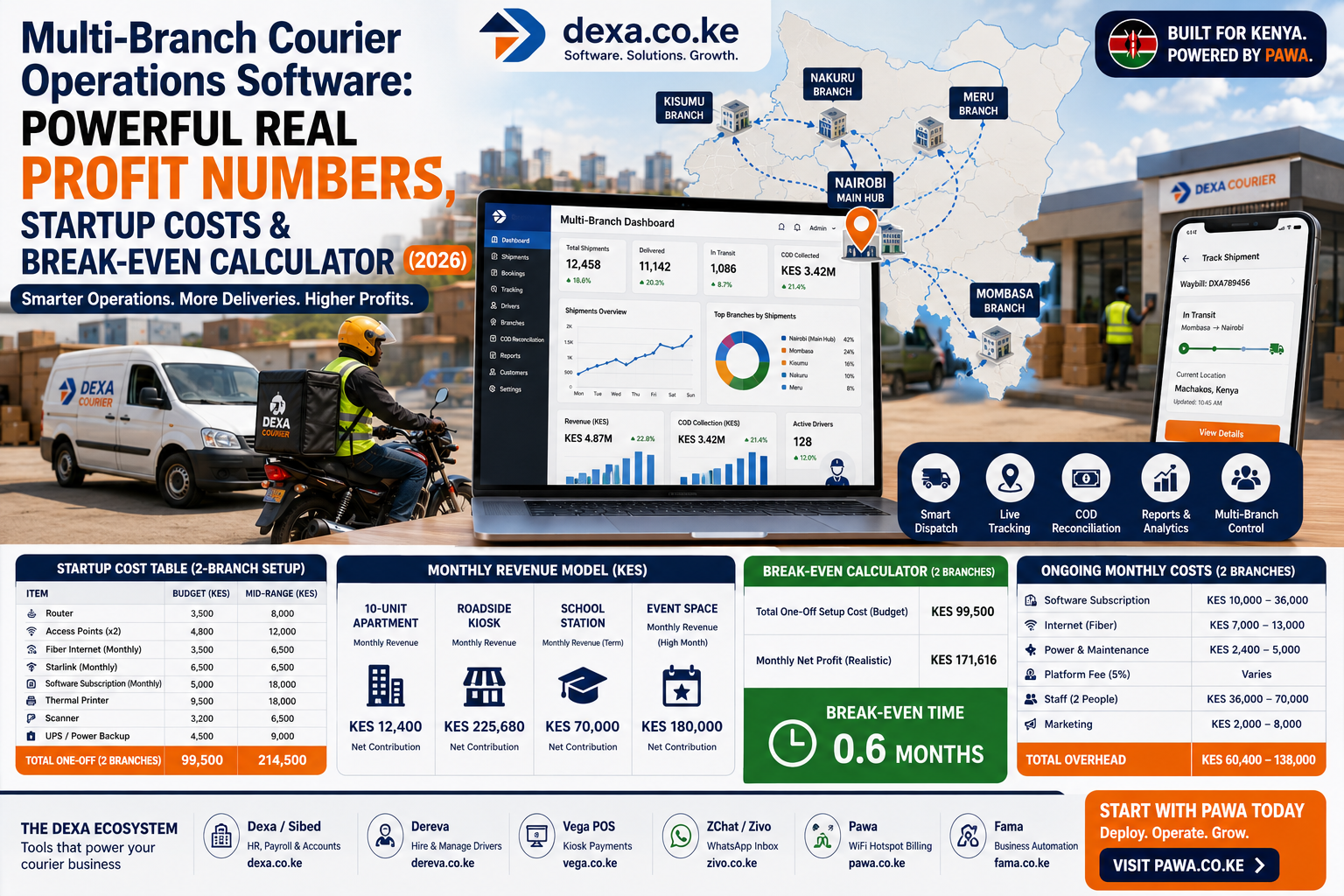
, a cloud-based courier and delivery management solution designed to simplify dispatch, rider coordination, customer tracking, billing, and reporting.
What Is Delivery Management Software?
Delivery management software is a digital platform that helps businesses plan, execute, track, and optimize deliveries.
Instead of relying on multiple disconnected tools, everything is managed through one centralized system.
A modern delivery management system typically includes:
- Order management
- Dispatch coordination
- Rider assignment
- Real-time tracking
- Customer notifications
- Proof of delivery
- Payment management
- Reporting and analytics
By integrating these functions into one platform, businesses can operate more efficiently and scale without operational chaos.
Why Delivery Management Software Is Important in Kenya
The Kenyan logistics market is becoming increasingly competitive.
Businesses are expected to deliver faster while maintaining high service quality.
Without the right technology, courier companies face several challenges.
These include:
- Missed deliveries
- Delayed assignments
- Lost delivery records
- Customer complaints
- Poor rider accountability
- Financial reconciliation problems
Delivery management software solves these issues by providing structure, visibility, and automation.
The Challenges Facing Traditional Delivery Operations
Manual Dispatching
Many businesses still assign deliveries manually through calls and messaging apps.
This often leads to:
- Delayed assignments
- Miscommunication
- Duplicate work
- Human errors
As delivery volumes increase, manual dispatching becomes unsustainable.
Lack of Delivery Visibility
Customers want to know where their parcels are at all times.
Without a tracking system:
- Customers become frustrated
- Support calls increase
- Trust decreases
Real-time tracking eliminates these issues.
Poor Rider Coordination
Managing multiple riders manually can be difficult.
Without a structured system:
- Riders become overloaded
- Deliveries get delayed
- Performance becomes difficult to measure
A delivery management platform solves these coordination challenges.
Disconnected Financial Systems
Many courier businesses manage payments separately from operations.
This causes:
- Reconciliation delays
- Missing records
- Billing errors
Integrated systems ensure all financial records remain connected to delivery operations.
How Delivery Management Software Works
Modern systems follow a structured workflow.
First, an order is created in the system.
The dispatch team then assigns the order to an available rider.
The rider receives the assignment instantly and begins the delivery process.
Throughout the journey, the system updates delivery progress in real time.
The customer receives tracking updates while management maintains visibility.
Once the delivery is completed, proof of delivery is uploaded and payment records are updated automatically.
This creates a seamless operational flow.
Key Features of Delivery Management Software Kenya
Smart Order Management
Order management is the foundation of delivery operations.
The software allows businesses to:
- Create delivery requests
- Categorize orders
- Prioritize urgent deliveries
- Track progress from start to finish
Every order remains visible throughout its lifecycle.
Automated Dispatch Management
Modern systems automate dispatch processes.
Benefits include:
- Faster assignments
- Reduced human error
- Better workload distribution
- Improved delivery speed
Dispatchers can view all active orders from a centralized dashboard.
Real-Time Tracking
Real-time tracking is one of the most valuable features for both businesses and customers.
Tracking enables:
- Live delivery monitoring
- Accurate ETAs
- Improved transparency
- Faster issue resolution
Customers gain confidence when they can track their deliveries independently.
Rider Management
Efficient rider coordination is critical for success.
Delivery management software helps businesses:
- Monitor rider availability
- Assign workloads fairly
- Track performance
- Manage delivery capacity
This improves productivity while reducing operational bottlenecks.
Proof of Delivery (POD)
Proof of delivery helps verify completed deliveries.
Riders can upload:
- Delivery photos
- Digital signatures
- Delivery timestamps
This reduces disputes and improves customer trust.
Customer Notifications
Customers appreciate regular updates.
Automated notifications provide information such as:
- Order received
- Rider assigned
- Delivery in progress
- Delivery completed
This reduces customer inquiries and enhances the overall experience.
Why Dexa Is a Powerful Delivery Management Platform
provides businesses with a complete delivery management ecosystem.
Instead of using separate tools for dispatch, tracking, payments, and reporting, everything is available in one platform.
Dexa helps businesses:
- Manage deliveries efficiently
- Coordinate riders effectively
- Track orders in real time
- Link payments to deliveries
- Generate operational reports
This creates a structured and scalable delivery operation.
Benefits of Using Delivery Management Software
Improved Operational Efficiency
Automation eliminates repetitive tasks and streamlines workflows.
Teams spend less time managing paperwork and more time focusing on customers.
Faster Deliveries
Optimized dispatching ensures deliveries are assigned quickly and efficiently.
This reduces delays and improves delivery success rates.
Better Customer Satisfaction
Customers receive accurate updates and delivery visibility.
This improves trust and encourages repeat business.
Reduced Operational Costs
Businesses save money through:
- Reduced manual labor
- Fewer errors
- Lower communication costs
- Better resource utilization
Increased Scalability
As businesses grow, software allows them to handle larger delivery volumes without operational breakdowns.
Delivery Analytics and Business Intelligence
Data plays a major role in business growth.
Delivery management software provides valuable insights such as:
- Delivery completion rates
- Average delivery times
- Rider productivity
- Revenue trends
- Customer behavior patterns
These insights help businesses make informed decisions.
Supporting E-Commerce Growth in Kenya
E-commerce continues to expand across Kenya.
Online businesses require reliable delivery systems to satisfy customers.
Delivery management software helps e-commerce stores by:
- Automating fulfillment processes
- Providing tracking links
- Improving delivery success rates
- Enhancing customer experience
This creates a stronger connection between retailers and customers.
Enhancing Customer Experience Through Technology
Customer expectations have changed significantly.
People now expect:
- Fast deliveries
- Real-time updates
- Accurate delivery estimates
- Transparent communication
Businesses that fail to meet these expectations risk losing customers.
Delivery management software helps businesses stay competitive.
Security and Data Protection
Modern logistics systems must prioritize security.
A professional delivery management platform provides:
- Secure user authentication
- Role-based access controls
- Activity logs
- Data backups
- Controlled user permissions
This protects sensitive customer and operational information.
The Future of Delivery Management in Kenya
Technology continues to reshape the logistics industry.
Future delivery management systems will likely include:
- AI-powered dispatching
- Route optimization algorithms
- Predictive delivery analytics
- Automated customer engagement
- Smart logistics forecasting
Businesses that adopt technology today will be better positioned for future growth.
Who Should Use Delivery Management Software?
This solution is ideal for:
- Courier companies
- E-commerce businesses
- Pharmacy delivery services
- Food delivery companies
- Retail distributors
- Logistics startups
- Multi-branch delivery businesses
Any organization that handles deliveries can benefit from a structured system.
How Delivery Management Software Reduces Failed Deliveries
Failed deliveries can be costly for courier companies. They lead to wasted fuel, lost time, customer dissatisfaction, and increased operational expenses.
A delivery management platform helps reduce failed deliveries by:
- Providing accurate customer information
- Offering real-time communication between riders and customers
- Sending automated delivery notifications
- Recording delivery attempts
- Tracking delivery status throughout the journey
With a structured platform like Dexa
, businesses can significantly improve first-attempt delivery success rates.
Improving Rider Productivity Through Technology
Riders are the backbone of any courier operation. Their efficiency directly impacts customer satisfaction and profitability.
Delivery management software improves rider productivity by:
- Providing clear delivery assignments
- Eliminating paperwork
- Reducing unnecessary phone calls
- Offering optimized delivery workflows
- Allowing instant status updates
This enables riders to complete more deliveries in less time while maintaining service quality.
Building Customer Trust Through Delivery Transparency
Trust is one of the most important factors in logistics.
Customers want assurance that their parcels are safe and progressing as expected.
Delivery management software helps build trust through:
- Real-time tracking
- Automated notifications
- Proof of delivery
- Delivery history records
- Transparent communication
When customers have visibility into their deliveries, they are more likely to become repeat clients.
Managing Peak Delivery Seasons Efficiently
Certain periods experience significant increases in delivery demand, including:
- Holiday seasons
- Back-to-school periods
- Black Friday sales
- Promotional campaigns
- Festive seasons
Without proper systems, courier companies may struggle to manage these spikes.
Delivery management software helps businesses:
- Handle increased order volumes
- Balance rider workloads
- Monitor delivery performance
- Maintain service quality during peak periods
This ensures consistent customer experiences even during high-demand seasons.
Supporting Multi-Branch Courier Operations
As courier businesses grow, managing multiple branches becomes more complex.
A centralized delivery management system allows businesses to:
- Monitor all branches from one platform
- Standardize operations
- Track performance across locations
- Generate centralized reports
- Maintain consistent service quality
This makes expansion easier and more manageable.
Reducing Operational Bottlenecks
Operational bottlenecks slow down deliveries and affect customer satisfaction.
Common bottlenecks include:
- Delayed rider assignments
- Poor communication
- Incomplete delivery records
- Payment reconciliation delays
Delivery management software identifies and eliminates these bottlenecks by providing structured workflows and real-time visibility.
Enhancing Business Reputation
A professional delivery experience contributes directly to brand reputation.
Businesses that offer:
- Fast deliveries
- Reliable tracking
- Accurate updates
- Professional communication
are more likely to earn positive reviews and customer referrals.
A delivery management platform helps maintain these standards consistently.
Leveraging Data for Continuous Improvement
Every delivery generates valuable operational data.
Businesses can use this information to:
- Identify high-performing riders
- Analyze delivery trends
- Improve route planning
- Reduce delivery times
- Increase customer satisfaction
Data-driven decisions help businesses remain competitive and profitable.
Supporting Sustainable Logistics Operations
Modern logistics companies are increasingly focused on sustainability.
Delivery management software contributes by:
- Reducing unnecessary trips
- Optimizing delivery routes
- Improving fuel efficiency
- Minimizing paperwork through digitization
These improvements help reduce environmental impact while lowering operational costs.
Why Digital Transformation Is No Longer Optional
The logistics industry is becoming increasingly competitive.
Customers now expect:
- Instant delivery updates
- Real-time tracking
- Faster delivery times
- Digital communication
Businesses that continue relying on manual processes risk falling behind competitors.
Investing in a modern platform like Dexa
enables courier companies to adapt to changing market demands and position themselves for long-term growth.
Conclusion
The logistics industry in Kenya is evolving rapidly, and businesses need modern tools to remain competitive.
Delivery Management Software Kenya provides the visibility, automation, and efficiency needed to manage deliveries successfully.
From dispatch and tracking to rider management and financial reporting, a centralized platform can transform how delivery operations are managed.
offers businesses a powerful solution for streamlining courier operations, improving customer satisfaction, and scaling efficiently.
Organizations that invest in delivery management technology today will be better prepared for the future of logistics in Kenya.
Contact Dexa
+254725345345
ezekiel@kayapro360.com