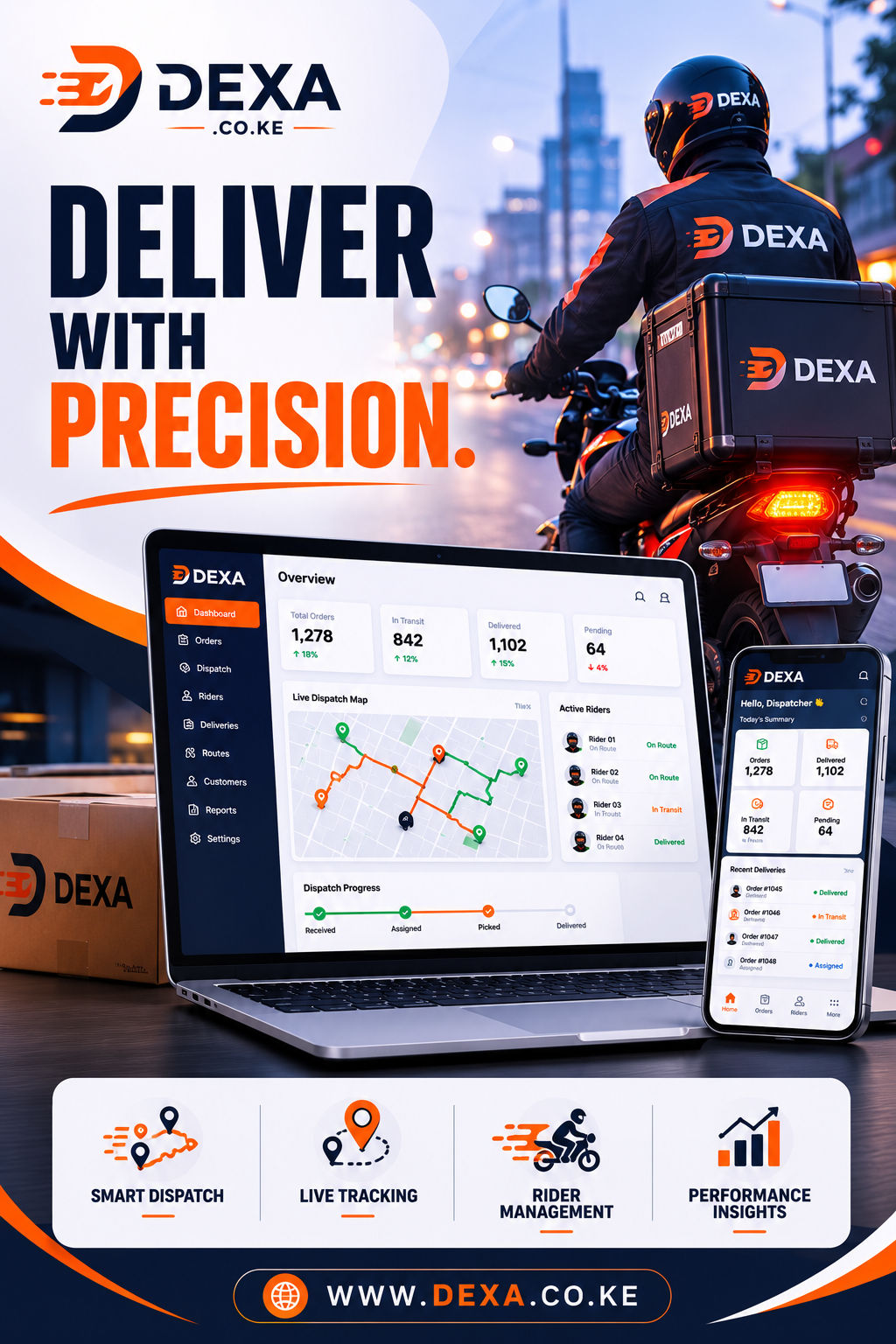
Route optimization software Kenya is becoming an essential solution for businesses that depend on efficient transportation, deliveries, field services, and fleet operations. As fuel prices, traffic congestion, customer expectations, and delivery volumes continue to increase, businesses can no longer rely entirely on manual route planning or basic navigation applications. They need intelligent technology that can analyze multiple routes, delivery locations, traffic conditions, vehicle capacity, and time restrictions to determine the most efficient way to complete daily operations.
For courier companies, logistics providers, distributors, retailers, e-commerce businesses, food delivery companies, pharmacies, wholesalers, and field service organizations, optimized routing can make a major difference. The right software can reduce unnecessary mileage, improve driver productivity, lower fuel consumption, increase on-time deliveries, and provide managers with better visibility over their fleets.
This comprehensive guide explains how route optimization software works, why Kenyan businesses need it, the challenges of manual route planning, how Artificial Intelligence improves routing, the key features to look for, and the major benefits businesses can achieve.
What Is Route Optimization Software?
Route optimization software Kenya is a technology solution designed to determine the most efficient routes for vehicles, drivers, deliveries, and field service teams.
Unlike basic navigation applications that typically provide directions from one location to another, route optimization software can analyze multiple destinations at the same time.
For example, a delivery company may have 100 customer orders that need to be completed by 20 drivers.
Manually deciding which driver should visit which customers and determining the best order for each stop can take hours.
Route optimization software automatically analyzes the entire delivery schedule and creates optimized routes.
The system can consider:
- Customer locations
- Number of delivery stops
- Vehicle availability
- Vehicle capacity
- Driver schedules
- Traffic conditions
- Delivery deadlines
- Road restrictions
- Distance
- Estimated travel time
The result is a more efficient transportation plan.
Why Route Optimization Matters in Kenya
Kenyan businesses operate in a transportation environment where traffic, road conditions, delivery distances, and customer locations can change quickly.
Businesses operating in Nairobi may encounter heavy congestion during peak hours, while companies serving customers across counties may need to manage significantly longer distances.
These challenges make efficient routing extremely important.
Businesses that fail to optimize routes may experience:
- Excessive fuel consumption
- Late deliveries
- Low driver productivity
- Unnecessary mileage
- Higher vehicle maintenance costs
- Customer complaints
- Poor fleet utilization
Implementing Route optimization software Kenya allows companies to respond to these challenges using data rather than relying entirely on manual decisions.
The software can analyze available information and recommend routes that minimize unnecessary travel while helping drivers meet delivery commitments.
How Route Optimization Software Works
Route optimization begins when delivery or service information enters the system.
This information can come from:
- E-commerce platforms
- ERP systems
- CRM systems
- Inventory management software
- Customer orders
- Mobile applications
- Dispatch platforms
Once the information is received, the system analyzes all destinations and operational requirements.
Step 1: Collect Delivery Information
The software receives details such as:
- Customer addresses
- Delivery priorities
- Required delivery times
- Package sizes
- Vehicle requirements
Step 2: Analyze Available Vehicles
The system identifies which vehicles are available and considers factors such as:
- Vehicle capacity
- Current location
- Vehicle type
- Driver availability
- Existing assignments
Step 3: Analyze Routes
The system calculates possible routes between multiple destinations.
It considers:
- Distance
- Estimated travel time
- Traffic
- Road restrictions
- Delivery windows
Step 4: Create Optimized Routes
The software determines the most efficient sequence of stops for each driver.
Instead of visiting locations randomly, drivers receive an optimized delivery sequence.
Step 5: Monitor Routes in Real Time
Once drivers begin their journeys, managers can track their progress using GPS.
If conditions change, the system can recommend route adjustments.
Route Planning vs Route Optimization
These terms are often confused, but they are not exactly the same.
Route Planning
Route planning involves determining how a driver should travel from one location to another.
For example:
A driver needs to travel from Nairobi to Nakuru.
A navigation system can recommend a route.
Route Optimization
Route optimization is more advanced.
Imagine the driver needs to visit:
- 10 customers
- 3 warehouses
- 2 pickup locations
The software determines the most efficient order in which to visit every location while considering operational constraints.
This can significantly reduce total travel distance and time.
Challenges of Manual Route Planning
Many businesses still plan routes using spreadsheets, paper records, phone calls, or basic map applications.
Although these methods may work for very small operations, they become inefficient as the business grows.
Time-Consuming Planning
A dispatcher may spend hours determining which driver should visit each customer.
As the number of deliveries increases, manual planning becomes increasingly difficult.
Increased Fuel Consumption
Poorly planned routes often cause drivers to travel unnecessary distances.
This increases fuel expenses.
For businesses operating dozens of vehicles, even small inefficiencies can result in significant annual costs.
Traffic Delays
Static routes may not account for changing traffic conditions.
A route that was efficient in the morning may become heavily congested later in the day.
Without real-time information, drivers can become trapped in traffic.
Poor Driver Utilization
Some drivers may receive too many deliveries while others have little work.
Manual scheduling makes it difficult to balance workloads accurately.
Missed Delivery Windows
Customers may request deliveries during specific periods.
Poor route planning can cause drivers to arrive too early or too late.
This can result in failed deliveries and customer dissatisfaction.
Limited Operational Visibility
Without real-time tracking, managers may not know where drivers are or whether deliveries are progressing according to schedule.
This makes it difficult to respond quickly to problems.
How Artificial Intelligence Improves Route Optimization
Artificial Intelligence is taking route optimization to another level.
Traditional route planning relies on predefined rules.
AI can analyze large amounts of historical and real-time data to make better decisions.
For example, AI can evaluate:
- Historical traffic patterns
- Current traffic conditions
- Driver performance
- Delivery history
- Customer availability
- Vehicle capacity
- Weather conditions
- Road conditions
The system can then recommend routes based on the latest available information.
Dynamic Route Optimization
One of the biggest advantages of Route optimization software Kenya is its ability to adapt to changing conditions.
Suppose a driver is traveling toward a customer when traffic congestion suddenly develops.
A traditional route plan may remain unchanged.
An AI-powered system can detect the problem and calculate an alternative route.
The driver receives updated instructions through the mobile application.
This helps reduce delays and improves delivery reliability.
Key Features of Route Optimization Software
When choosing Route optimization software Kenya, businesses should evaluate the features available.
A comprehensive platform should provide more than basic navigation.
Multi-Stop Route Optimization
Businesses with multiple daily deliveries need software capable of managing numerous destinations simultaneously.
The system determines:
- Best driver
- Best route
- Best stop sequence
- Estimated completion time
This is particularly useful for courier companies, distributors, and e-commerce businesses.
Real-Time GPS Tracking
GPS tracking gives managers real-time visibility over vehicles and drivers.
Managers can see:
- Current vehicle location
- Driver movement
- Route progress
- Delivery status
- Idle time
- Route deviations
This information makes fleet management more transparent.
Traffic-Aware Routing
Traffic can significantly affect delivery schedules.
Modern route optimization systems consider traffic information when calculating routes.
When congestion occurs, the system can recommend alternatives.
This is particularly valuable for businesses operating in heavily congested urban areas.
Driver Management
A route optimization platform should also help businesses manage drivers.
Managers can monitor:
- Driver availability
- Driver schedules
- Assigned routes
- Completed deliveries
- Working hours
- Performance
The software can distribute routes based on driver availability and workload.
Delivery Time Windows
Many customers require deliveries within specific periods.
For example:
- 8:00 AM–10:00 AM
- 10:00 AM–12:00 PM
- 2:00 PM–4:00 PM
Route optimization software considers these restrictions when creating routes.
This helps businesses meet customer commitments without creating unnecessary delays.
Vehicle Capacity Management
Different vehicles have different capacities.
A small van cannot carry the same amount of cargo as a large truck.
The software considers:
- Vehicle weight capacity
- Cargo volume
- Package size
- Delivery requirements
This ensures the right vehicle is assigned to the right route.
Automated Route Assignment
Once optimized routes are generated, they can automatically be assigned to drivers.
Drivers receive:
- Route details
- Customer information
- Delivery sequence
- Navigation instructions
- Special delivery instructions
This reduces communication between dispatchers and drivers.
Mobile Driver Application
A mobile application allows drivers to access routes directly from their smartphones.
Drivers can:
- View assigned routes
- Navigate to customers
- Update delivery status
- Capture proof of delivery
- Contact customers
- Report problems
This eliminates much of the paperwork associated with traditional delivery operations.
Proof of Delivery
Modern route optimization platforms can integrate digital proof of delivery.
Drivers can capture:
- Customer signatures
- Delivery photos
- GPS coordinates
- Timestamps
- Barcode scans
This provides businesses with verifiable records of completed deliveries.
Automated Customer Notifications
Customers can receive automated updates throughout the delivery process.
Notifications can include:
- Order received
- Driver assigned
- Delivery dispatched
- Estimated arrival time
- Driver approaching
- Delivery completed
This improves transparency and reduces customer calls.
Benefits of Route Optimization Software
The primary goal of Route optimization software Kenya is to make transportation operations more efficient.
However, the benefits extend beyond simply finding shorter routes.
Reduced Fuel Consumption
Fuel represents a major expense for delivery and transportation businesses.
Optimized routes reduce:
- Unnecessary mileage
- Detours
- Idle time
- Repeated trips
Reducing the number of kilometers traveled can produce significant savings over time.
Faster Deliveries
Optimized routes help drivers reach customers more efficiently.
Faster deliveries improve:
- Customer satisfaction
- Delivery capacity
- Driver productivity
- Business reputation
Increased Driver Productivity
Drivers can complete more deliveries during the same working hours.
Instead of spending time deciding where to go next, they follow an optimized sequence.
Lower Vehicle Maintenance Costs
Reduced mileage means less wear on:
- Tires
- Brakes
- Engines
- Suspension systems
This can extend vehicle lifespan and reduce maintenance expenses.
Improved Customer Satisfaction
Customers want reliable delivery services.
Accurate ETAs, real-time tracking, and timely deliveries improve the overall customer experience.
Better Fleet Utilization
Route optimization helps businesses make better use of available vehicles.
Managers can identify underutilized vehicles and redistribute workloads accordingly.
Reduced Operational Costs
Lower fuel consumption, fewer failed deliveries, improved driver productivity, and reduced administrative work all contribute to lower operating costs.
Why Kenyan Businesses Should Invest in Route Optimization
For businesses operating delivery fleets, transportation is often one of the largest operational expenses.
The cost of:
- Fuel
- Driver salaries
- Vehicle maintenance
- Insurance
- Repairs
- Administration
can quickly increase as the fleet grows.
Route optimization software Kenya helps businesses control these expenses by making every journey more efficient.
Instead of simply adding more vehicles as delivery volumes increase, businesses can first improve the utilization of their existing fleet.
This makes route optimization an important tool for sustainable growth.
Implementing Route optimization software Kenya can transform the way businesses manage deliveries, field operations, and transportation. However, purchasing software is only the beginning. Businesses need a structured implementation strategy to ensure employees understand the system, existing processes are properly integrated, and the organization can measure the results.
A successful route optimization strategy combines technology, accurate data, trained employees, efficient fleet management, and continuous performance monitoring. When these elements work together, businesses can reduce transportation costs, improve delivery reliability, increase fleet productivity, and create a better customer experience.
How to Implement Route Optimization Software Successfully
A carefully planned implementation helps businesses avoid unnecessary disruptions and ensures that employees receive maximum value from the system.
The implementation process can be divided into several stages.
1. Assess Your Current Routing Process
Before introducing new technology, analyze how routes are currently planned.
Identify:
- How drivers receive assignments
- How routes are created
- How customers receive updates
- How delivery performance is measured
- How vehicles are monitored
- How fuel consumption is tracked
- How failed deliveries are handled
This assessment helps identify the areas where Route optimization software Kenya can provide the greatest improvement.
2. Define Your Business Objectives
Set measurable goals before implementation.
For example, a business may want to:
- Reduce fuel expenses
- Reduce total kilometers traveled
- Improve on-time deliveries
- Increase daily deliveries
- Reduce driver idle time
- Improve fleet utilization
- Increase customer satisfaction
Clear objectives make it easier to measure the success of the software after deployment.
3. Prepare Your Data
Route optimization depends heavily on accurate information.
Businesses should ensure that their databases contain correct:
- Customer addresses
- GPS coordinates
- Driver information
- Vehicle details
- Delivery schedules
- Vehicle capacity
- Delivery time windows
Incorrect addresses can result in inefficient routes, regardless of how advanced the software is.
4. Integrate Existing Systems
If your business already uses an ERP, CRM, inventory system, e-commerce platform, or accounting system, consider integrating it with the route optimization platform.
Integration allows information to flow automatically between systems.
For example:
Customer places an order → order enters the system → route is optimized → driver receives assignment → customer receives tracking information → proof of delivery is recorded.
This creates a seamless delivery workflow.
5. Train Your Dispatch Team
Dispatchers should understand how to:
- Create routes
- Assign vehicles
- Monitor drivers
- Handle exceptions
- Review analytics
- Modify delivery schedules
Training reduces mistakes and improves employee confidence.
6. Train Drivers
Drivers should receive practical training on the mobile application.
They should know how to:
- View assigned routes
- Navigate to customers
- Update delivery status
- Capture proof of delivery
- Report problems
- Communicate with dispatchers
Driver adoption is critical because they interact directly with the system throughout the delivery process.
7. Start with a Pilot Project
Rather than deploying the software across the entire organization immediately, start with a small group.
For example:
- One branch
- Five vehicles
- One delivery region
Monitor performance for several weeks before expanding.
A pilot allows the organization to identify technical or operational problems before full deployment.
8. Monitor and Optimize
Once the software is operational, monitor performance regularly.
Compare results against the original objectives.
Look at:
- Fuel consumption
- Delivery times
- Driver productivity
- Route efficiency
- Customer satisfaction
- Fleet utilization
Use these insights to continuously improve your operations.
Common Challenges When Implementing Route Optimization Software
Although route optimization provides significant benefits, businesses may encounter several challenges during implementation.
Resistance to New Technology
Employees accustomed to manual processes may initially resist automated systems.
The best solution is to explain how the technology supports their work.
Dispatchers can spend less time performing repetitive tasks, while drivers receive clearer instructions.
Training and communication can significantly reduce resistance.
Poor Address Data
Incorrect or incomplete addresses can negatively affect route planning.
Businesses should verify customer information before migrating it into the new system.
Using GPS coordinates or accurate digital location information can further improve routing.
Internet Connectivity
Cloud-based systems require reliable connectivity.
Drivers operating in areas with poor network coverage may experience interruptions.
Businesses should consider platforms with offline functionality where possible.
The mobile application should be capable of storing essential information and synchronizing data when connectivity returns.
Integration Problems
Older business systems may not easily connect to modern platforms.
Businesses should evaluate API availability and integration capabilities before purchasing software.
A professional implementation team can help connect existing systems.
Employee Training
Insufficient training can prevent businesses from realizing the full benefits of route optimization.
Training should continue after launch rather than ending on the first day.
New employees should also receive training when they join the organization.
Measuring the Return on Investment
One of the most important questions businesses ask is whether route optimization software is worth the investment.
The answer can be measured through several financial and operational indicators.
Fuel Savings
Compare fuel consumption before and after implementing Route optimization software Kenya.
If optimized routes reduce total kilometers, fuel consumption should also decrease.
Increased Deliveries
If drivers spend less time traveling between locations, they may be able to complete more deliveries each day.
More deliveries from the same fleet can increase revenue without requiring immediate investment in additional vehicles.
Reduced Overtime
Efficient scheduling can reduce the amount of overtime required to complete daily deliveries.
This lowers labor costs while improving employee work-life balance.
Lower Vehicle Maintenance Costs
Reducing unnecessary mileage can decrease wear on:
- Tires
- Brakes
- Engines
- Suspension
- Other vehicle components
This can contribute to longer vehicle lifespans.
Fewer Failed Deliveries
Accurate routes and delivery time management can reduce unsuccessful delivery attempts.
Fewer failed deliveries mean fewer repeat trips and lower operational costs.
Key Performance Indicators for Route Optimization
Businesses should track specific KPIs to measure whether their routing strategy is improving.
Total Distance Traveled
Monitor the total number of kilometers traveled by the fleet.
A reduction may indicate better route efficiency.
Fuel Consumption
Track fuel consumption by:
- Vehicle
- Driver
- Route
- Delivery volume
This helps identify inefficient operations.
On-Time Delivery Rate
Measure the percentage of deliveries completed within the promised delivery window.
Improving this metric can significantly increase customer satisfaction.
Average Delivery Time
Track how long it takes to complete individual deliveries.
Lower average delivery times generally indicate improved routing efficiency.
Driver Utilization
Measure how much time drivers spend:
- Delivering
- Driving
- Waiting
- Idling
This helps businesses identify unused capacity.
Vehicle Utilization
Track how frequently each vehicle is being used.
Underutilized vehicles may indicate poor scheduling.
Cost Per Delivery
Calculate the total cost of completing each delivery.
A reduction in cost per delivery indicates improved operational efficiency.
Future Trends in Route Optimization Software
The future of Route optimization software Kenya will be strongly influenced by Artificial Intelligence, automation, connected vehicles, and sustainable transportation.
Generative AI for Fleet Management
Generative AI will allow managers to interact with route optimization systems using natural language.
For example, a manager could ask:
“Which routes experienced the most delays this week?”
The system could analyze operational data and provide an answer immediately.
Managers could also ask AI to generate:
- Fleet performance reports
- Delivery summaries
- Route recommendations
- Driver performance analyses
This will make complex operational data easier to understand.
Predictive Route Optimization
Future systems will increasingly predict problems before they occur.
AI could forecast:
- Traffic congestion
- Delivery delays
- Vehicle availability
- High-demand periods
- Potential route disruptions
Businesses can then adjust routes before problems affect customers.
Electric Vehicle Route Optimization
As electric vehicles become more common, route optimization will need to consider battery range and charging locations.
Future systems will calculate:
- Battery consumption
- Charging station availability
- Charging time
- Route distance
- Vehicle load
This will help businesses transition toward electric fleets without compromising delivery efficiency.
Autonomous Delivery
Autonomous vehicles, robots, and drones may eventually become part of delivery networks.
Future route optimization systems will coordinate different types of transportation.
For example, AI could determine whether an order should be handled by:
- A traditional delivery vehicle
- An electric vehicle
- An autonomous vehicle
- A delivery robot
- A drone
The objective will be to select the most efficient option for each delivery.
Internet of Things Integration
Connected vehicles will provide more real-time information to route optimization platforms.
Sensors could monitor:
- Fuel
- Engine performance
- Tire pressure
- Cargo temperature
- Battery levels
- Vehicle condition
This information can improve routing and fleet management decisions.
Green Route Optimization
Environmental sustainability will become increasingly important.
Businesses will use route optimization to reduce:
- Fuel consumption
- Carbon emissions
- Unnecessary mileage
- Vehicle idle time
Eco-friendly routing can help businesses reduce environmental impact while also lowering transportation costs.
Frequently Asked Questions
What is Route Optimization Software?
Route optimization software Kenya is a digital solution that calculates efficient routes for vehicles, drivers, deliveries, and field service teams. It considers factors such as distance, traffic, vehicle capacity, delivery priorities, and time windows.
Is route optimization different from GPS navigation?
Yes.
GPS navigation primarily helps a driver travel from one location to another.
Route optimization software can plan routes involving multiple vehicles and multiple destinations while considering business rules and operational constraints.
Who needs route optimization software?
It can benefit:
- Courier companies
- Logistics companies
- E-commerce businesses
- Retailers
- Wholesalers
- FMCG distributors
- Pharmacies
- Food delivery companies
- Field service companies
- Transport businesses
Can small businesses use route optimization software?
Yes.
Cloud-based platforms can support businesses with small fleets and scale as the company grows.
A small delivery company can begin with a few vehicles and add more drivers and vehicles as demand increases.
Does route optimization reduce fuel consumption?
It can.
By reducing unnecessary mileage, inefficient routes, detours, and idle time, optimized routing can help businesses reduce fuel usage.
Actual savings depend on factors such as fleet size, existing routing efficiency, traffic conditions, and delivery patterns.
Can route optimization software track drivers?
Many modern platforms combine route optimization with real-time GPS tracking.
This allows managers to see vehicle locations and monitor delivery progress after routes are assigned.
Can the software manage multiple vehicles?
Yes.
Advanced route optimization platforms can optimize multiple vehicles simultaneously, distributing deliveries according to vehicle capacity, driver availability, delivery requirements, and geographic location.
Can customers track their deliveries?
Many systems provide customer-facing tracking links and automated notifications.
Customers may receive updates about:
- Delivery status
- Driver location
- Estimated arrival
- Completed delivery
Can route optimization software integrate with e-commerce platforms?
Yes.
Through APIs and other integrations, businesses can automatically transfer customer orders from e-commerce platforms into their dispatch and route optimization systems.
Is route optimization useful for field service companies?
Absolutely.
A plumbing, electrical, telecommunications, maintenance, or installation company can use route optimization to determine the most efficient schedule for technicians visiting multiple customer locations.
Best Practices for Getting Maximum Value
Businesses should remember that technology alone does not guarantee efficiency.
To maximize the benefits of Route optimization software Kenya, organizations should:
- Maintain accurate customer information
- Keep vehicle information updated
- Monitor route performance
- Train drivers continuously
- Review delivery KPIs
- Analyze fuel consumption
- Encourage driver feedback
- Maintain vehicles regularly
- Update software regularly
- Review business rules as operations change
Continuous optimization ensures that the software remains aligned with business needs.
Conclusion
Route optimization software Kenya has become an increasingly important technology for businesses that depend on deliveries, transportation, field services, and fleet operations. As fuel expenses, traffic congestion, customer expectations, and delivery volumes continue to place pressure on businesses, relying solely on manual route planning is no longer an efficient long-term strategy.
Modern route optimization software gives businesses the ability to plan smarter routes, assign drivers efficiently, monitor vehicles in real time, manage multiple delivery stops, and respond quickly to changing road conditions. When combined with Artificial Intelligence, the technology can analyze traffic, delivery priorities, vehicle capacity, driver availability, and historical data to create more intelligent transportation plans.
For Kenyan businesses, the benefits can extend across the entire operation. Optimized routes can help reduce unnecessary mileage and fuel consumption, while automated scheduling can improve driver productivity. GPS tracking provides managers with greater visibility, and digital proof of delivery improves accountability. Automated customer notifications also create a more transparent and professional delivery experience.
The technology is useful across many industries, including courier services, logistics, e-commerce, retail, FMCG distribution, healthcare, food delivery, wholesale distribution, and field service operations. Small businesses can use it to organize growing fleets, while larger enterprises can use advanced AI capabilities to coordinate hundreds of vehicles and thousands of delivery locations.
Looking ahead, Route optimization software Kenya will continue evolving through Artificial Intelligence, predictive analytics, IoT connectivity, electric vehicle integration, autonomous transportation, and green logistics. These technologies will allow businesses to make faster decisions, predict operational challenges, reduce environmental impact, and deliver better customer experiences.
Ultimately, investing in route optimization is not simply about finding shorter routes. It is about creating a smarter transportation operation where every driver, vehicle, delivery, and kilometer is managed efficiently. Businesses that adopt intelligent routing technology can improve operational performance, control transportation costs, scale their delivery networks, and build a stronger competitive advantage in Kenya’s increasingly digital economy.
- Route optimization software Kenya
- Route optimization software Kenya
- Route optimization software Kenya
- Route optimization software Kenya
- Route optimization software Kenya
- Route optimization software Kenya
- Route optimization software Kenya
- Route optimization software Kenya
- Route optimization software Kenya
- Route optimization software Kenya
- Route optimization software Kenya
- Route optimization software Kenya
- Route optimization software Kenya
- Route optimization software Kenya
- Route optimization software Kenya
- Route optimization software Kenya
- Route optimization software Kenya
- Route optimization software Kenya
- Route optimization software Kenya
- Route optimization software Kenya
- Route optimization software Kenya
- Route optimization software Kenya
- Route optimization software Kenya
- Route optimization software Kenya
- Route optimization software Kenya
- Route optimization software Kenya
- Route optimization software Kenya