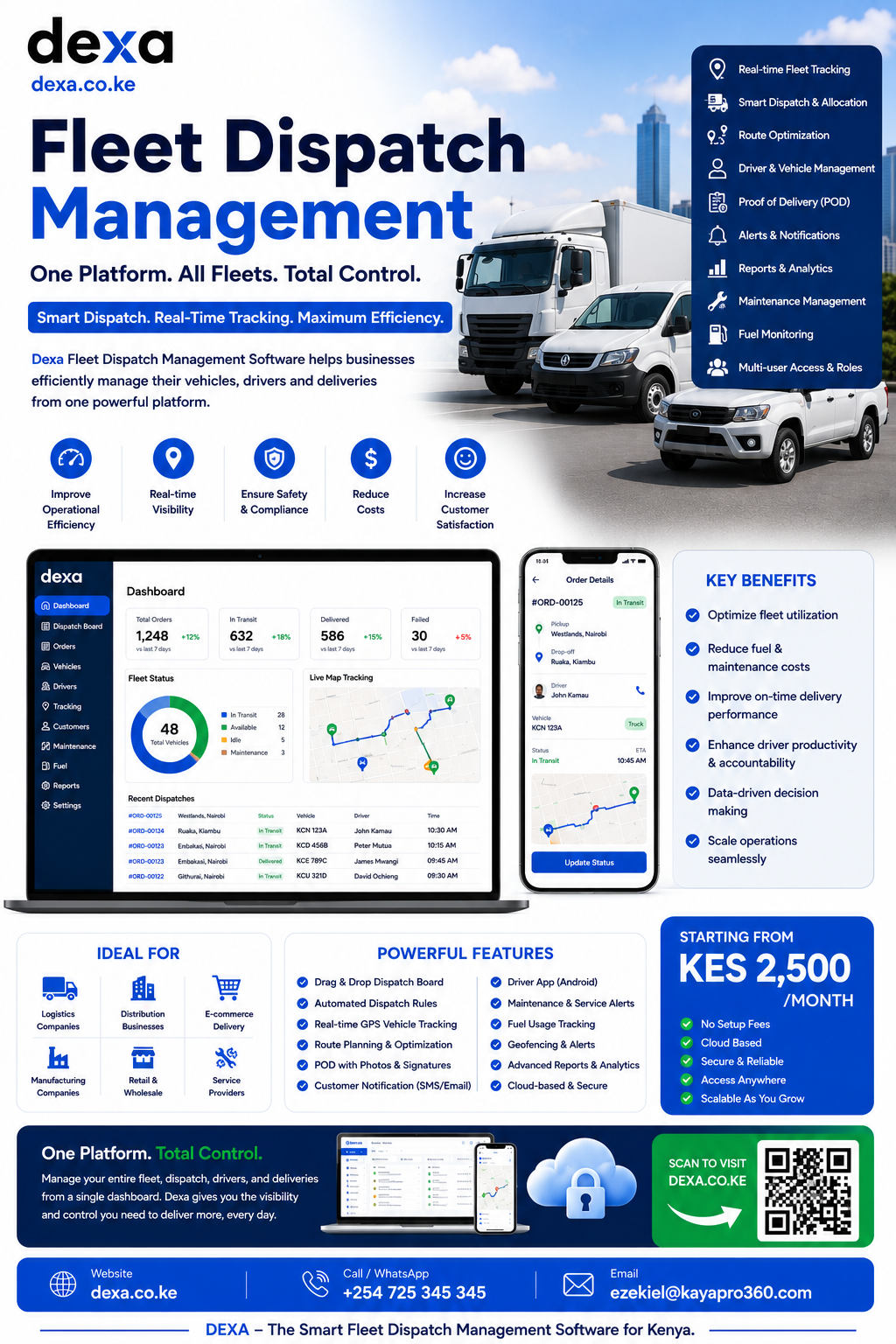
Logistics Management Software Kenya: A Complete Guide for Modern Businesses
Logistics plays an important role in the success of businesses across Kenya. Retailers, manufacturers, distributors, e-commerce companies, courier businesses, wholesalers, and service providers all depend on efficient movement of goods and services.
However, managing logistics manually becomes increasingly difficult as a business grows.
Businesses may have to coordinate:
- Vehicles
- Drivers
- Deliveries
- Customers
- Routes
- Warehouses
- Orders
- Payments
- Inventory
- Operational reports
When these activities are managed using spreadsheets, paper records, phone calls, and disconnected systems, errors and delays can occur.
This is where Logistics Management Software Kenya becomes valuable.
A modern logistics management platform gives businesses a centralized system for planning, coordinating, monitoring, and analyzing logistics operations.
Dexa provides digital solutions that help businesses improve logistics efficiency, reduce unnecessary costs, and deliver better customer experiences.
What Is Logistics Management Software?
Logistics management software is a digital platform designed to help businesses manage the movement and delivery of goods.
It brings multiple logistics activities into one centralized system.
Depending on the business, the software can help manage:
- Orders
- Deliveries
- Drivers
- Vehicles
- Routes
- Customers
- Payments
- Inventory
- Proof of delivery
- Reports
Instead of managing each process separately, businesses can coordinate operations from one platform.
Why Logistics Management Software Is Important in Kenya
Kenyan businesses operate in an environment where transportation costs, traffic congestion, customer expectations, and operational efficiency can significantly affect profitability.
A logistics management system can help organizations respond to these challenges.
Businesses can use technology to:
- Improve delivery planning
- Reduce unnecessary trips
- Monitor drivers
- Track vehicles
- Improve customer communication
- Manage operational costs
- Analyze performance
Challenges of Traditional Logistics Management
Manual Data Entry
Entering customer, delivery, and vehicle information manually can consume time and increase the risk of errors.
Automation reduces repetitive data-entry tasks.
Poor Route Planning
Inefficient routes can increase travel time and fuel expenses.
Route optimization helps businesses identify better delivery routes.
Limited Visibility
Managers may struggle to determine the location and status of deliveries when information is not centralized.
Real-time tracking provides better visibility.
Communication Problems
When dispatchers, drivers, and customers rely heavily on phone calls and manual messages, important information can be missed.
Centralized communication improves coordination.
Difficult Reporting
Preparing reports manually can take hours or even days.
Automated reporting provides information faster and more accurately.
Key Features of Logistics Management Software Kenya
Order Management
Businesses can organize customer orders and connect them with delivery activities.
Managers can monitor:
- New orders
- Pending orders
- Assigned orders
- Completed orders
- Cancelled orders
Delivery Management
The system helps businesses schedule, assign, and monitor deliveries.
This makes it easier to coordinate large numbers of deliveries.
Fleet Management
Businesses can maintain information about vehicles, including:
- Vehicle details
- Mileage
- Maintenance history
- Availability
- Service schedules
Driver Management
Managers can organize drivers and monitor their assignments and performance.
Route Optimization
Route optimization helps identify efficient routes based on delivery locations and operational requirements.
Benefits can include:
- Reduced travel distance
- Lower fuel consumption
- Faster deliveries
- Better vehicle utilization
Real-Time Tracking
Tracking technology allows businesses to monitor vehicles and deliveries while they are in progress.
This provides managers with greater operational visibility.
Digital Proof of Delivery
Drivers can record delivery completion using digital methods such as:
- Customer signatures
- Photographs
- GPS information
- Delivery notes
- Completion timestamps
Customer Management
Businesses can maintain centralized customer information, including delivery locations and communication details.
Payment and Billing Management
A logistics platform can help businesses organize:
- Customer payments
- Invoices
- Transaction records
- Delivery charges
- Financial reports
Reports and Analytics
Managers can generate reports covering:
- Delivery performance
- Driver productivity
- Vehicle utilization
- Fuel consumption
- Revenue
- Failed deliveries
- Customer satisfaction
Benefits of Logistics Management Software
Reduced Operating Costs
Better route planning, vehicle utilization, and automation can help businesses reduce unnecessary expenses.
Improved Productivity
Employees spend less time on repetitive administrative tasks.
Faster Deliveries
Efficient scheduling and route planning help businesses improve delivery performance.
Better Customer Service
Customers receive more accurate information and improved communication.
Improved Decision-Making
Business reports provide data that managers can use to make informed decisions.
Greater Accountability
Digital records make it easier to determine what happened during each delivery or trip.
How Logistics Software Supports E-Commerce Businesses
E-commerce businesses depend heavily on reliable logistics.
After a customer places an order, the business needs to coordinate:
- Order processing
- Product preparation
- Dispatch
- Rider or driver assignment
- Route planning
- Delivery
- Customer communication
- Proof of delivery
A centralized logistics platform helps coordinate these activities more efficiently.
Logistics Management for Courier Companies
Courier companies manage large numbers of parcels and deliveries every day.
A logistics management platform can help courier businesses manage:
- Parcel information
- Customers
- Drivers
- Delivery routes
- Dispatching
- Tracking
- Proof of delivery
- Payments
This improves operational efficiency and creates better customer experiences.
How Logistics Software Helps Reduce Fuel Costs
Fuel expenses can have a significant impact on transportation businesses.
A logistics management system can help reduce fuel consumption through:
- Route optimization
- Trip planning
- Vehicle utilization monitoring
- Driver performance monitoring
- Reduced unnecessary travel
- Better delivery scheduling
Reducing fuel consumption can improve profitability while supporting more sustainable operations.
Improving Driver Productivity
Drivers play a critical role in logistics operations.
A centralized platform can help managers monitor:
- Assigned deliveries
- Completed deliveries
- Delivery times
- Route performance
- Driver availability
- Customer feedback
This information helps managers identify areas where additional training or operational improvements may be needed.
Preventive Vehicle Maintenance
Vehicle breakdowns can cause serious delivery disruptions.
Businesses should maintain regular schedules for:
- Oil changes
- Tire inspections
- Brake checks
- Engine servicing
- Battery checks
- General inspections
A digital maintenance system can help businesses keep track of these activities and reduce unexpected downtime.
Using Data Analytics for Logistics Decisions
Data is one of the most valuable resources available to modern businesses.
Logistics software can provide information about:
- Most efficient routes
- Delivery delays
- Fuel usage
- Driver performance
- Customer demand
- Vehicle utilization
- Operational expenses
Managers can use these insights to identify inefficiencies and improve business performance.
Mobile Technology in Logistics Management
Mobile technology allows drivers and field employees to stay connected with management teams.
Drivers can use mobile devices to:
- Receive assignments
- View customer information
- Access navigation
- Update delivery status
- Capture proof of delivery
- Communicate with dispatchers
This improves communication and reduces delays.
Cloud-Based Logistics Management
Cloud-based software allows authorized users to access business information remotely.
This is especially useful for businesses with:
- Multiple branches
- Remote teams
- Mobile drivers
- Regional operations
- Growing customer bases
Cloud systems can also make it easier to scale operations as business requirements increase.
Industries That Can Use Logistics Management Software
Logistics management technology can benefit:
- Courier companies
- E-commerce businesses
- Retailers
- Supermarkets
- Manufacturers
- Wholesalers
- Distributors
- Pharmacies
- Medical suppliers
- Construction companies
- Agricultural businesses
- Transport companies
How to Choose Logistics Management Software
Businesses should consider several factors before selecting a platform.
Ease of Use
Employees should be able to learn the system quickly.
Scalability
The platform should support future growth.
Security
Customer and business information should be protected.
Mobile Accessibility
Drivers should be able to use relevant features while working in the field.
Reporting
The system should provide useful reports and analytics.
Integration
Businesses should consider whether the platform can work with other important systems.
Customer Support
Reliable technical assistance is important when implementing new technology.
Best Practices for Logistics Management
Businesses can improve logistics performance by:
- Keeping accurate records.
- Planning routes carefully.
- Monitoring vehicle performance.
- Training drivers regularly.
- Communicating with customers.
- Tracking delivery performance.
- Reviewing operational reports.
- Scheduling preventive maintenance.
- Automating repetitive processes.
Future of Logistics Management in Kenya
Technology will continue to transform the logistics industry.
Future developments may include:
- Artificial intelligence
- Predictive analytics
- Internet of Things technology
- Advanced GPS tracking
- Automated route optimization
- Smart delivery systems
- Predictive vehicle maintenance
- Advanced mobile applications
Businesses that adopt modern logistics technology can position themselves for sustainable growth.
Why Choose Dexa?
Dexa helps businesses modernize logistics operations through digital management tools.
With a centralized platform, businesses can improve:
- Delivery management
- Driver coordination
- Vehicle management
- Route planning
- Customer communication
- Operational reporting
- Business visibility
The goal is to help businesses reduce manual work, improve efficiency, and provide better services to their customers.
Frequently Asked Questions
What is logistics management software?
Logistics management software is a digital platform that helps businesses manage deliveries, vehicles, drivers, routes, customers, payments, and other logistics activities.
Can logistics software reduce business costs?
Yes. Better route planning, automation, vehicle utilization, and performance monitoring can help reduce unnecessary expenses.
Is logistics software suitable for small businesses?
Yes. Small and growing businesses can use scalable logistics solutions to improve their operations.
Can logistics software track deliveries?
Yes. Modern platforms can provide delivery status and tracking information.
Can businesses manage multiple drivers?
Yes. Driver management features allow businesses to organize assignments and monitor performance.
Contact Dexa
Website: Dexa.co.ke
Phone: +254725345345
Email: ezekiel@kayapro360.com
Take control of your logistics operations with smarter digital management from Dexa.