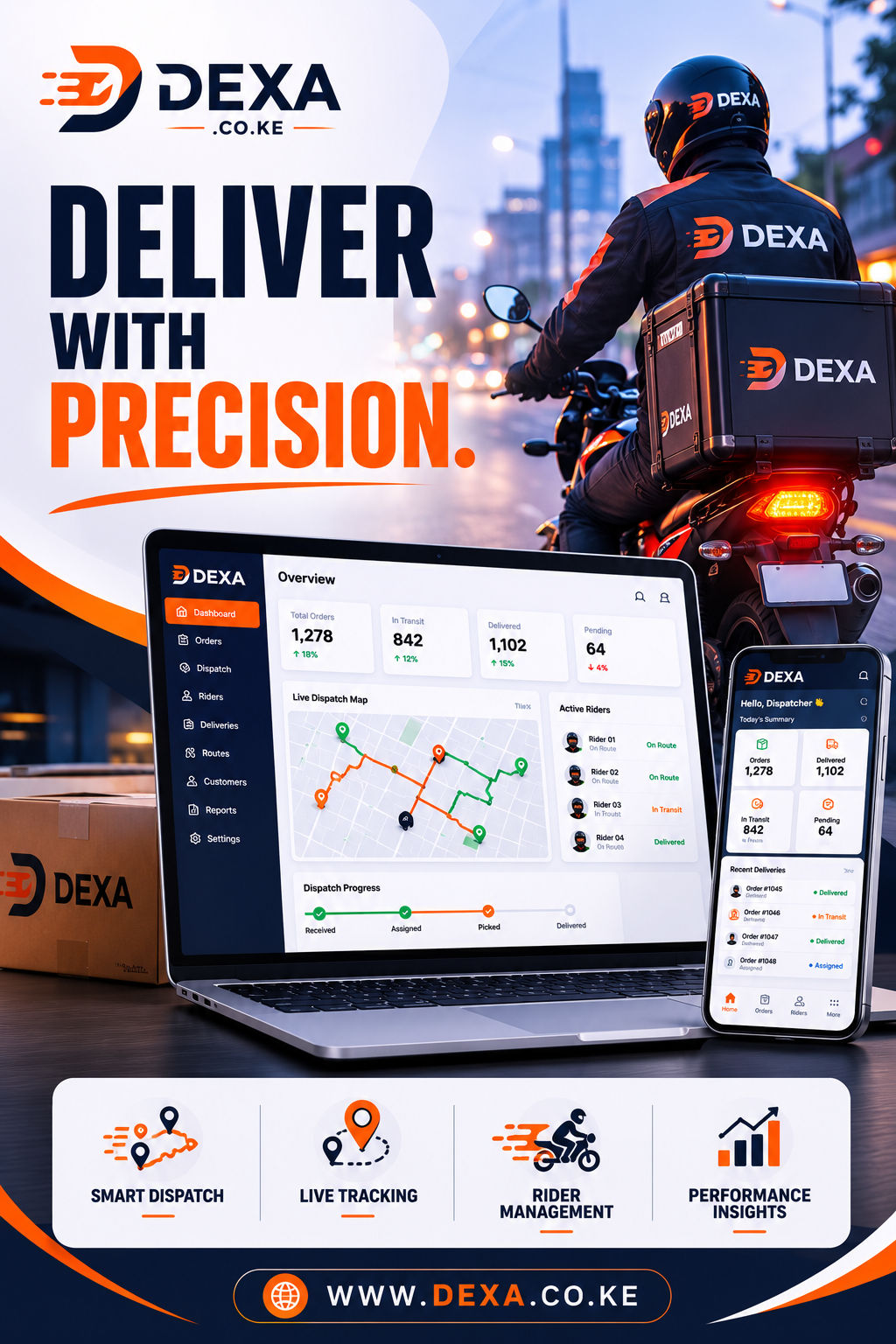
Delivery Allocation Software helps logistics companies, courier services, distributors, wholesalers, and delivery businesses automatically assign delivery jobs to the most suitable drivers or riders based on predefined rules. Instead of manually allocating deliveries using spreadsheets, phone calls, or paper records, Delivery Allocation Software streamlines the entire dispatch process by matching orders with available vehicles, optimizing routes, tracking deliveries in real time, and improving overall operational efficiency. As customer expectations for faster and more reliable deliveries continue to grow, businesses across Kenya are investing in delivery management technology that reduces delays, minimizes operational costs, and enhances customer satisfaction. Whether managing a fleet of motorcycles, vans, trucks, or mixed vehicles, implementing Delivery Allocation Software enables organizations to improve productivity while maintaining complete visibility over every delivery operation.
Table of Contents
- Introduction
- What Is Delivery Allocation Software?
- How Delivery Allocation Software Works
- Key Features of Delivery Allocation Software
- Benefits of Automated Delivery Allocation
- Industries That Benefit from Delivery Allocation
- Choosing the Right Delivery Allocation Software
- Delivery Allocation Software in Kenya
- The Future of Smart Dispatch Management
Introduction
Delivery Allocation Software has become an essential solution for businesses that handle multiple deliveries every day. As delivery volumes increase, manually assigning drivers and planning routes becomes inefficient, leading to delays, missed deliveries, higher fuel costs, and dissatisfied customers. Modern delivery allocation systems automate these tasks by intelligently assigning orders based on driver availability, delivery location, vehicle capacity, delivery priority, and route efficiency. This allows dispatch teams to coordinate hundreds or even thousands of deliveries with greater accuracy and speed. For businesses operating in Kenya’s growing logistics sector, adopting delivery allocation technology helps improve service quality while reducing operational complexity.
What Is Delivery Allocation Software?
Delivery Allocation Software is a digital dispatch management solution that automatically assigns delivery tasks to drivers, riders, or vehicles based on predefined business rules.
The software manages:
- Delivery orders.
- Driver allocation.
- Vehicle assignments.
- Route planning.
- Dispatch scheduling.
- Delivery tracking.
- Customer notifications.
- Performance reporting.
- Fleet utilization.
- Proof of delivery.
Rather than manually contacting drivers for every assignment, dispatchers can automate the process while maintaining full operational control.
How Delivery Allocation Software Works
Understanding Delivery Allocation Software becomes easier by following a typical workflow.
When a customer places an order:
- The delivery request is created.
- Customer information is verified.
- Delivery location is identified.
- Available drivers are checked.
- Vehicle capacity is evaluated.
- The system recommends the most suitable driver.
- The assignment is confirmed.
- The driver receives delivery instructions.
- GPS tracking begins.
- Delivery progress is monitored until completion.
This automated process significantly reduces dispatch time while improving delivery accuracy.
Key Features of Delivery Allocation Software
Modern logistics businesses require much more than basic dispatch tools.
Intelligent Driver Allocation
The system automatically assigns deliveries using criteria such as:
- Driver availability.
- Vehicle type.
- Delivery location.
- Current workload.
- Delivery priority.
- Route efficiency.
This ensures deliveries are assigned fairly and efficiently.
Route Optimization
Efficient routing helps businesses:
- Reduce travel distance.
- Save fuel.
- Minimize delivery delays.
- Improve driver productivity.
- Increase daily deliveries.
- Lower operating costs.
Optimized routes improve customer satisfaction while increasing profitability.
Live GPS Tracking
Real-time tracking allows dispatchers to monitor:
- Vehicle locations.
- Delivery progress.
- Driver movement.
- Estimated arrival times.
- Delays.
- Route deviations.
Complete visibility improves operational decision-making.
Delivery Scheduling
Businesses can plan:
- Same-day deliveries.
- Scheduled deliveries.
- Priority deliveries.
- Multi-stop routes.
- Recurring deliveries.
- Time-sensitive deliveries.
Scheduling tools help businesses organize deliveries more efficiently.
Proof of Delivery
Digital proof of delivery provides confirmation through:
- Customer signatures.
- Photographs.
- GPS location.
- Delivery timestamps.
- Delivery notes.
- Digital confirmations.
Electronic records improve accountability while reducing disputes.
Benefits of Automated Delivery Allocation
Businesses implementing Delivery Allocation Software experience numerous operational improvements.
Major benefits include:
- Faster dispatching.
- Better resource utilization.
- Reduced manual work.
- Improved customer service.
- Lower fuel costs.
- Better fleet visibility.
- Increased delivery accuracy.
- Higher driver productivity.
Automation enables dispatch teams to handle significantly larger delivery volumes.
Industries That Benefit from Delivery Allocation
Many industries rely on efficient delivery management.
Examples include:
- Courier companies.
- E-commerce businesses.
- Food distributors.
- Wholesale suppliers.
- Pharmaceutical distributors.
- Retail chains.
- Water delivery companies.
- Gas suppliers.
- FMCG distributors.
- Logistics providers.
As delivery demand grows, these industries benefit from intelligent dispatch automation.
Choosing the Right Delivery Allocation Software
Businesses should evaluate several factors before selecting a solution.
Important considerations include:
- Ease of use.
- GPS integration.
- Route optimization.
- Mobile applications.
- Reporting capabilities.
- Fleet scalability.
- Customer notifications.
- Technical support.
Choosing the right platform supports long-term operational growth.
Dexa: A Smart Delivery Allocation Solution
Businesses looking for comprehensive Delivery Allocation Software can benefit from Dexa, a modern dispatch and delivery management platform designed to simplify logistics operations.
Dexa provides:
- Intelligent order allocation.
- Driver management.
- Route optimization.
- Real-time tracking.
- Proof of delivery.
- Delivery scheduling.
- Customer notifications.
- Dispatch dashboards.
- Performance reporting.
- Fleet analytics.
Rather than manually coordinating deliveries, businesses using Dexa can automate dispatch operations while maintaining complete visibility over every delivery.
Delivery Allocation Software in Kenya
The logistics industry in Kenya continues expanding rapidly due to increased eCommerce activity, wholesale distribution, and on-demand delivery services.
Businesses operating in Nairobi, Mombasa, Kisumu, Nakuru, Eldoret, Thika, Meru, Nyeri, and other towns are adopting Delivery Allocation Software to improve delivery performance, reduce operational costs, and meet growing customer expectations.
Whether managing motorcycles, vans, trucks, or mixed fleets, modern dispatch software provides the tools required for efficient logistics management.
Benefits of Delivery Allocation Software for Different Stakeholders
As delivery operations become more complex, businesses need systems that can coordinate drivers, vehicles, customer orders, routes, and deliveries efficiently. Delivery Allocation Software benefits every stakeholder involved in the logistics process by providing accurate information, automating repetitive tasks, and improving communication across the entire delivery operation.
Whether your business operates a fleet of motorcycles, vans, trucks, or a combination of different vehicle types, automating delivery allocation helps improve productivity while reducing operational costs.
Benefits for Business Owners
Business owners require complete visibility into delivery operations to make informed decisions and maintain profitability.
Using Delivery Allocation Software, owners can:
- Monitor delivery performance.
- Reduce operational costs.
- Improve fleet utilization.
- Increase customer satisfaction.
- Track business growth.
- Monitor driver productivity.
- Access business reports.
- Improve profitability.
Real-time operational data enables business owners to identify inefficiencies and optimize logistics performance.
Benefits for Dispatch Managers
Dispatch teams coordinate deliveries every day and often manage hundreds of delivery requests.
A modern Delivery Allocation Software platform enables dispatchers to:
- Allocate deliveries automatically.
- Monitor available drivers.
- Optimize delivery routes.
- Prioritize urgent orders.
- Track delivery progress.
- Reduce manual scheduling.
- Handle delivery exceptions.
- Improve dispatch efficiency.
Automation allows dispatchers to focus on solving operational challenges instead of assigning deliveries manually.
Benefits for Drivers and Riders
Drivers and riders benefit from organized delivery schedules and optimized routes.
Using Delivery Allocation Software, delivery personnel can:
- Receive instant job assignments.
- Access optimized routes.
- Navigate efficiently.
- View customer information.
- Capture proof of delivery.
- Report delivery status.
- Communicate with dispatchers.
- Complete more deliveries daily.
Reduced travel time helps drivers improve productivity while lowering fuel consumption.
Benefits for Fleet Managers
Fleet managers oversee vehicle performance, maintenance, and utilization.
Delivery allocation technology helps fleet managers:
- Monitor fleet utilization.
- Track vehicle locations.
- Analyze driver performance.
- Schedule maintenance.
- Reduce idle time.
- Monitor fuel efficiency.
- Improve route planning.
- Increase operational visibility.
Efficient fleet management contributes to lower operating costs and improved service quality.
Benefits for Customer Service Teams
Customer support teams require accurate delivery information when responding to customer inquiries.
With Delivery Allocation Software, customer service representatives can:
- Monitor delivery status.
- Provide estimated arrival times.
- Resolve customer inquiries quickly.
- Confirm completed deliveries.
- Track delays.
- Improve communication.
- Access delivery history.
- Enhance customer satisfaction.
Accurate delivery information improves customer confidence and reduces complaints.
Benefits for Customers
Customers expect reliable, transparent, and timely deliveries.
Modern Delivery Allocation Software provides customers with:
- Faster deliveries.
- Real-time delivery updates.
- Delivery notifications.
- Accurate estimated arrival times.
- Digital proof of delivery.
- Better communication.
- Reliable service.
- Improved overall customer experience.
Satisfied customers are more likely to place repeat orders and recommend the business.
Improving Logistics Efficiency Through Automation
Automation is transforming modern logistics.
Instead of manually assigning deliveries, Delivery Allocation Software automates:
- Driver assignment.
- Vehicle allocation.
- Route optimization.
- Delivery scheduling.
- GPS tracking.
- Customer notifications.
- Delivery confirmation.
- Performance reporting.
- Fleet monitoring.
- Dispatch analytics.
Automation minimizes human error while increasing operational speed and consistency.
For logistics companies across Kenya, automation enables businesses to handle larger delivery volumes without significantly increasing staffing requirements.
Compliance, Security and Risk Management
Logistics businesses manage valuable customer, delivery, and operational information.
Professional Delivery Allocation Software includes strong security features that protect sensitive business data.
User Role Management
Different employees require different levels of system access.
Administrators can assign secure permissions to:
- Business owners.
- Dispatch managers.
- Fleet managers.
- Drivers.
- Customer support teams.
- System administrators.
Role-based access improves accountability while protecting confidential operational information.
Secure Delivery Records
The software securely stores:
- Delivery history.
- Customer information.
- Driver records.
- Route information.
- Vehicle assignments.
- GPS tracking data.
- Proof of delivery.
- Operational reports.
Centralized digital records improve organization while simplifying audits.
Audit Trails
Every operational activity is automatically recorded.
Managers can review:
- Delivery assignments.
- Route modifications.
- Driver activity.
- Status updates.
- Customer confirmations.
- Administrative changes.
Audit trails strengthen accountability throughout the delivery process.
Automatic Data Backup
Cloud-based backups help protect logistics information against:
- Hardware failures.
- Accidental deletion.
- System errors.
- Unexpected disruptions.
Reliable backups improve operational continuity and reduce downtime.
Operational Compliance
Well-organized delivery records support internal reporting, customer accountability, and business compliance requirements while maintaining accurate operational documentation.
Integrating Delivery Allocation Software with Business Systems
Modern logistics operations depend on multiple software platforms working together.
A professional Delivery Allocation Software solution can integrate with:
- Order management systems.
- Inventory management software.
- Accounting platforms.
- Customer Relationship Management (CRM) systems.
- GPS tracking platforms.
- Mobile applications.
- SMS notification services.
- Email communication systems.
- Payment gateways.
- Business intelligence dashboards.
Integration eliminates duplicate data entry while ensuring information flows seamlessly across the organization.
Why Dexa Is the Ideal Delivery Allocation Solution
Choosing the right software is just as important as automating delivery allocation.
Dexa is designed specifically for courier companies, distributors, wholesalers, logistics providers, eCommerce businesses, and organizations managing delivery fleets.
Dexa offers:
- Intelligent delivery allocation.
- Dispatch management.
- Driver management.
- Live GPS tracking.
- Route optimization.
- Delivery scheduling.
- Proof of delivery.
- Customer notifications.
- Fleet performance analytics.
- Operational reporting.
- Multi-user access.
- Real-time dispatch dashboards.
Unlike traditional dispatch methods that depend heavily on manual coordination, Dexa automates delivery allocation while giving dispatch teams complete visibility and control over every delivery.
Delivery Allocation Software in Kenya
The logistics industry in Kenya continues experiencing rapid growth due to increased online shopping, wholesale distribution, manufacturing, and last-mile delivery services.
Organizations benefiting from Delivery Allocation Software include:
- Courier companies.
- eCommerce retailers.
- FMCG distributors.
- Pharmaceutical distributors.
- Water suppliers.
- Gas delivery companies.
- Retail chains.
- Wholesale businesses.
- Food distributors.
- Third-party logistics providers.
Whether operating in Nairobi, Mombasa, Kisumu, Nakuru, Eldoret, Thika, Meru, Nyeri, or any other region, businesses are increasingly using delivery allocation technology to improve operational efficiency and customer satisfaction.
Future Trends in Delivery Allocation Software
Delivery technology continues evolving rapidly.
Future Delivery Allocation Software solutions are expected to include:
Artificial Intelligence
AI will improve driver allocation, demand forecasting, delivery scheduling, and predictive route optimization.
Machine Learning
Machine learning algorithms will continuously improve delivery decisions based on historical operational data.
Advanced Route Optimization
Future systems will dynamically adjust delivery routes based on live traffic conditions, weather, and delivery priorities.
Mobile Workforce Management
Drivers will receive richer mobile applications with navigation, communication, document management, and digital workflow capabilities.
Real-Time Business Analytics
Managers will gain deeper insights into fleet performance, delivery efficiency, operational costs, and customer satisfaction through advanced dashboards.
Greater System Integration
Future platforms will integrate more closely with ERP systems, warehouse management software, inventory platforms, payment systems, and customer communication tools.
Getting Started with Delivery Allocation Software
Successfully implementing Delivery Allocation Software begins with understanding your logistics operations and delivery requirements.
Businesses should:
- Evaluate current dispatch processes.
- Identify operational challenges.
- Organize driver and vehicle information.
- Configure delivery zones.
- Import customer and order data.
- Train dispatchers and drivers.
- Test delivery workflows.
- Monitor delivery performance.
- Optimize allocation rules.
- Continuously improve logistics operations.
A structured implementation approach ensures faster adoption and maximizes the long-term value of the software.
Conclusion
Delivery Allocation Software has become an essential solution for businesses seeking to improve dispatch efficiency, reduce operational costs, and deliver exceptional customer service. By automating delivery assignment, optimizing routes, providing real-time tracking, and centralizing logistics operations, businesses can increase productivity while maintaining complete visibility over every delivery.
As logistics and eCommerce continue expanding across Kenya, investing in a reliable delivery allocation solution is critical for staying competitive. With Dexa, businesses gain a comprehensive dispatch and delivery management platform that streamlines operations, enhances fleet performance, improves customer satisfaction, and supports sustainable business growth.
Benefits of Delivery Allocation Software for Different Stakeholders
As delivery operations become more complex, businesses need systems that can coordinate drivers, vehicles, customer orders, routes, and deliveries efficiently. Delivery Allocation Software benefits every stakeholder involved in the logistics process by providing accurate information, automating repetitive tasks, and improving communication across the entire delivery operation.
Whether your business operates a fleet of motorcycles, vans, trucks, or a combination of different vehicle types, automating delivery allocation helps improve productivity while reducing operational costs.
Benefits for Business Owners
Business owners require complete visibility into delivery operations to make informed decisions and maintain profitability.
Using Delivery Allocation Software, owners can:
- Monitor delivery performance.
- Reduce operational costs.
- Improve fleet utilization.
- Increase customer satisfaction.
- Track business growth.
- Monitor driver productivity.
- Access business reports.
- Improve profitability.
Real-time operational data enables business owners to identify inefficiencies and optimize logistics performance.
Benefits for Dispatch Managers
Dispatch teams coordinate deliveries every day and often manage hundreds of delivery requests.
A modern Delivery Allocation Software platform enables dispatchers to:
- Allocate deliveries automatically.
- Monitor available drivers.
- Optimize delivery routes.
- Prioritize urgent orders.
- Track delivery progress.
- Reduce manual scheduling.
- Handle delivery exceptions.
- Improve dispatch efficiency.
Automation allows dispatchers to focus on solving operational challenges instead of assigning deliveries manually.
Benefits for Drivers and Riders
Drivers and riders benefit from organized delivery schedules and optimized routes.
Using Delivery Allocation Software, delivery personnel can:
- Receive instant job assignments.
- Access optimized routes.
- Navigate efficiently.
- View customer information.
- Capture proof of delivery.
- Report delivery status.
- Communicate with dispatchers.
- Complete more deliveries daily.
Reduced travel time helps drivers improve productivity while lowering fuel consumption.
Benefits for Fleet Managers
Fleet managers oversee vehicle performance, maintenance, and utilization.
Delivery allocation technology helps fleet managers:
- Monitor fleet utilization.
- Track vehicle locations.
- Analyze driver performance.
- Schedule maintenance.
- Reduce idle time.
- Monitor fuel efficiency.
- Improve route planning.
- Increase operational visibility.
Efficient fleet management contributes to lower operating costs and improved service quality.
Benefits for Customer Service Teams
Customer support teams require accurate delivery information when responding to customer inquiries.
With Delivery Allocation Software, customer service representatives can:
- Monitor delivery status.
- Provide estimated arrival times.
- Resolve customer inquiries quickly.
- Confirm completed deliveries.
- Track delays.
- Improve communication.
- Access delivery history.
- Enhance customer satisfaction.
Accurate delivery information improves customer confidence and reduces complaints.
Benefits for Customers
Customers expect reliable, transparent, and timely deliveries.
Modern Delivery Allocation Software provides customers with:
- Faster deliveries.
- Real-time delivery updates.
- Delivery notifications.
- Accurate estimated arrival times.
- Digital proof of delivery.
- Better communication.
- Reliable service.
- Improved overall customer experience.
Satisfied customers are more likely to place repeat orders and recommend the business.
Improving Logistics Efficiency Through Automation
Automation is transforming modern logistics.
Instead of manually assigning deliveries, Delivery Allocation Software automates:
- Driver assignment.
- Vehicle allocation.
- Route optimization.
- Delivery scheduling.
- GPS tracking.
- Customer notifications.
- Delivery confirmation.
- Performance reporting.
- Fleet monitoring.
- Dispatch analytics.
Automation minimizes human error while increasing operational speed and consistency.
For logistics companies across Kenya, automation enables businesses to handle larger delivery volumes without significantly increasing staffing requirements.
Compliance, Security and Risk Management
Logistics businesses manage valuable customer, delivery, and operational information.
Professional Delivery Allocation Software includes strong security features that protect sensitive business data.
User Role Management
Different employees require different levels of system access.
Administrators can assign secure permissions to:
- Business owners.
- Dispatch managers.
- Fleet managers.
- Drivers.
- Customer support teams.
- System administrators.
Role-based access improves accountability while protecting confidential operational information.
Secure Delivery Records
The software securely stores:
- Delivery history.
- Customer information.
- Driver records.
- Route information.
- Vehicle assignments.
- GPS tracking data.
- Proof of delivery.
- Operational reports.
Centralized digital records improve organization while simplifying audits.
Audit Trails
Every operational activity is automatically recorded.
Managers can review:
- Delivery assignments.
- Route modifications.
- Driver activity.
- Status updates.
- Customer confirmations.
- Administrative changes.
Audit trails strengthen accountability throughout the delivery process.
Automatic Data Backup
Cloud-based backups help protect logistics information against:
- Hardware failures.
- Accidental deletion.
- System errors.
- Unexpected disruptions.
Reliable backups improve operational continuity and reduce downtime.
Operational Compliance
Well-organized delivery records support internal reporting, customer accountability, and business compliance requirements while maintaining accurate operational documentation.
Integrating Delivery Allocation Software with Business Systems
Modern logistics operations depend on multiple software platforms working together.
A professional Delivery Allocation Software solution can integrate with:
- Order management systems.
- Inventory management software.
- Accounting platforms.
- Customer Relationship Management (CRM) systems.
- GPS tracking platforms.
- Mobile applications.
- SMS notification services.
- Email communication systems.
- Payment gateways.
- Business intelligence dashboards.
Integration eliminates duplicate data entry while ensuring information flows seamlessly across the organization.
Why Dexa Is the Ideal Delivery Allocation Solution
Choosing the right software is just as important as automating delivery allocation.
Dexa is designed specifically for courier companies, distributors, wholesalers, logistics providers, eCommerce businesses, and organizations managing delivery fleets.
Dexa offers:
- Intelligent delivery allocation.
- Dispatch management.
- Driver management.
- Live GPS tracking.
- Route optimization.
- Delivery scheduling.
- Proof of delivery.
- Customer notifications.
- Fleet performance analytics.
- Operational reporting.
- Multi-user access.
- Real-time dispatch dashboards.
Unlike traditional dispatch methods that depend heavily on manual coordination, Dexa automates delivery allocation while giving dispatch teams complete visibility and control over every delivery.
Delivery Allocation Software in Kenya
The logistics industry in Kenya continues experiencing rapid growth due to increased online shopping, wholesale distribution, manufacturing, and last-mile delivery services.
Organizations benefiting from Delivery Allocation Software include:
- Courier companies.
- eCommerce retailers.
- FMCG distributors.
- Pharmaceutical distributors.
- Water suppliers.
- Gas delivery companies.
- Retail chains.
- Wholesale businesses.
- Food distributors.
- Third-party logistics providers.
Whether operating in Nairobi, Mombasa, Kisumu, Nakuru, Eldoret, Thika, Meru, Nyeri, or any other region, businesses are increasingly using delivery allocation technology to improve operational efficiency and customer satisfaction.
Future Trends in Delivery Allocation Software
Delivery technology continues evolving rapidly.
Future Delivery Allocation Software solutions are expected to include:
Artificial Intelligence
AI will improve driver allocation, demand forecasting, delivery scheduling, and predictive route optimization.
Machine Learning
Machine learning algorithms will continuously improve delivery decisions based on historical operational data.
Advanced Route Optimization
Future systems will dynamically adjust delivery routes based on live traffic conditions, weather, and delivery priorities.
Mobile Workforce Management
Drivers will receive richer mobile applications with navigation, communication, document management, and digital workflow capabilities.
Real-Time Business Analytics
Managers will gain deeper insights into fleet performance, delivery efficiency, operational costs, and customer satisfaction through advanced dashboards.
Greater System Integration
Future platforms will integrate more closely with ERP systems, warehouse management software, inventory platforms, payment systems, and customer communication tools.
Getting Started with Delivery Allocation Software
Successfully implementing Delivery Allocation Software begins with understanding your logistics operations and delivery requirements.
Businesses should:
- Evaluate current dispatch processes.
- Identify operational challenges.
- Organize driver and vehicle information.
- Configure delivery zones.
- Import customer and order data.
- Train dispatchers and drivers.
- Test delivery workflows.
- Monitor delivery performance.
- Optimize allocation rules.
- Continuously improve logistics operations.
A structured implementation approach ensures faster adoption and maximizes the long-term value of the software.
Conclusion
Delivery Allocation Software has become an essential solution for businesses seeking to improve dispatch efficiency, reduce operational costs, and deliver exceptional customer service. By automating delivery assignment, optimizing routes, providing real-time tracking, and centralizing logistics operations, businesses can increase productivity while maintaining complete visibility over every delivery.
As logistics and eCommerce continue expanding across Kenya, investing in a reliable delivery allocation solution is critical for staying competitive. With Dexa, businesses gain a comprehensive dispatch and delivery management platform that streamlines operations, enhances fleet performance, improves customer satisfaction, and supports sustainable business growth.