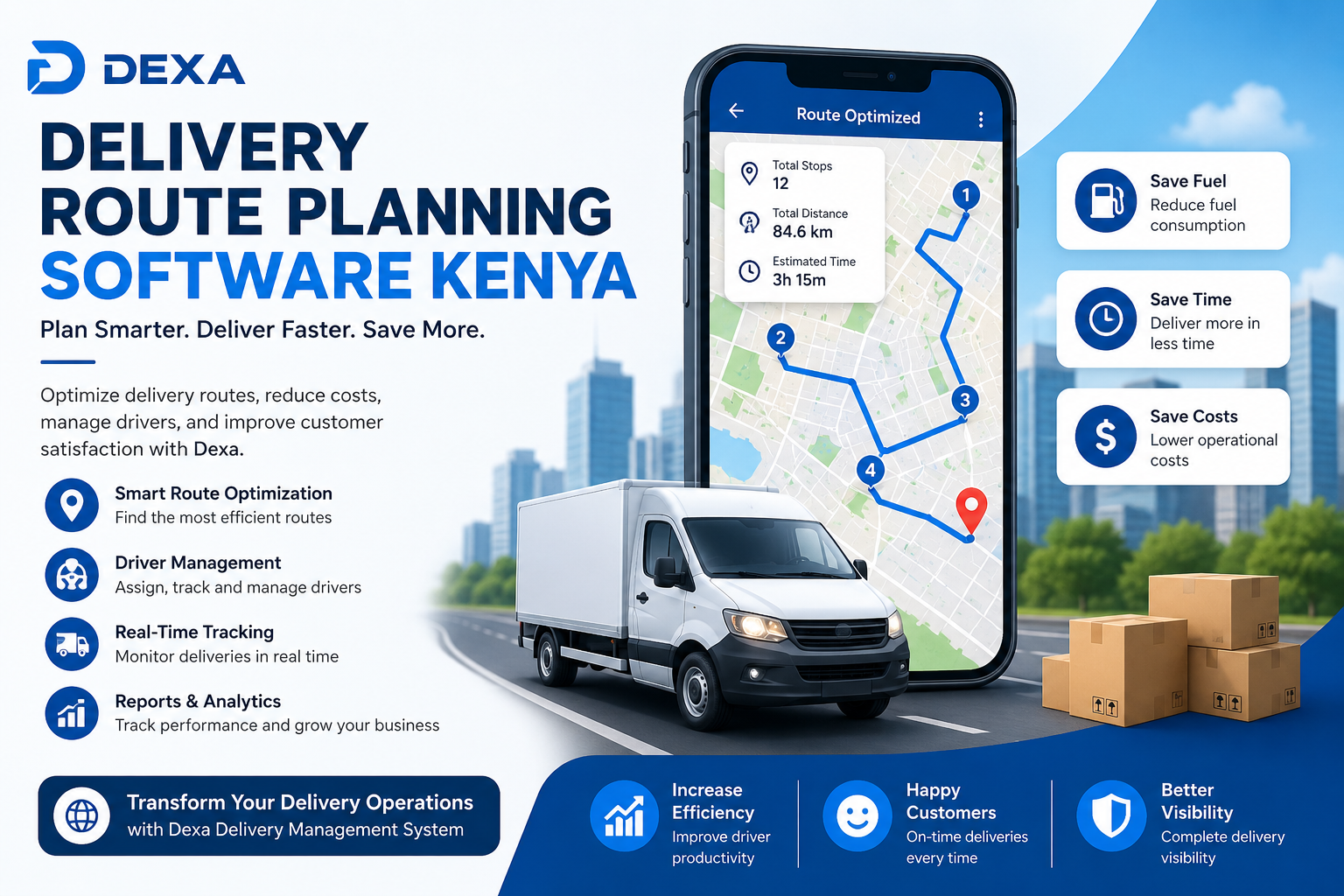
Delivery Route Planning Software: A Smarter Way to Manage Deliveries
Businesses that handle multiple deliveries every day face an important challenge: determining the best routes for drivers and riders.
Poor route planning can result in:
- Longer delivery times
- High fuel consumption
- Delayed customer orders
- Increased vehicle wear and tear
- Low driver productivity
- Higher operational costs
- Customer complaints
For businesses handling deliveries across Nairobi, Kisumu, Mombasa, Nakuru, Eldoret, and other locations, manually planning routes can become increasingly difficult.
This is where dexa.co.ke
becomes valuable.
A modern route planning system helps businesses organize delivery locations, assign drivers, optimize travel routes, and monitor delivery progress from a centralized platform.
With the right technology, businesses can reduce unnecessary travel and improve the overall delivery experience.
What Is Delivery Route Planning Software?
Delivery route planning software is a digital solution that helps businesses determine efficient routes for completing deliveries.
Instead of manually deciding which locations a driver should visit first, businesses can use technology to organize delivery stops and improve route efficiency.
The software can support:
- Delivery location management
- Multi-stop route planning
- Driver assignment
- Delivery scheduling
- Route optimization
- Delivery tracking
- Customer notifications
- Delivery status updates
- Performance reporting
This makes it easier to manage both small and large delivery operations.
Why Route Planning Is Important for Delivery Businesses
Every unnecessary kilometer travelled can increase business costs.
Poor route planning may cause drivers to:
- Travel longer distances
- Repeat the same routes
- Spend more time in traffic
- Miss scheduled delivery times
- Consume unnecessary fuel
An effective route planning strategy helps businesses use their available vehicles and drivers more efficiently.
For companies managing multiple deliveries per day, even small improvements in route efficiency can have a positive effect on productivity and operating costs.
Common Challenges of Manual Route Planning
1. Managing Multiple Delivery Stops
When a driver has several deliveries, deciding the correct order can be difficult.
A poorly organized route may cause the driver to travel back and forth unnecessarily.
Route planning software helps businesses organize multiple delivery locations more efficiently.
2. Traffic Delays
Traffic congestion can significantly affect delivery schedules.
Businesses need flexible systems that allow dispatchers to monitor delivery progress and respond to unexpected delays.
3. High Fuel Costs
Fuel is one of the largest expenses for many logistics and delivery businesses.
Longer routes and unnecessary trips can increase fuel consumption.
Better route planning can help businesses reduce unnecessary travel.
4. Difficulty Managing Multiple Drivers
Businesses with several drivers or riders need an organized way to assign delivery zones and workloads.
A centralized system helps managers understand:
- Which drivers are available
- Which deliveries have been assigned
- Which areas drivers are serving
- Which deliveries are pending
- Which drivers may have excessive workloads
Key Features of Delivery Route Planning Software Kenya
Smart Route Optimization
Route optimization helps businesses identify efficient delivery routes.
The system can consider factors such as:
- Delivery locations
- Distance
- Delivery priorities
- Driver availability
- Vehicle capacity
- Number of delivery stops
This helps businesses create better delivery plans.
Multi-Stop Delivery Planning
Many drivers complete multiple deliveries during a single trip.
Multi-stop planning helps businesses organize these deliveries in a logical sequence.
Benefits include:
- Reduced travel distance
- Better time management
- Improved driver productivity
- Faster deliveries
Driver Assignment
Dispatchers can assign deliveries based on:
- Driver availability
- Current workload
- Delivery location
- Vehicle type
- Delivery priority
This improves resource allocation.
Delivery Scheduling
Businesses can organize deliveries according to:
- Customer preferences
- Delivery time slots
- Order priority
- Driver availability
- Location
This creates a more organized delivery process.
Real-Time Delivery Monitoring
Managers can monitor the progress of active deliveries.
This can help businesses identify:
- Delayed deliveries
- Completed deliveries
- Pending deliveries
- Driver availability
- Operational issues
Better visibility allows teams to respond faster.
Benefits of Delivery Route Planning Software
Reduced Fuel Consumption
Efficient routes can reduce unnecessary travel and help businesses control fuel expenses.
Faster Deliveries
Better route planning helps drivers reach customers more efficiently.
Increased Driver Productivity
Drivers can spend more time completing deliveries instead of navigating inefficient routes.
Lower Vehicle Maintenance Costs
Reducing unnecessary travel can also reduce vehicle wear and tear over time.
Improved Customer Satisfaction
Faster and more reliable deliveries can create a better customer experience.
Better Operational Visibility
Managers can access important information about deliveries, drivers, and route performance from a centralized system.
How Route Planning Software Helps E-Commerce Businesses
E-commerce businesses often receive orders from customers in different locations.
Without proper route planning, managing these deliveries can become complicated.
A delivery route planning system can help organize the process:
- Customer orders are received.
- Delivery locations are recorded.
- Orders are grouped according to location.
- Drivers or riders are assigned.
- Efficient delivery routes are planned.
- Deliveries are monitored.
- Customers receive updates.
- Completed deliveries are recorded.
This creates a more efficient workflow.
Route Planning for Courier Companies
Courier companies often manage large numbers of parcels travelling to different destinations.
Route planning software can help courier businesses:
- Group deliveries by location
- Assign parcels to available riders
- Plan delivery zones
- Reduce unnecessary travel
- Monitor delivery performance
- Manage delayed deliveries
This can make daily courier operations easier to manage.
How Route Optimization Can Reduce Delivery Costs
Delivery costs are affected by several factors, including:
- Fuel consumption
- Driver time
- Vehicle maintenance
- Travel distance
- Failed deliveries
- Traffic delays
Businesses can use route planning technology to identify opportunities to improve efficiency.
For example, instead of sending multiple vehicles to the same area at different times, deliveries may be grouped and scheduled more effectively.
This can reduce unnecessary trips and improve vehicle utilization.
Improving Customer Experience Through Better Route Planning
Customers expect businesses to provide reliable delivery services.
Efficient route planning can help businesses:
- Reduce late deliveries
- Provide more accurate delivery schedules
- Improve communication
- Reduce delivery errors
- Respond faster to customer requests
A reliable delivery experience can encourage customers to make future purchases.
Managing Delivery Zones
Businesses serving large geographical areas can divide operations into delivery zones.
For example, a business may organize deliveries according to:
- Nairobi CBD
- Westlands
- Kilimani
- Karen
- Embakasi
- Ruaka
- Ruiru
- Other service areas
Delivery route planning software can help businesses organize orders based on geographical locations and assign the appropriate driver or rider.
This improves coordination and reduces confusion.
The Role of Mobile Technology in Route Planning
Drivers and riders need access to route information while working.
Mobile technology can help delivery teams:
- Receive assignments
- View delivery locations
- Access route information
- Update delivery status
- Communicate with dispatch teams
- Record proof of delivery
This creates better communication between field teams and business managers.
Important Route Planning KPIs
Businesses should monitor performance indicators such as:
- Average delivery distance
- Fuel consumption per trip
- Average delivery time
- Number of deliveries per driver
- Cost per delivery
- Delivery completion rate
- Failed delivery rate
- Vehicle utilization
These metrics help businesses understand whether route planning strategies are improving performance.
How Automation Improves Route Planning
Automation can simplify several logistics activities.
Businesses can automate:
- Delivery assignment
- Route planning
- Delivery scheduling
- Customer notifications
- Status updates
- Performance reporting
This reduces repetitive manual work and allows employees to focus on more important operational activities.
Industries That Can Benefit From Delivery Route Planning Software
This technology can support:
- Courier companies
- E-commerce businesses
- Supermarkets
- Restaurants
- Pharmacies
- Retail businesses
- Wholesalers
- Distribution companies
- Medical suppliers
- Food delivery services
- Field service businesses
Any organization that manages multiple delivery locations can benefit from better route planning.
How to Choose the Right Delivery Route Planning Software
Before selecting a platform, businesses should consider several factors.
Ease of Use
Drivers, dispatchers, and managers should be able to use the platform easily.
Scalability
The system should support additional drivers, vehicles, and deliveries as the business grows.
Mobile Accessibility
Drivers should be able to access route and delivery information remotely.
Real-Time Visibility
Managers should be able to monitor active deliveries and respond to operational issues.
Reporting
The platform should provide useful reports about delivery performance and costs.
Integration
Businesses may need a system that can work alongside order management, logistics, CRM, or accounting tools.
The Future of Delivery Route Planning in Kenya
Technology is expected to continue changing how businesses manage transportation and deliveries.
Future developments may include:
- Artificial intelligence-powered route planning
- Predictive traffic analysis
- Automated delivery scheduling
- Advanced GPS tracking
- Smart delivery zones
- Machine learning
- Predictive analytics
- Automated dispatch management
Businesses that adopt modern route planning technology can improve efficiency and prepare for increasing delivery demand.
Why Choose Dexa?
Dexa helps businesses simplify logistics and delivery operations through centralized digital management.
With a modern delivery management platform, businesses can improve:
- Route planning
- Delivery scheduling
- Driver coordination
- Dispatch management
- Delivery tracking
- Customer communication
- Operational reporting
- Business visibility
By reducing manual processes and improving operational coordination, businesses can create faster and more efficient delivery systems.
Frequently Asked Questions
What is delivery route planning software?
Delivery route planning software helps businesses organize delivery locations and create efficient routes for drivers and riders.
Can route planning software reduce fuel costs?
Efficient route planning can help reduce unnecessary travel and improve fuel efficiency.
Can businesses manage multiple delivery stops?
Yes. Multi-stop route planning can help businesses organize several deliveries within a single trip.
Is route planning software suitable for small businesses?
Yes. Small businesses with regular deliveries can use route planning technology to improve organization and prepare for growth.
Can businesses monitor delivery performance?
Yes. Reporting and analytics tools can help businesses evaluate delivery times, driver productivity, delivery completion, and operational efficiency.
[…] also provides information about delivery route planning software in Kenya and how route planning can help businesses reduce unnecessary travel and improve vehicle […]