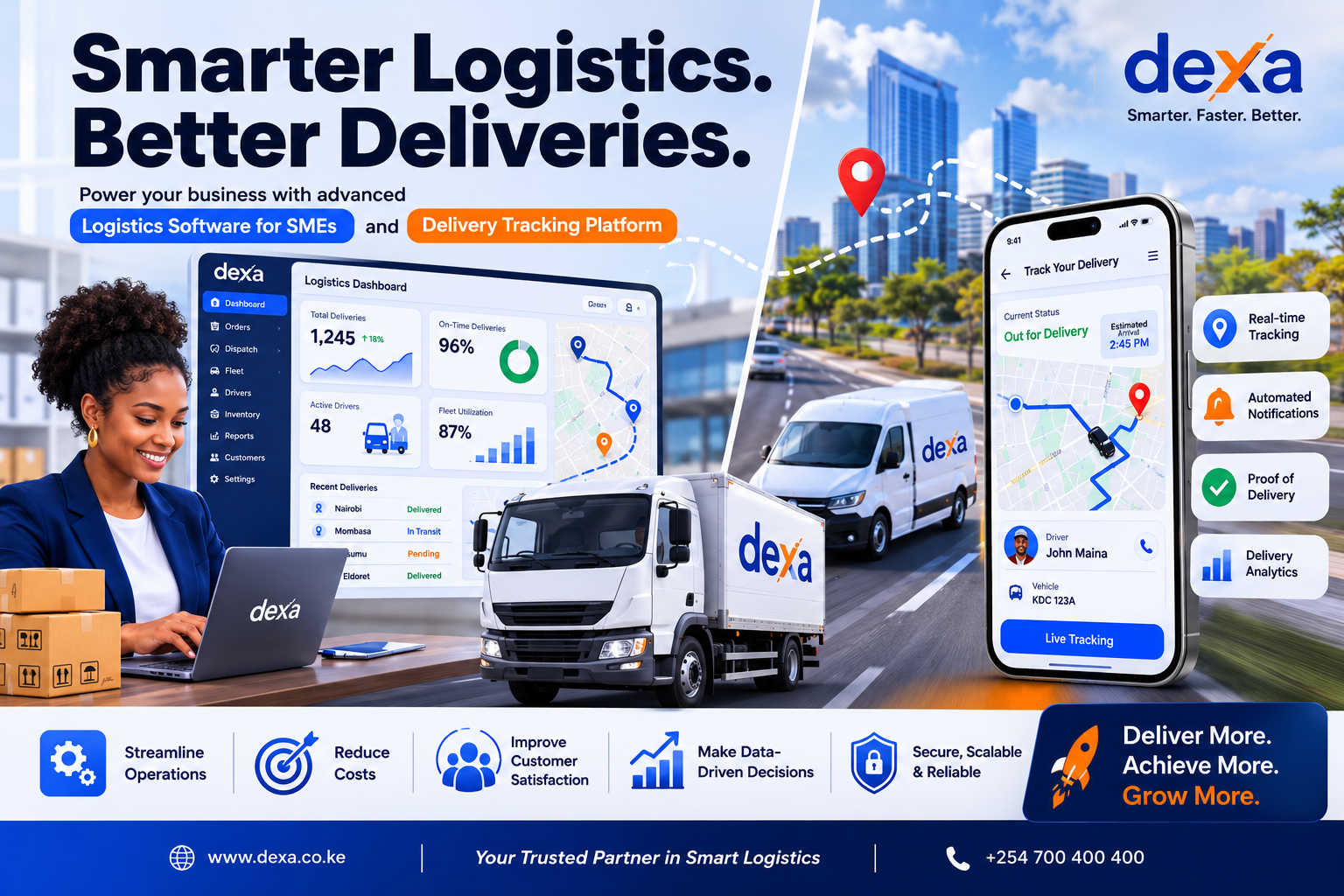
Delivery Tracking Platform – Transforming Modern Logistics and Delivery Operations
In today’s fast-paced business environment, customers expect more than just fast deliveries. They want complete visibility into the status of their shipments, accurate delivery estimates, and instant notifications throughout the delivery journey. Businesses that fail to provide this level of transparency often struggle with customer complaints, missed deliveries, and operational inefficiencies.
This is why implementing a Delivery Tracking Platform has become essential for modern logistics operations. Whether you manage a courier company, e-commerce business, distribution network, wholesale operation, or last-mile delivery service, a delivery tracking platform provides the visibility and control required to meet growing customer expectations while improving operational efficiency.
A modern delivery tracking platform enables businesses to monitor shipments in real time, track drivers, optimize routes, automate customer communication, and generate valuable operational insights from a centralized dashboard. These capabilities help businesses reduce costs, improve customer satisfaction, and scale their logistics operations effectively. Real-time tracking, route optimization, and automated delivery notifications are among the most valuable features driving adoption of delivery management solutions worldwide. (Zama Web Experts)
For businesses seeking a reliable logistics technology solution, Dexa.co.ke provides powerful delivery tracking capabilities designed to simplify delivery operations while improving customer experiences and operational visibility.
What is a Delivery Tracking Platform?
A Delivery Tracking Platform is a software solution that allows businesses, dispatchers, drivers, and customers to monitor the movement of goods from dispatch to final delivery.
The platform combines several technologies including:
- GPS tracking
- Route optimization
- Mobile applications
- Automated notifications
- Driver management
- Delivery analytics
- Electronic proof of delivery
These tools work together to provide complete visibility across the delivery process. Customers can track shipments in real time, businesses can monitor delivery performance, and managers can make informed decisions using accurate operational data. Modern delivery tracking platforms typically provide ETA visibility, live GPS tracking, delivery confirmations, and customer-facing tracking links that improve transparency throughout the delivery journey. (leta.ai)
Why Businesses Need a Delivery Tracking Platform
As delivery volumes increase, manual tracking methods quickly become ineffective.
Many businesses still rely on:
- Phone calls between drivers and dispatchers
- Spreadsheet-based delivery records
- Paper delivery notes
- Manual customer updates
- Limited shipment visibility
These methods often create inefficiencies that negatively impact customer satisfaction and profitability.
A delivery tracking platform solves these challenges by centralizing logistics operations into one system.
Key benefits include:
- Improved delivery visibility
- Faster customer communication
- Reduced delivery delays
- Better route planning
- Enhanced driver accountability
- Lower operational costs
- Accurate performance reporting
- Improved customer trust
Businesses using delivery tracking systems often experience fewer delivery disputes and significantly lower customer support workloads because customers can access shipment information themselves. Real-time tracking and proactive notifications are widely recognized as major drivers of customer satisfaction in modern logistics operations. (Descartes)
How a Delivery Tracking Platform Works
A delivery tracking platform follows the shipment throughout its lifecycle.
Order Creation
A delivery order is entered into the system through:
- Manual entry
- E-commerce integration
- ERP integration
- API connections
- Customer portals
The order details are stored and prepared for dispatch.
Dispatch Assignment
The system automatically or manually assigns deliveries to drivers based on:
- Driver availability
- Vehicle capacity
- Delivery location
- Priority level
- Route efficiency
This ensures resources are allocated effectively.
Real-Time Tracking
Once the driver begins the journey, GPS technology continuously updates the shipment status.
Managers can view:
- Driver location
- Delivery progress
- Estimated arrival times
- Route deviations
- Delivery completion status
Customers can also receive access to shipment tracking information through mobile devices or web portals. Real-time GPS visibility has become a core capability of leading logistics software platforms because it improves both operational control and customer experience. (leta.ai)
Delivery Confirmation
Upon completion, drivers can capture:
- Digital signatures
- Delivery photos
- Customer confirmation
- OTP verification
- Delivery notes
This creates a reliable proof-of-delivery record while reducing disputes.
Key Features of a Modern Delivery Tracking Platform
Businesses should evaluate several critical features when selecting a delivery tracking solution.
Real-Time GPS Tracking
GPS tracking provides live visibility into every delivery operation.
Benefits include:
- Improved shipment visibility
- Faster issue resolution
- Better driver accountability
- Enhanced customer communication
- Increased operational transparency
Real-time tracking has become one of the most requested features by businesses and customers alike. (leta.ai)
Automated Customer Notifications
Customers no longer need to call customer support to request updates.
The system automatically sends:
- Dispatch notifications
- Delivery status updates
- ETA alerts
- Delay notifications
- Delivery confirmations
This significantly improves customer satisfaction.
Route Optimization
Efficient route planning helps businesses:
- Reduce fuel consumption
- Increase daily delivery capacity
- Minimize travel time
- Improve on-time performance
Route optimization software can dramatically improve delivery efficiency while reducing operating costs. AI-powered route planning is increasingly helping logistics businesses streamline delivery operations and improve fleet utilization. (Business Insider)
Driver Mobile Application
Drivers can manage deliveries directly from mobile devices.
Features typically include:
- Delivery schedules
- Navigation assistance
- Customer details
- Status updates
- Proof-of-delivery capture
This eliminates paperwork while improving communication between drivers and dispatch teams.
Analytics and Reporting
Managers gain access to detailed operational insights such as:
- Delivery completion rates
- Driver productivity
- Failed deliveries
- Fleet utilization
- Delivery performance trends
- Customer satisfaction indicators
These insights support better business decision-making.
Industries That Benefit from Delivery Tracking Platform
A delivery tracking platform is valuable across multiple industries.
Courier and Logistics Companies
Courier businesses use tracking platforms to manage large delivery volumes while maintaining customer visibility.
E-Commerce Businesses
Online retailers rely on delivery tracking to provide transparency after purchase and improve customer trust.
Retail Distribution
Retail distributors use tracking platforms to coordinate deliveries between warehouses, stores, and customers.
Food and Grocery Delivery
Food delivery businesses depend on real-time tracking to maintain speed and customer satisfaction.
Pharmaceutical Distribution
Healthcare organizations use tracking systems to monitor sensitive deliveries and maintain compliance requirements.
Manufacturing and Wholesale Distribution
Manufacturers benefit from improved visibility into product movement across the supply chain.
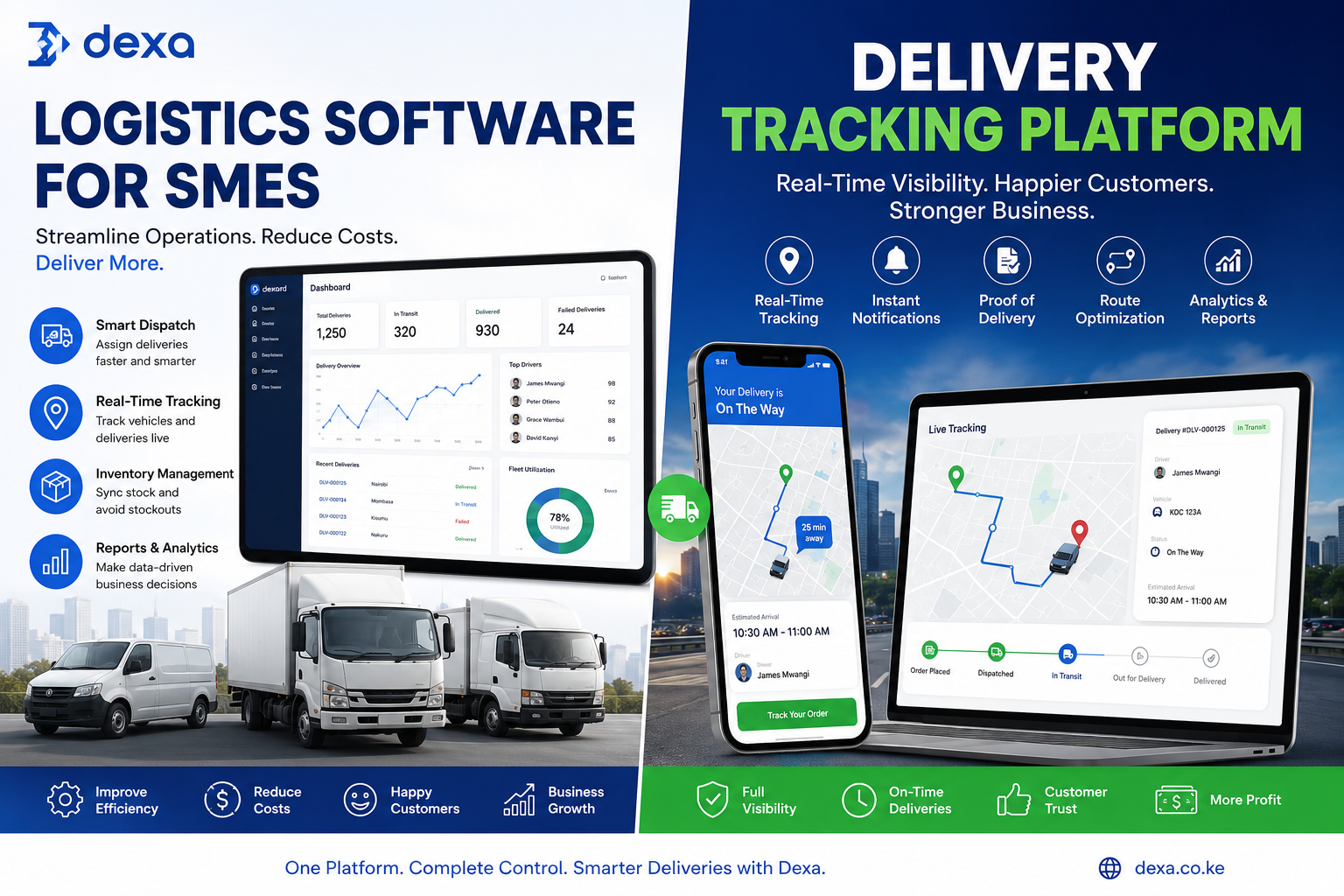
The Growing Importance of Real-Time Delivery Visibility
Customer expectations continue to evolve.
Modern consumers expect:
- Instant updates
- Accurate ETAs
- Live shipment tracking
- Mobile accessibility
- Fast issue resolution
Businesses that provide these capabilities gain a competitive advantage over organizations that still rely on outdated logistics processes.
Industry leaders are increasingly investing in intelligent logistics platforms that combine tracking, automation, route optimization, and analytics into a unified solution. These systems improve delivery performance while reducing administrative workload and operating costs. (leta.ai)
Why Choose Dexa for Delivery Tracking Solutions
Dexa provides businesses with a comprehensive delivery tracking platform designed to simplify logistics management and improve operational visibility.
Organizations can:
- Track deliveries in real time
- Monitor drivers from a centralized dashboard
- Automate customer notifications
- Capture digital proof of delivery
- Generate detailed logistics reports
- Improve delivery efficiency
- Reduce operational costs
The platform is scalable, cloud-based, and suitable for SMEs as well as growing logistics organizations seeking to modernize their delivery operations.
Advanced Features, Integrations, Best Practices, Industry Applications, FAQs & Conclusion
As logistics operations become more complex, businesses need more than just basic shipment tracking. They require intelligent systems that provide actionable insights, automate repetitive tasks, and improve decision-making. A modern Delivery Tracking Platform delivers these capabilities by combining real-time visibility, automation, analytics, and seamless integrations into one centralized solution.
For businesses using Dexa, delivery tracking goes beyond simply knowing where a vehicle is. It creates a connected logistics ecosystem where dispatchers, drivers, managers, and customers all have access to the information they need to keep deliveries moving efficiently.
Advanced Features of a Modern Delivery Tracking Platform
The best delivery tracking platforms include advanced tools that improve operational efficiency while reducing manual work.
Intelligent Dispatch Management
Assigning deliveries manually can be time-consuming, particularly as delivery volumes increase.
An intelligent dispatch system automatically assigns deliveries based on:
- Driver availability
- Vehicle capacity
- Delivery location
- Delivery priority
- Traffic conditions
- Existing delivery schedules
This reduces scheduling conflicts while ensuring every delivery is assigned to the most suitable driver.
Electronic Proof of Delivery (ePOD)
One of the biggest causes of delivery disputes is the lack of verifiable delivery records.
Electronic Proof of Delivery allows drivers to capture:
- Customer signatures
- Delivery photographs
- GPS delivery location
- Date and time stamps
- Delivery notes
- Barcode scans
- OTP verification where required
These digital records provide undeniable evidence that deliveries were completed successfully, reducing disputes and improving customer confidence.
Automated Customer Communication
Customers appreciate proactive communication.
Instead of contacting customer support for shipment updates, they automatically receive:
- Order confirmation messages
- Dispatch notifications
- Estimated delivery times
- Driver arrival alerts
- Delay notifications
- Successful delivery confirmations
Automated communication improves transparency while significantly reducing the workload of customer support teams.
Driver Performance Monitoring
Managing delivery teams becomes easier when managers have access to measurable performance indicators.
The platform can monitor:
- Deliveries completed
- Average delivery time
- On-time delivery percentage
- Distance travelled
- Fuel efficiency
- Customer feedback
- Failed delivery attempts
These insights help businesses reward high-performing drivers while identifying areas requiring improvement.
Delivery Exception Management
Unexpected situations occur in every logistics operation.
Examples include:
- Customer unavailable
- Incorrect delivery address
- Vehicle breakdown
- Heavy traffic
- Bad weather
- Road closures
A delivery tracking platform allows dispatchers to identify exceptions immediately and take corrective action before customers experience significant delays.
Integrating Your Delivery Tracking Platform
One of the greatest advantages of cloud logistics software is its ability to integrate with other business systems.
A fully integrated platform eliminates duplicate data entry while improving workflow efficiency.
E-commerce Platforms
Businesses selling online can automatically import customer orders from their online stores into the delivery management system.
Benefits include:
- Faster order processing
- Reduced manual entry
- Fewer order errors
- Improved delivery speed
Accounting Software
Finance departments benefit from automatic synchronization between deliveries and accounting records.
Integration supports:
- Invoice generation
- Payment tracking
- Revenue reporting
- Customer account updates
CRM Systems
Customer Relationship Management integration ensures customer records remain consistent across departments.
Businesses can:
- View delivery history
- Monitor customer interactions
- Resolve delivery complaints faster
- Improve customer service
GPS and Mapping Services
Mapping integration enables:
- Live vehicle tracking
- Route optimization
- Estimated arrival calculations
- Traffic-aware navigation
Drivers spend less time navigating while customers receive more accurate delivery estimates.
SMS and Email Platforms
Automated messaging services keep customers informed throughout every stage of the delivery process without requiring manual intervention from staff.
Benefits of Using Dexa’s Delivery Tracking Platform
Businesses implementing Dexa’s delivery tracking solution enjoy significant operational improvements.
Increased Operational Efficiency
Automation eliminates repetitive administrative work, allowing staff to focus on customer service and business growth.
Tasks such as dispatching, reporting, customer notifications, and delivery confirmation become significantly faster.
Improved Customer Satisfaction
Customers receive:
- Accurate tracking information
- Faster deliveries
- Real-time updates
- Reliable delivery confirmations
Greater transparency builds trust and encourages repeat business.
Better Decision Making
Business owners gain access to comprehensive dashboards displaying:
- Delivery performance
- Driver productivity
- Fleet utilization
- Revenue trends
- Delivery completion rates
- Customer satisfaction metrics
These reports enable informed strategic decisions.
Reduced Operational Costs
A delivery tracking platform helps businesses lower expenses by reducing:
- Fuel consumption
- Paperwork
- Administrative workload
- Failed deliveries
- Route inefficiencies
- Customer support requests
Lower costs contribute directly to increased profitability.
Business Scalability
As businesses grow, logistics operations naturally become more complex.
Cloud-based delivery tracking platforms scale effortlessly by supporting:
- Additional vehicles
- More drivers
- Multiple branches
- Larger delivery volumes
- Expanded service areas
Businesses avoid replacing their systems as they expand.
Industries That Benefit Most
Although delivery tracking is commonly associated with courier companies, many industries benefit from these platforms.
Courier and Parcel Delivery
Track every shipment from pickup to delivery while improving dispatch efficiency.
E-commerce
Provide customers with complete visibility after checkout and reduce “Where is my order?” inquiries.
Wholesale Distribution
Coordinate deliveries between warehouses, distributors, and retail outlets.
Manufacturing
Monitor transportation of raw materials and finished products throughout the supply chain.
Retail
Manage store replenishment and customer deliveries efficiently.
Pharmaceutical Distribution
Ensure sensitive medical products are delivered securely and on time with full traceability.
Food and Beverage
Track time-sensitive deliveries while maintaining product quality and customer satisfaction.
Best Practices for Successful Implementation
Implementing a delivery tracking platform successfully requires proper planning.
Train Every User
Ensure dispatchers, warehouse staff, drivers, customer support teams, and managers understand how to use the platform effectively.
Maintain Accurate Customer Information
Incorrect delivery addresses or customer contact details reduce the effectiveness of tracking systems.
Regularly update customer records.
Monitor Key Performance Indicators
Track metrics such as:
- On-time delivery percentage
- Delivery success rate
- Driver productivity
- Fleet utilization
- Average delivery time
- Customer satisfaction
- Failed deliveries
- Delivery costs
Regular analysis helps identify improvement opportunities.
Optimize Routes Regularly
Customer locations, traffic patterns, and delivery volumes change continuously.
Review route performance regularly to maximize efficiency.
Leverage Reporting Tools
Use built-in analytics to identify trends, forecast demand, and make informed operational decisions.
Data-driven logistics consistently outperforms manual decision-making.
Common Challenges Solved by a Delivery Tracking Platform
Businesses often struggle with:
- Lost shipments
- Delayed deliveries
- Poor communication
- Manual paperwork
- Customer complaints
- Driver accountability issues
- Inefficient route planning
- Limited shipment visibility
- Slow reporting
A centralized delivery tracking platform addresses these challenges through automation, real-time visibility, and intelligent logistics management.
Frequently Asked Questions
What is a Delivery Tracking Platform?
A Delivery Tracking Platform is software that enables businesses to monitor shipments, drivers, and deliveries in real time while automating logistics processes.
Is a Delivery Tracking Platform suitable for SMEs?
Yes. Cloud-based platforms like Dexa are designed to support businesses of all sizes, allowing SMEs to improve delivery performance without significant infrastructure investment.
Can customers track their own deliveries?
Yes. Customers can receive automated notifications and tracking links that provide real-time shipment updates and estimated arrival times.
Does the platform support proof of delivery?
Absolutely. Drivers can capture digital signatures, photographs, GPS coordinates, timestamps, and delivery notes to verify successful deliveries.
Can the software integrate with existing business systems?
Yes. Most modern delivery tracking platforms integrate with accounting software, ERP systems, CRM solutions, e-commerce platforms, payment gateways, GPS services, and communication tools.
Is cloud-based delivery tracking secure?
Yes. Reputable cloud platforms use encrypted communications, secure user authentication, role-based access controls, automatic backups, and regular security updates to protect business data.
Conclusion
As customer expectations continue to rise, businesses can no longer rely on manual methods to manage deliveries. A modern Delivery Tracking Platform empowers organizations with real-time shipment visibility, automated dispatching, intelligent route optimization, electronic proof of delivery, and powerful analytics that streamline logistics operations from end to end.
Whether you operate a courier service, e-commerce business, wholesale distribution company, retail operation, manufacturing enterprise, or third-party logistics provider, investing in a delivery tracking platform enables you to improve efficiency, reduce operational costs, enhance customer satisfaction, and scale your business with confidence.
At Dexa, we provide a comprehensive cloud-based Delivery Tracking Platform built to help Kenyan businesses modernize their logistics operations. From real-time driver tracking and automated customer notifications to detailed reporting and seamless integrations, Dexa equips your business with the tools needed to deliver faster, operate smarter, and stay competitive in an increasingly digital marketplace.
If you’re ready to transform your logistics operations, improve delivery accuracy, and provide customers with the transparency they expect, Dexa’s Delivery Tracking Platform is the solution your business needs.