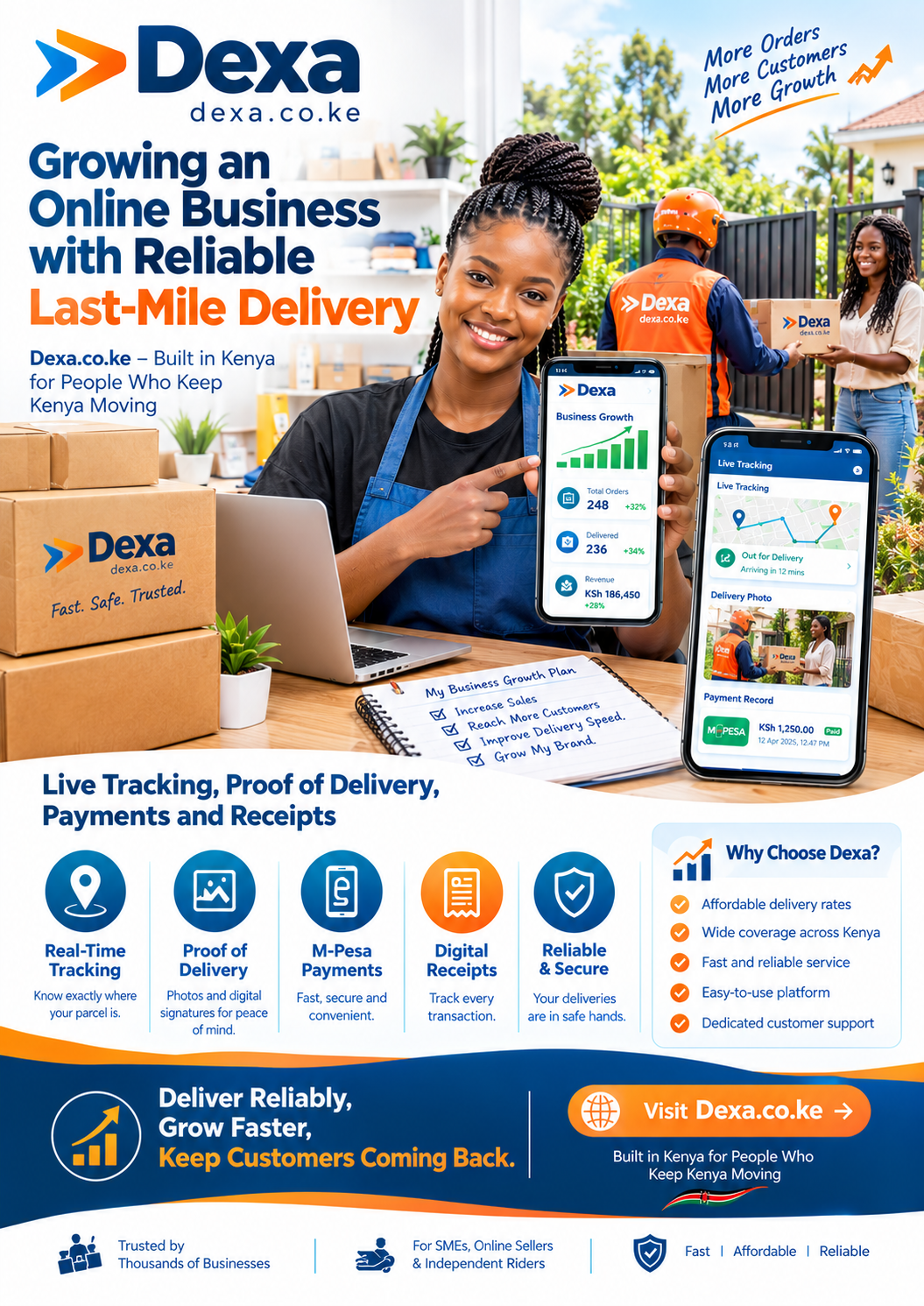
Growing an online business with reliable last-mile delivery is not a coincidence of good fortune—it is a direct cause-and-effect relationship that most sellers only recognise after the damage is done. Marketing brings a customer to the checkout. The parcel decides whether that customer ever returns. Everything between those two moments is the last mile, and it is where online businesses either compound their gains or quietly bleed them away.
Understanding growing an online business with reliable last-mile delivery means accepting that delivery is not a cost centre to be minimised but a growth engine to be managed. The sellers who scale are the ones whose customers stop worrying about whether an order will arrive. Once that worry disappears, price becomes less important, repeat purchases increase, and word of mouth does the marketing for free.
Why the Last Mile Decides Whether Customers Return
Consider what a customer actually experiences when they buy online. They see photographs, read descriptions, and take a gamble on a seller they may never have dealt with before. The product either matches expectations or it does not. But long before they open the package, they experience the delivery. That experience arrives first, and it colours everything that follows.
When you are working on growing an online business with reliable last-mile delivery, the practical question is simple: what does your customer feel between paying and receiving? If the answer is uncertainty—no updates, no tracking, no idea when the rider will appear—then every other part of your business is carrying unnecessary weight. A customer who has to chase you for information has already begun to regret the purchase.
Reliable delivery reverses that. Updates arrive without being requested. The rider comes when promised. Proof of delivery lands in the customer’s messages. The package is opened in a mood of satisfaction rather than relief. This is the mechanism behind growing an online business with reliable last-mile delivery, and it operates quietly in the background of every successful online shop.
The Economics of Getting Delivery Right
Delivery costs money, and startups understandably watch that line closely. But the arithmetic of last-mile delivery is more subtle than a per-parcel rate. The expense that matters is the cost of completed deliveries, and that figure includes everything surrounding the trip.
Start with failed attempts. When a rider cannot find a customer or the recipient is unavailable, the trip is repeated. Fuel is burned twice, the rider is paid twice, and the order is delayed. Industry data suggests a substantial share of parcels nationally are delayed or never delivered at all, with addressing gaps a leading cause. Every failed attempt roughly doubles the cost of that delivery, which is why serious work on growing an online business with reliable last-mile delivery begins with reducing failure rates rather than negotiating rates downward.
Then count the hours. Coordinating deliveries by phone—confirming addresses, relaying instructions, chasing status—consumes a meaningful portion of every working day. For a small team, that time comes directly out of selling. Systems that absorb the coordination are not an overhead; they are recovered capacity. This is the calculation that makes growing an online business with reliable last-mile delivery worth examining in financial terms rather than treating as a soft benefit.
Finally, consider cash. Cash on delivery remains common among Kenyan online buyers, particularly first-timers. When collections live in a rider’s memory or a notebook, small shortfalls accumulate invisibly. Logging every payment against its specific order closes that leak entirely, and it is one of the quieter reasons sellers invest in growing an online business with reliable last-mile delivery infrastructure early.
The Nairobi Environment That Shapes Everything
Any realistic discussion of growing an online business with reliable last-mile delivery has to account for where that delivery happens. Nairobi ranks among the most congested cities in Africa, and a peak-hour journey can stretch past an hour for a distance that would take fifteen minutes in clear conditions. Schedules built on optimistic assumptions collapse, repeatedly, and the customer hears every excuse.
Addressing compounds the problem. Large parts of the city have no formal street numbering, so delivery instructions arrive as landmarks—behind the blue gate, opposite the petrol station, call when you reach. A significant share of parcels nationally are delayed or never delivered, and the inability to locate a destination precisely is a major contributor. Sellers working on growing an online business with reliable last-mile delivery need a partner that treats landmark navigation as normal rather than a nuisance.
Payment habits complete the picture. Cash on delivery dominates many segments, riders carry money, and reconciliation is a daily task. Building growing an online business with reliable last-mile delivery around these realities rather than pretending they do not exist is what separates operations that scale from those that stall.
What Reliability Actually Looks Like
Reliability is an overused word, so it helps to describe it precisely. A reliable last-mile operation has four visible characteristics, and each one contributes directly to growth.
The first is visibility. At any moment, the seller can see where every parcel is and tell a customer without making a call. This is the foundation of growing an online business with reliable last-mile delivery, because visibility removes the anxiety that otherwise surrounds every order.
The second is proof. Every delivery produces a record—a signature, a photograph, a timestamp—captured at handover and retrievable in seconds. When a customer claims an order never arrived, the evidence already exists. Sellers who have built growing an online business with reliable last-mile delivery on documented proof rarely lose disputes, and rarely face them in the first place.
The third is accurate payment handling. Cash and M-Pesa collections are logged against their orders, so reconciliation takes minutes rather than an afternoon. In growing an online business with reliable last-mile delivery, financial clarity is not separate from operational clarity—they are the same discipline applied to different data.
The fourth is scalability. The system that handles twenty orders a day should handle sixty without collapsing. This is the most commonly overlooked dimension of growing an online business with reliable last-mile delivery, because it only becomes visible when a promotion succeeds or a wholesale client arrives. A courier that cannot scale will cap your growth precisely when momentum is strongest.
How Dexa.co.ke Supports Growing Sellers
Dexa.co.ke was built for the Kenyan market rather than adapted from a foreign model, and its structure reflects how delivery actually works here. The platform splits into two products, each suited to a different stage of business growth, which means a seller can engage at the level that matches current volume rather than paying for capacity that is not yet needed.
For sellers working with one or two trusted riders, the independent driver model fits naturally. This arrangement matters to growing an online business with reliable last-mile delivery because it lets a business build a relationship with a specific rider who learns the pickup routine, the packaging habits, and the regular customers. Familiarity reduces errors, and errors are what erode customer trust.
For sellers who have outgrown informal arrangements and now coordinate several riders, the courier team model provides the structure. Dispatch, rider assignment, pricing, payments, and delivery proofs live in one place. This matters when working on growing an online business with reliable last-mile delivery at volume, because the coordination layer is where expanding sellers most often come unstuck.
For Independent Drivers
Dexa Driver gives a rider their own customer channel. A driver can create a personal booking link, share it with sellers on WhatsApp, and receive direct bookings rather than competing for work in a crowded marketplace. From the seller’s side, this simplifies growing an online business with reliable last-mile delivery considerably: one known contact, one consistent standard, one person accountable for each parcel.
The rider benefits as well. Instead of chasing one-off trips, a driver can build a roster of regular business clients, schedule pickups in advance, and track earnings in one place. That stability encourages reliability, and reliability is exactly what a growing seller needs from a delivery partner.
For Courier Teams
Dexa Courier is built for teams managing several riders and a steady flow of orders. The platform keeps one operating record from request to receipt, so no order has to be reconstructed from scattered chats. Each parcel carries its customer details, assigned rider, agreed price, payment status, proof of delivery, and associated expense along with it.
For a seller working with a courier team, this makes growing an online business with reliable last-mile delivery predictable rather than stressful. Dispatch is organised, riders know their assignments, and the business receives a clean record for every order. When a customer disputes a delivery, the answer is already in the system rather than in someone’s memory.
Features That Turn Delivery Into a Growth Advantage
Live Tracking Instead of Phone Calls
The most immediate relief a growing seller feels comes from live tracking. Instead of calling a rider to ask where they are, the business can see it. Customers can be told with confidence that their parcel is fifteen minutes away. The visibility built into growing an online business with reliable last-mile delivery platforms removes an entire category of daily friction, and friction is expensive in a small team.
Order and Rider Control in One Place
Orders, riders, and assignments belong together. When they are, dispatch takes minutes rather than an hour of coordination. The control layer behind growing an online business with reliable last-mile delivery lets a business assign a parcel, adjust a route, or reassign a delivery when a rider is delayed, without disrupting the rest of the day.
Proof of Delivery as Standard
Proof of delivery should be automatic rather than optional. Digital signatures, photographs, and timestamps captured at handover create a record that protects the business, the rider, and the customer. In growing an online business with reliable last-mile delivery, that record is stored electronically and retrievable in seconds, which matters enormously when a customer claims a parcel never arrived. Photographic proof showing the package at the customer’s location is especially valuable where landmarks serve as addresses.
Payments and Receipts Handled Properly
M-Pesa and cash both require handling, and both require recording. A platform that logs each payment against its order gives the business a live view of what has been collected and what remains outstanding. This matters most for sellers where cash on delivery makes up a large share of transactions.
Expense Visibility
Delivery costs accumulate quietly: fuel, rider commissions, maintenance, airtime. Businesses that track these alongside revenue understand their true margins. Without that visibility, pricing is guesswork. With it, pricing becomes a calculation. Any serious approach to growing an online business with reliable last-mile delivery includes this financial layer, because delivery that cannot be costed cannot be priced correctly.
Building Customer Trust Without a Big Budget
Delivery is where a young business’s reputation is confirmed or damaged. Marketing attracts a first purchase; the parcel experience decides whether there is a second. Sellers rarely have the budget to recover from repeated delivery failures, which makes reliability disproportionately valuable.
Trust compounds quietly. A customer who receives a parcel on time, with a courteous rider and a confirmation photograph, is far more likely to order again and to recommend the business. A customer who waits three days for a reply about a missing order rarely returns. The difference between those outcomes is seldom the product. It is the delivery system behind it.
Proactive communication does much of this work. An update at dispatch, another when the rider is en route, and a confirmation on delivery leave the customer feeling informed rather than forgotten. For a growing seller, that sense of being kept in the loop is often the cheapest form of customer service available.
Cash on Delivery on Thin Margins
Cash on delivery remains a significant part of online retail in Kenya, particularly for first purchases. Buyers want to see a product before paying, and sellers want to close sales that would otherwise be abandoned. The arrangement works, but only when managed carefully.
The risks are straightforward. Riders carry cash that can be lost or misappropriated. Businesses lose track of what has been collected. Disagreements arise over whether payment was made at all. A system that records each collection against its specific order removes most of this ambiguity. Riders have a record, the business has a record, and reconciliation takes minutes rather than days. For sellers handling a high proportion of cash orders, this feature often justifies the switch on its own.
Growing From Five Orders to Fifty
The point at which a seller outgrows informal delivery arrangements usually arrives suddenly. A viral post, a seasonal promotion, or a single wholesale client can triple daily orders within a week. Businesses that have not prepared for that moment find themselves spending entire days coordinating riders instead of selling.
The transition from informal to structured delivery is much easier when the underlying records already exist. Order details, rider assignments, payment logs, and delivery proofs should live in one place from the beginning, so adding riders later does not mean rebuilding the process. The tools that support growing an online business with reliable last-mile delivery at higher volumes are the same ones that make small volumes simpler to manage.
In-House Rider, Independent Driver, or Courier Team
Sellers generally weigh three options, and the right answer depends on volume, geography, and how predictable the order flow is.
A dedicated rider offers maximum control and familiarity but becomes costly when volumes fluctuate. Independent drivers offer flexibility and personal accountability, and they suit businesses with consistent daily volume in a defined area. Courier teams offer scale and wider coverage, and they suit businesses that need to reach customers across the city or beyond.
Many sellers combine approaches. A business might keep one rider for regular local deliveries while engaging a courier team for outlying areas or peak periods. The key is a system that handles both without duplicating work or fragmenting records, which is precisely the problem growing an online business with reliable last-mile delivery platforms are designed to solve.
Warning Signs Delivery Is Holding You Back
Some warning signs build gradually and are easy to miss. If you spend the first hour of every morning confirming the day’s deliveries by phone, your arrangement costs more than the invoice suggests. If customers regularly ask for proof that their order arrived, your system is not capturing what it needs to.
Other signs include riders who cannot be reached when a customer calls, orders that disappear between pickup and delivery, payment records that never quite balance, and a growing sense that you are managing delivery rather than running your business. None of these problems are unusual for a growing company. They are simply what happens when delivery is handled without proper tools.
Where Last-Mile Delivery Is Heading
Several shifts are reshaping delivery economics in Kenya. Electric motorcycles are becoming more common, and their lower running costs are changing the maths of short-distance work. Charging costs a fraction of fuelling, maintenance requirements are lighter, and riders report moving through traffic more quickly. For sellers watching margins, that difference is material.
Government investment in intelligent traffic management is another factor. A growing number of junctions are being connected to systems that adjust signal timing based on live congestion, which should gradually improve movement across Nairobi. The improvements will arrive over years rather than months, but the direction is clear.
What will not change is the need for visibility, accountability, and accurate records. Whatever vehicles are used and whatever the traffic conditions, sellers will still need to know where their parcels are and be able to prove they arrived. That requirement sits at the centre of growing an online business with reliable last-mile delivery, today and in future.
Growing an online business with reliable last-mile delivery is not about finding the cheapest rate or the largest fleet. It is about building a delivery system that customers stop worrying about—one that shows where every parcel is, captures proof on every delivery, records every payment against its order, and can scale when volume increases.
Whether you are dispatching five orders a week from a single room or fifty a day from a small warehouse, the tools behind growing an online business with reliable last-mile delivery from dexa.co.ke give you the visibility and records that make delivery predictable. From the first order request to the final confirmation, everything stays in one place.
The sellers who grow are the ones who treat delivery as part of the product rather than an afterthought. Build the system early, let it carry the weight as volume rises, and delivery becomes the reason customers come back.