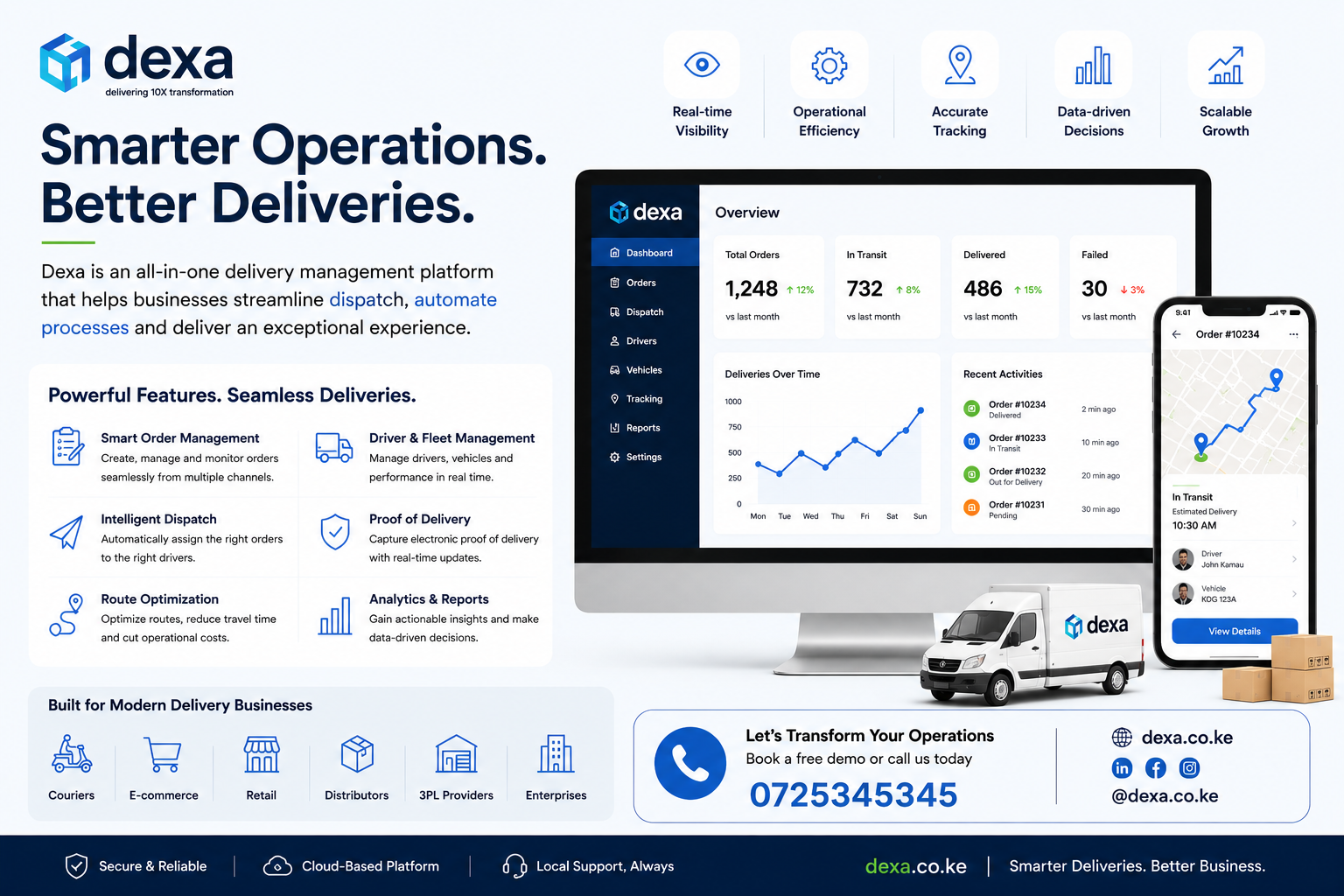
Delivery Analytics Software: Turn Logistics Data into Better Business Decisions
The modern logistics industry generates enormous amounts of operational data every single day. Every dispatched order, completed delivery, route update, customer notification, driver assignment, and proof of delivery contributes valuable information that can help businesses improve performance. Unfortunately, many organizations fail to utilize this data effectively, leaving opportunities for cost savings and operational improvements untapped.
This is where Delivery Analytics Software becomes an essential business tool. Rather than relying on spreadsheets, manual reporting, or assumptions, businesses can gain complete visibility into their delivery operations through intelligent dashboards, automated reports, and real-time performance metrics.
Whether you’re managing a courier company, a retail distribution network, an eCommerce delivery operation, or a third-party logistics business, understanding your operational data is no longer optional—it’s a competitive advantage.
Dexa provides businesses with advanced delivery analytics software capabilities that help transform raw operational data into actionable insights, enabling smarter decisions, greater efficiency, improved customer satisfaction, and sustainable growth.
What Is Delivery Analytics Software?
Delivery Analytics Software is a centralized platform that collects, processes, and visualizes data generated across the entire delivery lifecycle. It provides business owners, logistics managers, dispatch teams, and executives with comprehensive insights into delivery performance through easy-to-understand dashboards and reports.
Instead of spending hours compiling operational reports manually, businesses receive instant access to real-time information that supports better planning and faster decision-making.
The software continuously monitors logistics activities including:
- Delivery completion rates
- Driver productivity
- Fleet utilization
- Dispatch efficiency
- Route performance
- Delivery turnaround times
- Failed deliveries
- Customer service metrics
- Geographic delivery trends
- Operational costs
By presenting these metrics in a meaningful way, businesses gain a clearer understanding of what is working well and where improvements are needed.
Why Delivery Analytics software Has Become Essential
The logistics industry has become increasingly competitive. Customers expect same-day deliveries, real-time tracking, accurate delivery windows, and seamless communication.
Meeting these expectations consistently requires more than simply tracking deliveries—it requires understanding every aspect of operational performance.
Delivery Analytics Software enables businesses to:
- Measure operational efficiency objectively
- Detect inefficiencies before they escalate
- Improve resource allocation
- Increase delivery success rates
- Monitor fleet productivity
- Reduce operational expenses
- Improve dispatch accuracy
- Enhance customer satisfaction
- Support business expansion with data-driven planning
Companies that actively monitor delivery analytics are better positioned to adapt quickly to changing customer expectations and market demands.
How Delivery Analytics Software Works
Understanding how delivery analytics software functions helps businesses appreciate the value it brings to everyday operations.
Data Collection
Every delivery activity generates valuable operational data.
The software automatically captures information from:
- Driver mobile applications
- Dispatch systems
- GPS devices
- Vehicle tracking systems
- Customer delivery confirmations
- Electronic proof of delivery
- Barcode scanners
- Order management systems
- Delivery scheduling platforms
Instead of scattered information across multiple systems, everything is consolidated into one centralized platform.
Data Processing
Raw logistics data alone offers limited value.
Delivery Analytics Software processes this information by organizing, categorizing, and comparing operational metrics to identify trends, patterns, and anomalies.
For example, the system may reveal:
- Routes with consistently late deliveries
- Drivers completing significantly more deliveries than average
- Delivery zones generating the highest operational costs
- Peak delivery periods requiring additional resources
- Frequently delayed customers or locations
These insights help businesses identify opportunities for operational improvements.
Dashboard Visualization
Modern analytics platforms convert complex data into visual dashboards that are easy to understand.
Managers can quickly review:
- Delivery success rates
- Active deliveries
- Fleet performance
- Driver rankings
- Delivery timelines
- Daily operational summaries
- Customer satisfaction indicators
- Delivery heat maps
Visual reporting makes it easier to identify issues at a glance.
Continuous Reporting
Rather than waiting for weekly or monthly reports, businesses receive continuous updates throughout the day.
This enables management teams to respond immediately to operational challenges instead of discovering them after customer complaints arise.
Types of Delivery Analytics
Modern logistics businesses benefit from multiple layers of analytics.
Descriptive Analytics
Descriptive analytics answers the question:
“What happened?”
Examples include:
- Number of deliveries completed
- Average delivery time
- Delivery completion percentage
- Daily dispatch volume
- Driver productivity reports
These reports summarize historical performance.
Diagnostic Analytics
Diagnostic analytics explains:
“Why did it happen?”
Examples include:
- Reasons for delayed deliveries
- Causes of failed deliveries
- Areas experiencing delivery bottlenecks
- Driver-specific performance issues
Understanding root causes enables targeted improvements.
Predictive Analytics
Predictive analytics estimates future outcomes using historical trends.
Businesses can forecast:
- Seasonal delivery demand
- Fleet requirements
- Staffing needs
- High-volume delivery periods
- Expected delivery delays
Predictive planning improves operational readiness.
Prescriptive Analytics
Prescriptive analytics recommends the best course of action.
Examples include:
- Suggested delivery routes
- Optimal dispatch schedules
- Resource allocation recommendations
- Fleet optimization strategies
- Driver assignment improvements
This allows organizations to proactively improve performance rather than simply reacting to problems.
Key Performance Indicators Every Business Should Track
Successful logistics operations rely on measurable performance indicators.
Delivery Success Rate
This measures the percentage of deliveries completed successfully during the first attempt.
Higher success rates reduce operational costs while improving customer satisfaction.
Average Delivery Time
Tracking average delivery duration helps identify inefficient routes and operational bottlenecks.
Reducing delivery time often improves profitability.
Driver Productivity
Businesses should monitor:
- Deliveries completed
- Average service time
- Route efficiency
- Customer ratings
- Idle time
- Working hours
Performance data supports coaching, recognition, and workforce planning.
Fleet Utilization
Vehicles represent significant investments.
Analytics should monitor:
- Vehicle usage
- Downtime
- Fuel efficiency
- Capacity utilization
- Maintenance frequency
Optimizing fleet utilization lowers operating costs.
Failed Deliveries
Every failed delivery increases operational expenses.
Analytics identify recurring causes such as:
- Customer unavailable
- Incorrect addresses
- Route planning issues
- Vehicle breakdowns
- Dispatch errors
Understanding these causes enables corrective action.
Cost Per Delivery
One of the most valuable metrics is the total operational cost associated with completing each delivery.
Businesses can monitor:
- Fuel expenses
- Driver costs
- Vehicle maintenance
- Administrative expenses
- Delivery overhead
Lowering cost per delivery directly improves profitability.
Major Benefits of Delivery Analytics Software
Better Operational Visibility
Managers gain a complete overview of delivery operations from one centralized dashboard.
Instead of relying on assumptions or fragmented reports, they have access to accurate, real-time operational intelligence.
Smarter Decision Making
Every strategic decision becomes supported by measurable data.
Rather than asking, “What do we think is happening?”, businesses can confidently ask, “What does the data show?”
Improved Customer Satisfaction
Customers appreciate:
- Accurate delivery estimates
- Reliable service
- Faster deliveries
- Better communication
- Fewer delivery errors
Analytics help organizations consistently deliver better customer experiences.
Increased Driver Accountability
Performance dashboards encourage greater accountability across delivery teams.
Drivers receive clear performance expectations while managers can identify coaching opportunities based on measurable metrics.
Lower Operational Costs
Analytics expose unnecessary expenses resulting from:
- Poor route planning
- Vehicle underutilization
- Fuel wastage
- Failed deliveries
- Dispatch inefficiencies
Addressing these issues improves long-term profitability.
Continuous Performance Improvement
Unlike one-time operational reviews, delivery analytics provide continuous monitoring.
Businesses can evaluate improvements over time and measure the effectiveness of operational changes.
How Delivery Analytics Software Supports Dispatch Operations
Dispatch teams coordinate hundreds or even thousands of deliveries every day.
Analytics enable dispatch managers to:
- Balance workloads fairly
- Identify delayed deliveries
- Monitor driver availability
- Optimize route assignments
- Track dispatch completion rates
- Reduce scheduling conflicts
The result is smoother daily operations and faster response to changing delivery conditions.
Delivery Analytics software and Last-Mile Delivery
The final stage of delivery is often the most expensive and challenging.
Analytics improve last-mile delivery by helping businesses:
- Reduce missed deliveries
- Improve customer communication
- Optimize delivery sequences
- Monitor delivery completion times
- Increase first-attempt delivery success
- Identify high-risk delivery locations
Since last-mile delivery heavily influences customer satisfaction, improving this stage creates a significant competitive advantage.
Integrating Delivery Analytics software with Other Business Systems
The true value of analytics increases when connected with other operational tools.
Dexa can support integration with systems such as:
- Dispatch management
- Fleet management
- Order management
- Customer relationship management (CRM)
- Inventory systems
- Warehouse management
- GPS tracking
- Electronic proof of delivery
- Customer notification platforms
- Billing and invoicing systems
Integrated operations eliminate duplicate data entry while improving reporting accuracy.
How AI Is Transforming Delivery Analytics
Artificial Intelligence is reshaping logistics by making analytics more intelligent and proactive.
AI-powered analytics can help businesses:
- Predict delivery delays
- Detect unusual operational patterns
- Recommend better delivery routes
- Forecast delivery demand
- Optimize driver allocation
- Improve fleet utilization
- Reduce operational risks
As logistics technology evolves, AI-driven analytics will continue becoming an increasingly valuable competitive advantage.
Choosing the Right Delivery Analytics Software
Not every analytics platform offers the same capabilities.
When evaluating solutions, businesses should prioritize software that provides:
- Real-time dashboards
- Custom reporting
- Route performance analysis
- Driver analytics
- Fleet monitoring
- Mobile accessibility
- Scalability
- Cloud-based infrastructure
- Secure data management
- Easy integration with existing systems
Choosing software that grows alongside your business helps maximize long-term value.
Why Businesses Choose Dexa
Dexa is designed to help organizations gain complete visibility into delivery operations while simplifying day-to-day logistics management.
With a centralized platform, businesses can:
- Monitor deliveries in real time
- Analyze operational performance
- Track driver productivity
- Improve dispatch efficiency
- Optimize delivery routes
- Reduce operational costs
- Generate comprehensive reports
- Enhance customer service
- Scale logistics operations confidently
Instead of relying on disconnected systems, Dexa provides a unified environment where operational data becomes meaningful business intelligence.
The Future of Delivery Analytics software
Delivery analytics will continue evolving as logistics businesses embrace automation, AI, machine learning, and predictive technologies.
Future platforms will offer:
- More accurate demand forecasting
- Autonomous operational recommendations
- Enhanced predictive maintenance
- Smarter fleet optimization
- Deeper customer behavior insights
- Advanced sustainability reporting
- Greater operational automation
Businesses that invest in analytics today position themselves for greater resilience, efficiency, and long-term growth.
Conclusion
As delivery operations become more complex, the ability to understand and act on operational data becomes increasingly important. Delivery Analytics Software enables businesses to move beyond basic tracking by providing real-time visibility into every stage of the delivery process. From monitoring driver performance and fleet utilization to reducing costs and improving customer satisfaction, analytics empower organizations to make faster, smarter, and more informed decisions.
For businesses seeking to modernize logistics operations, improve efficiency, and build a data-driven culture, Dexa offers a comprehensive platform that transforms everyday delivery data into actionable insights that support sustainable growth.
Frequently Asked Questions (FAQs)
What is Delivery Analytics Software?
Delivery Analytics Software is a platform that collects, analyzes, and visualizes delivery data to help businesses improve logistics performance, monitor KPIs, and make informed operational decisions.
Who should use Delivery Analytics Software?
Courier companies, eCommerce businesses, distributors, retailers, manufacturers, wholesalers, pharmaceutical suppliers, and third-party logistics providers can all benefit from delivery analytics.
Can delivery analytics reduce logistics costs?
Yes. By identifying inefficient routes, reducing failed deliveries, improving fleet utilization, and optimizing dispatch operations, businesses can significantly lower operational costs.
How does delivery analytics improve customer satisfaction?
Analytics help businesses deliver on time, improve communication, reduce delivery errors, and identify recurring service issues, leading to a better customer experience.
Is Delivery Analytics Software suitable for growing businesses?
Absolutely. Scalable analytics platforms help businesses manage increasing delivery volumes while maintaining visibility, efficiency, and operational control.
Can analytics integrate with dispatch and fleet management systems?
Yes. Modern solutions like Dexa are designed to integrate with dispatch management, fleet tracking, order management, proof of delivery, GPS, and other logistics systems to provide a unified operational view.
What are the most important delivery KPIs to monitor?
Key metrics include delivery success rate, average delivery time, cost per delivery, driver productivity, fleet utilization, failed delivery rate, on-time delivery percentage, and customer satisfaction scores.
How does Dexa help businesses make better logistics decisions?
Dexa centralizes delivery data into intuitive dashboards and reports, enabling businesses to identify trends, optimize operations, improve resource allocation, and make data-driven decisions that enhance overall logistics performance.